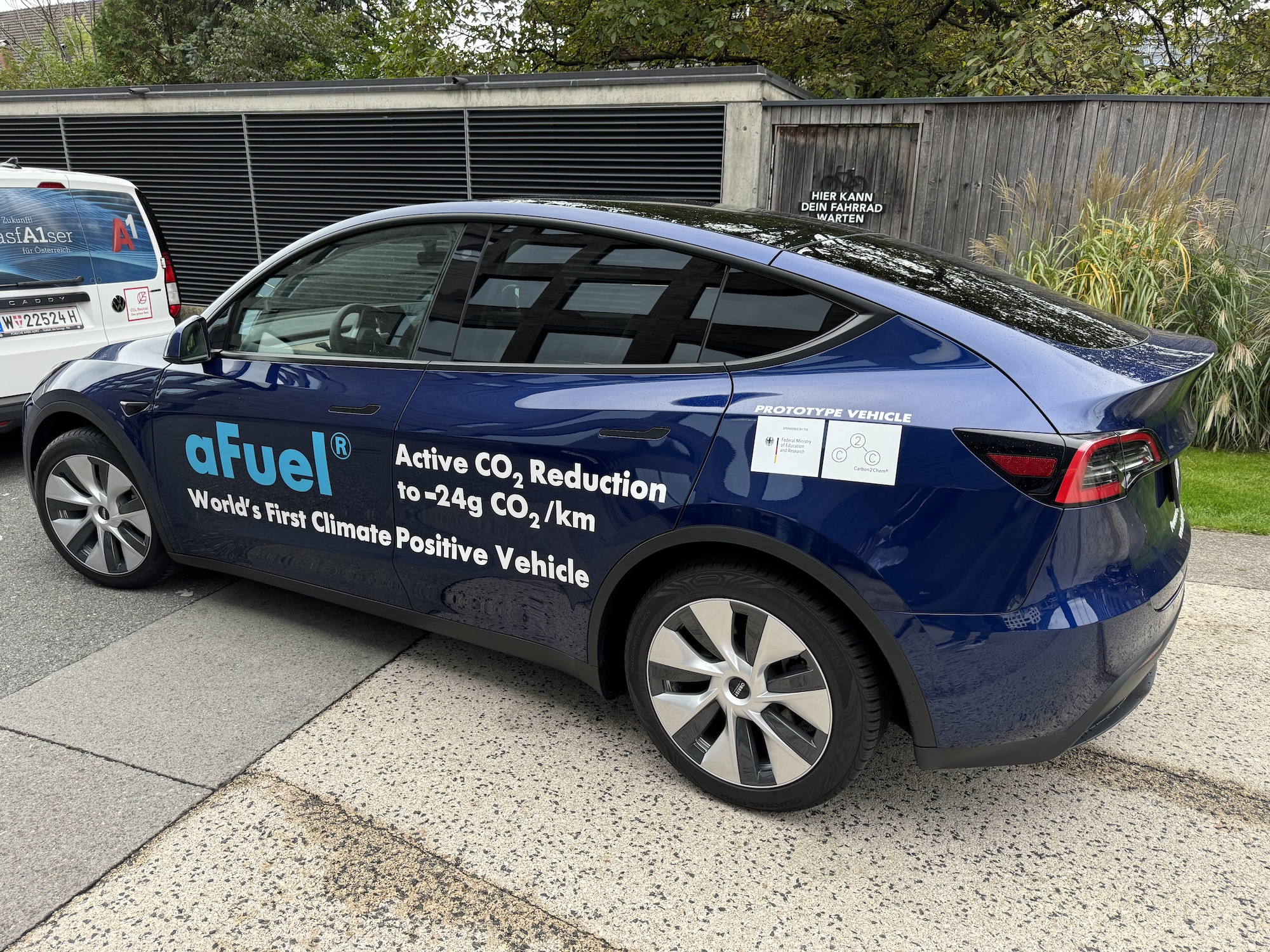
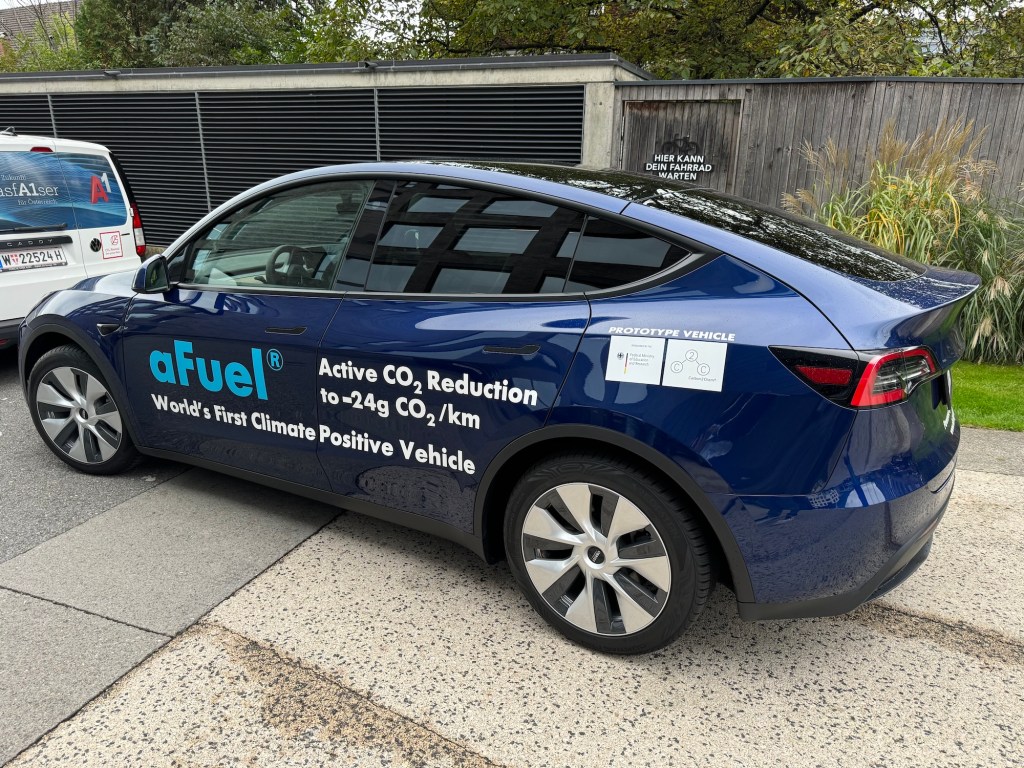
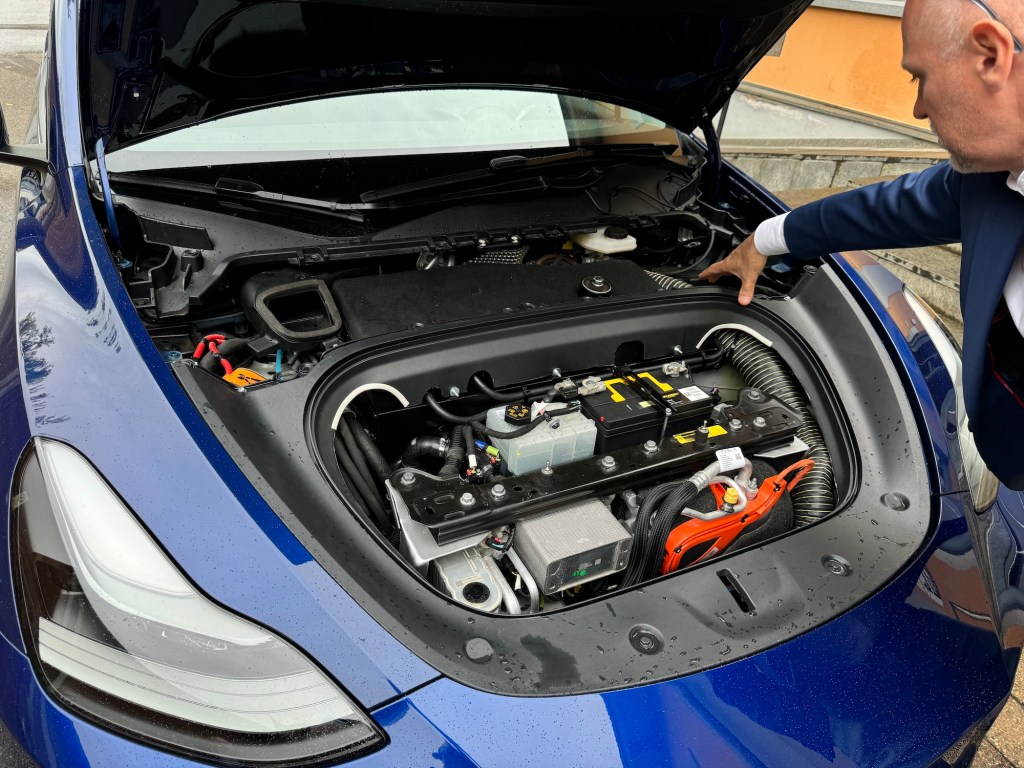
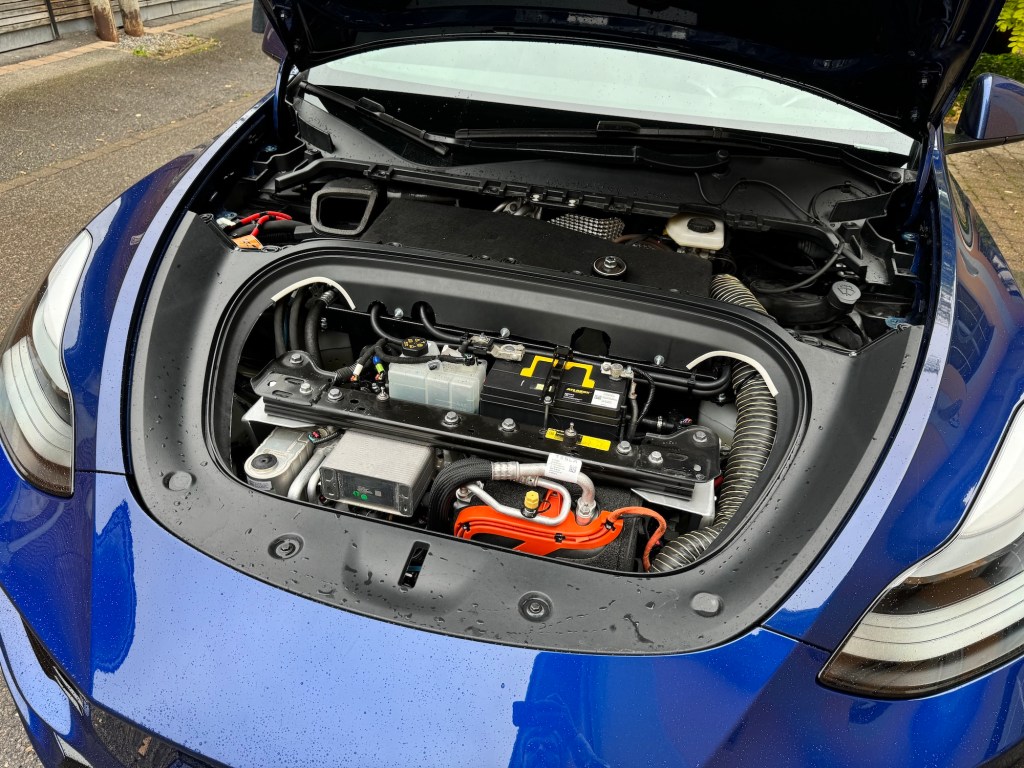
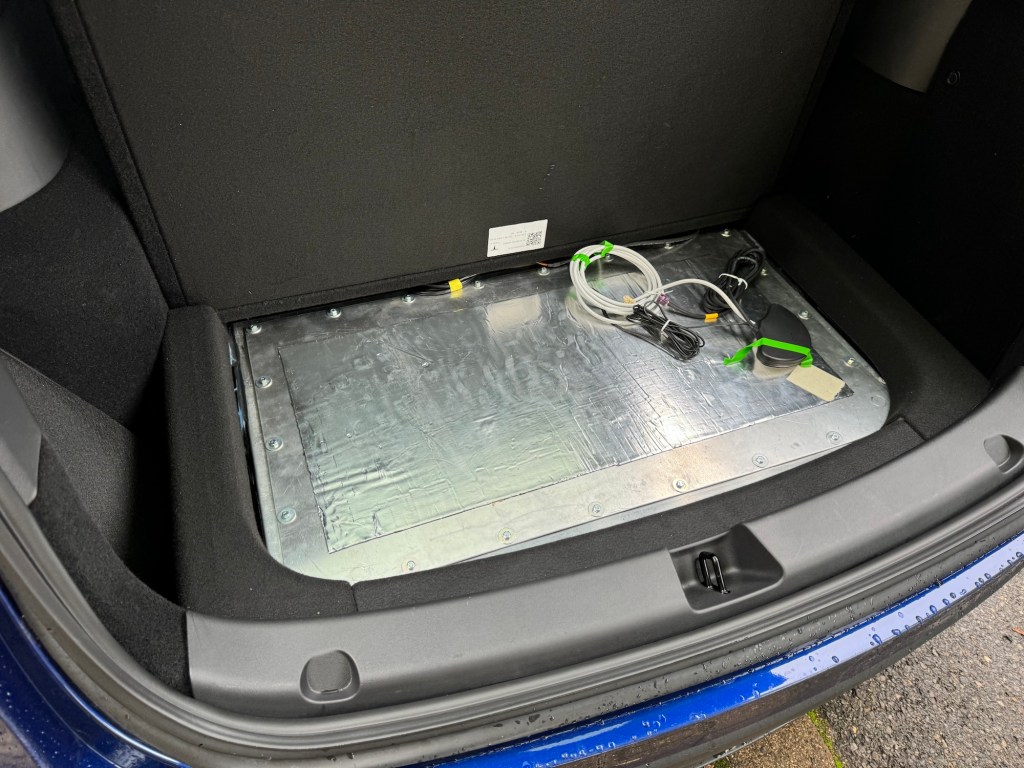
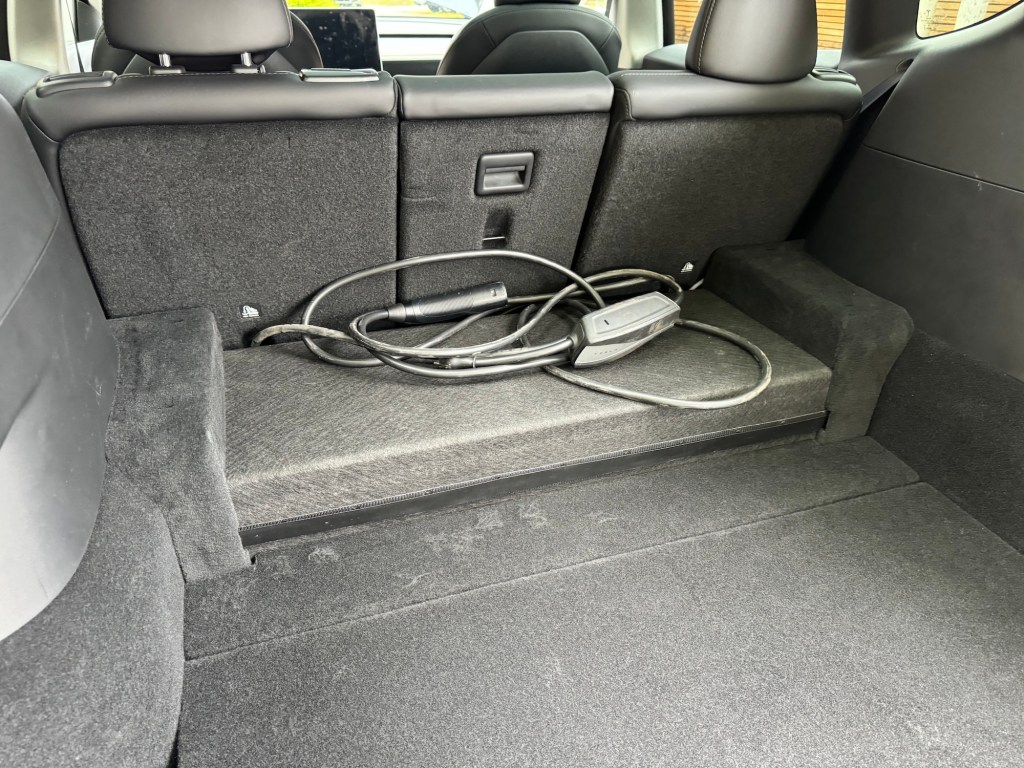
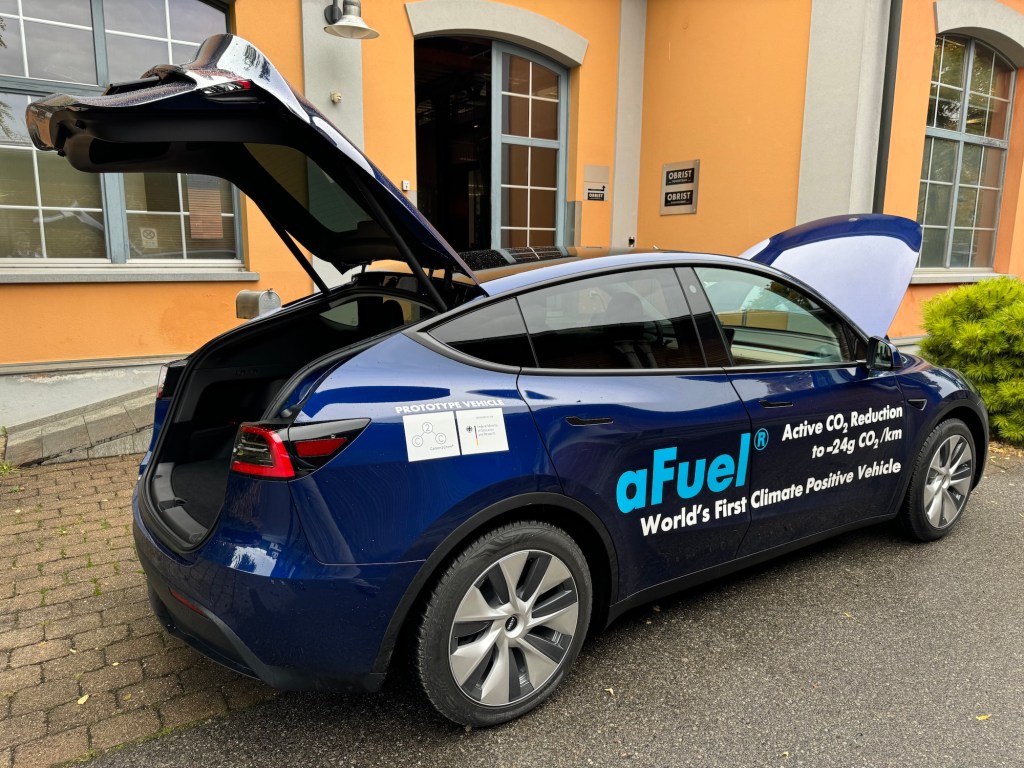
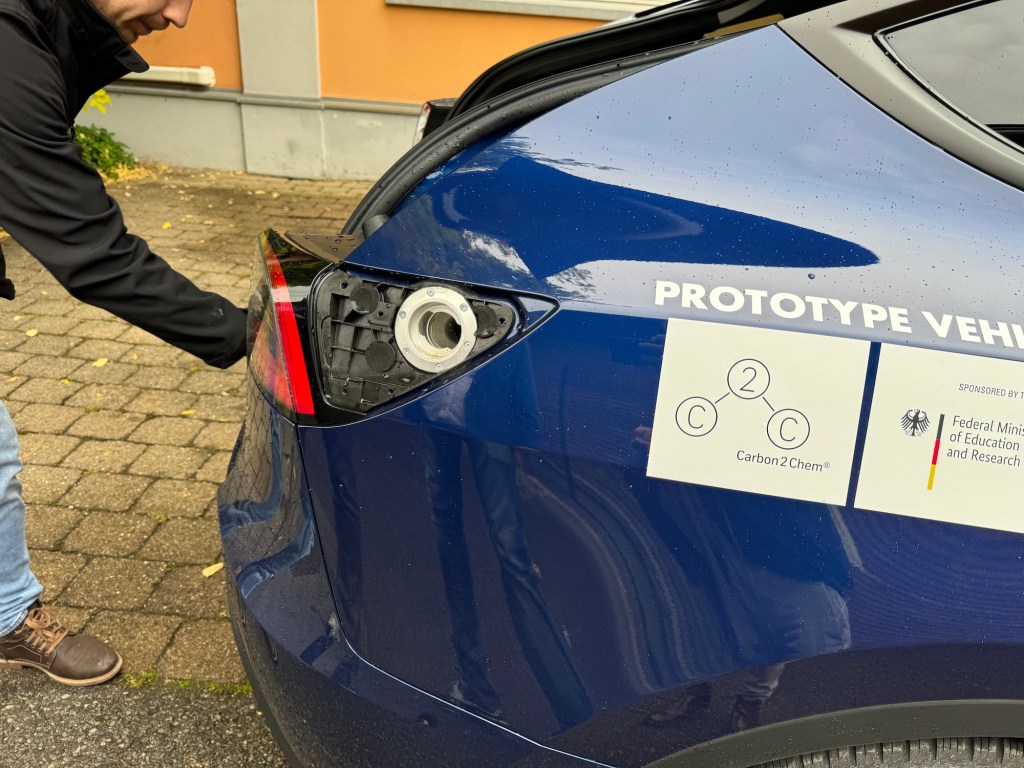
A Tesla Model Y whose battery pack has been removed, replaced with a smaller 17.3 kWh battery pack and a combustion engine has also been installed in the frunk? What sounds absurd at first may make sense on closer inspection.
The automotive engineering company Obrist, based in Lustenau in Austria’s westernmost province of Vorarlberg, is looking for solutions to not only put a stop to climate change, but also to counteract it.
We know with certainty that climate change is caused by human intervention. The burning of fossil fuels such as oil, gas or coal has led to an increase in CO2 in the atmosphere, which affects temperatures and has a number of consequences. Increased weather extremes or hotter summers make entire regions uninhabitable and affect crop yields and human well-being in general.
While many technical and regulatory solutions focus on reducing new CO2 emissions, there are hardly any technical approaches to date that attempt to remove CO2 from the atmosphere. Previous carbon capture solutions have focused on storing carbon in underground reservoirs without this ever making economic sense.
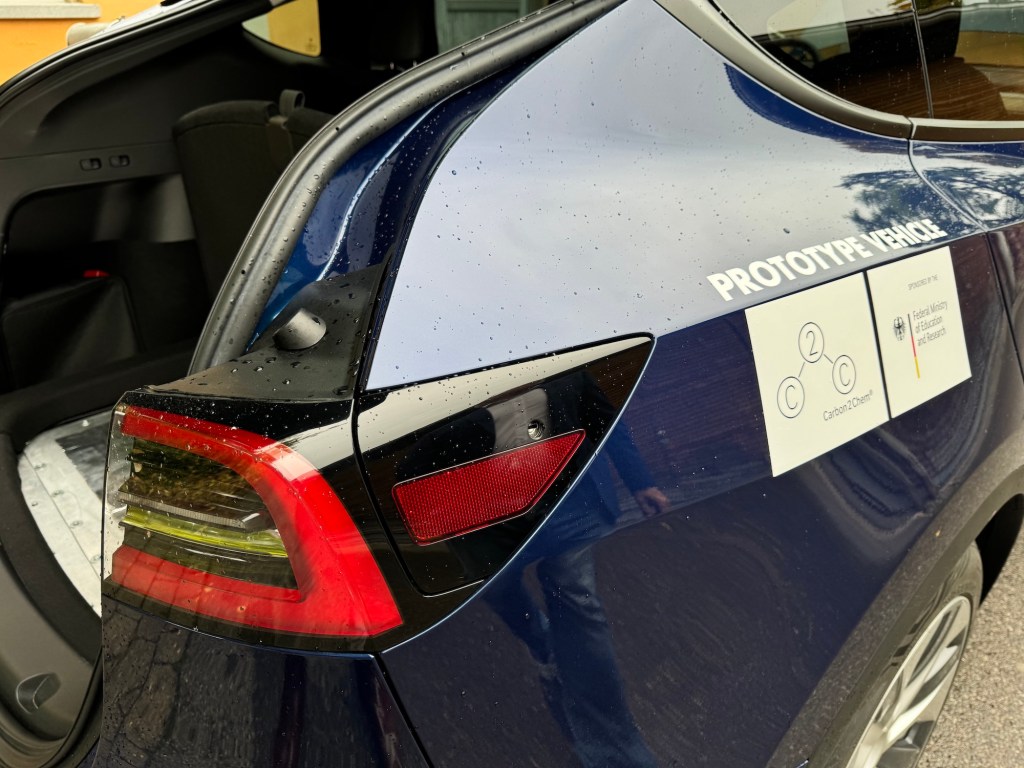
This is where the Obrist engineers are now pushing forward with a new approach, which led to this prototype vehicle based on a Tesla Model Y. The methanol engine in this HyperHybrid is to be powered by so-called aFuel – atmospheric fuel. With huge photovoltaic systems in sunny regions of the world such as the Sahara or Saudi Arabia, the electricity from sunlight is to be used for the electrolysis of water, i.e. the splitting of H2O into hydrogen H2 and oxygen O2. Methanol CH3OH can then be synthesized from the CO2 simultaneously extracted from the atmosphere.
Now it’s not just that the vision is not only to remove CO2, convert it into Methanol, which is then used as fuel and leads to a zero-emissions-cycle, but ro remove about ten percent more of CO2 that is then just converted into solid carbon that can be used for other purposes such as carbon fiber production and so on. This is why Obrist states that this is the first carbon-negative and climate-positive vehicle. The more your drive, the more CO2 is removed from the overall cycle.
The calculation seems to show that a competitive price point can be achieved with the first Gigawatt-solarfield. Also a lot of infrastructure can be reused such as liquid fuel transportation across the globe or gas stations. While converting solar light into electricity may seem the better approach, distributing it from the desert to places where it is actually needed seems infeasible with current technologies. The losses would simply be too high, and the power lines from the Sahara to Europe are non-existent.
Incidentally, the methanol engine is a symmetrically arranged two-cylinder four-stroke engine
with 999ccm, making it almost vibration-free. It is designed for a top speed of 170 km/h (140 km/h in continuous operation). When driving, the vehicle switches between the battery and the methanol engine as a form of propulsion depending on the speed. The smaller battery not only reduces the weight compared to the original Tesla battery, it also leads to a lower CO2 footprint per vehicle during production.
The next steps for the Obrist management are now the first test installations to demonstrate the practicality of the system, as well as talks with investors and interested parties to set up the first GW installation.
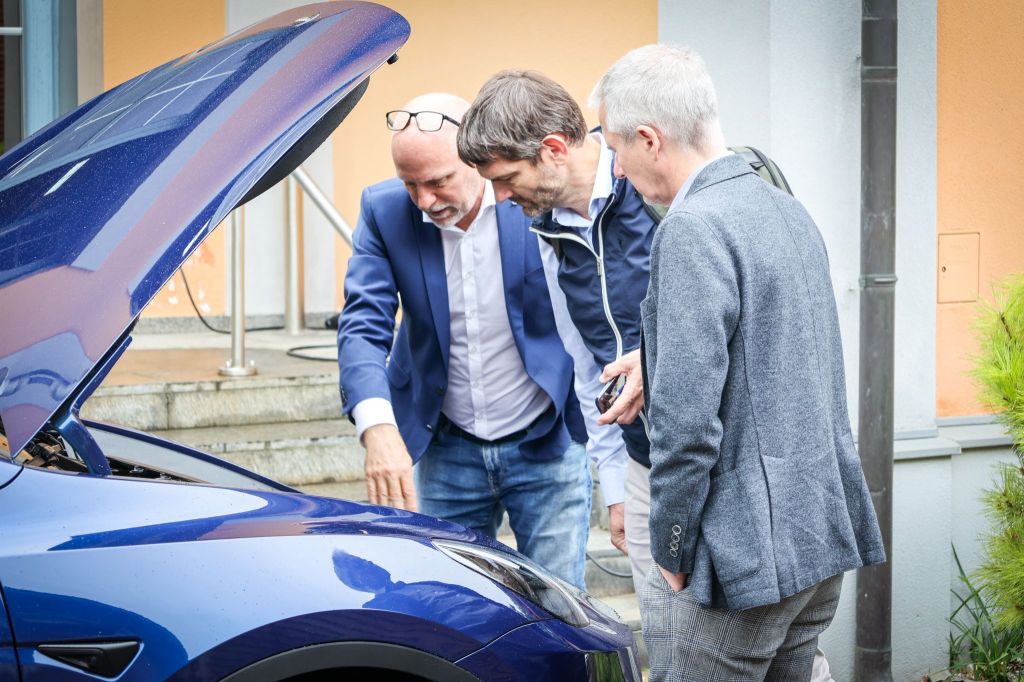
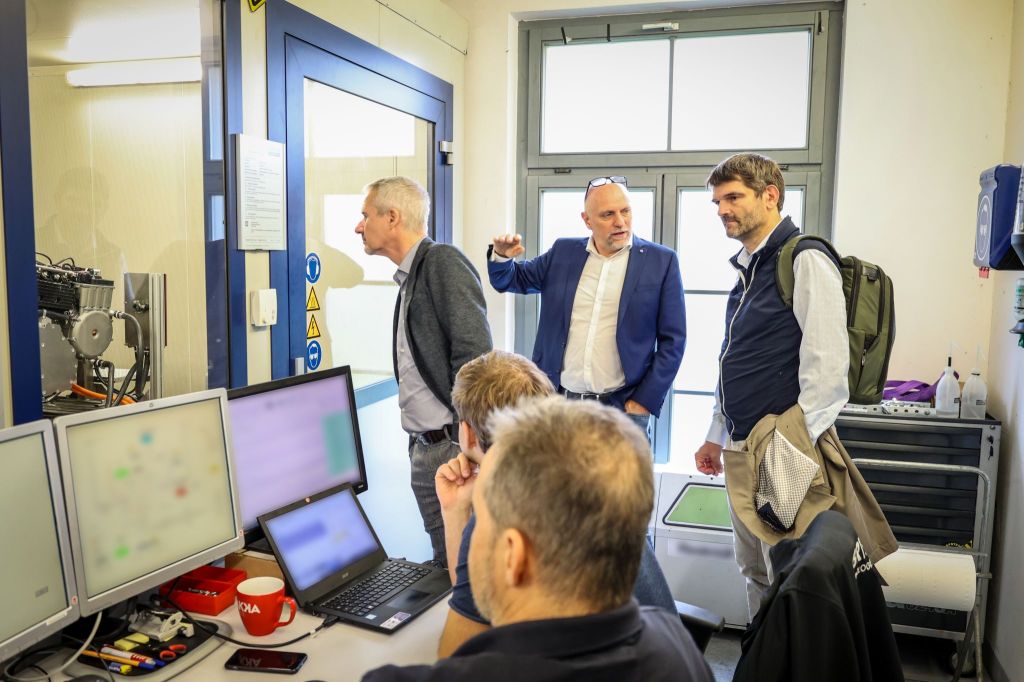
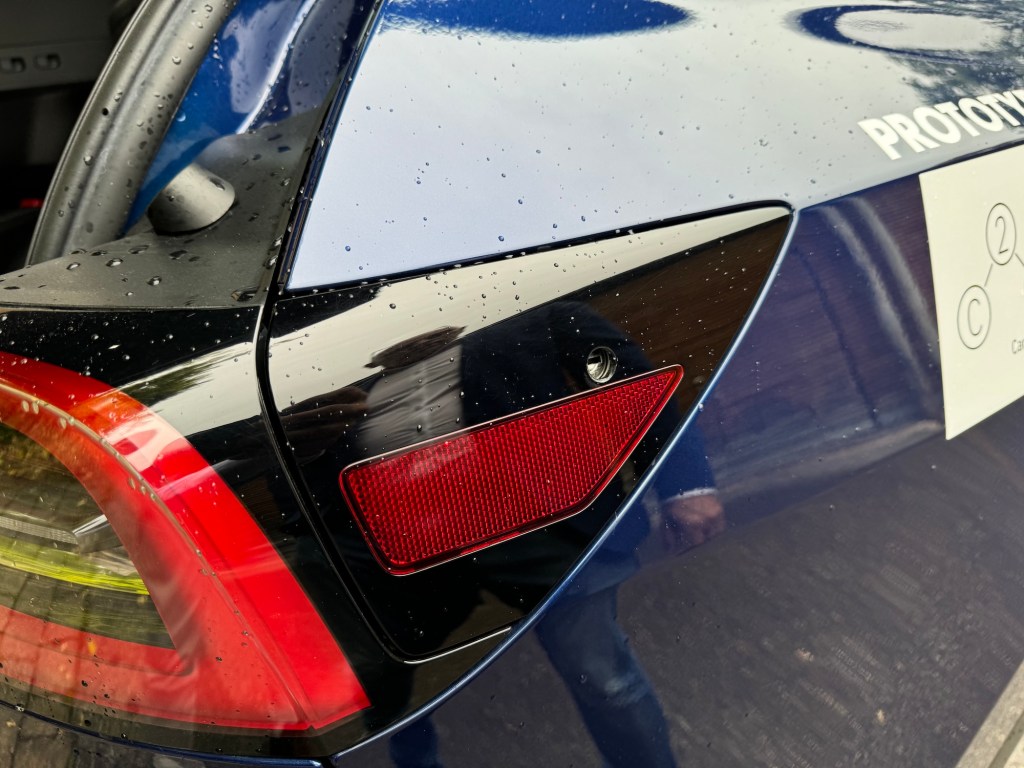
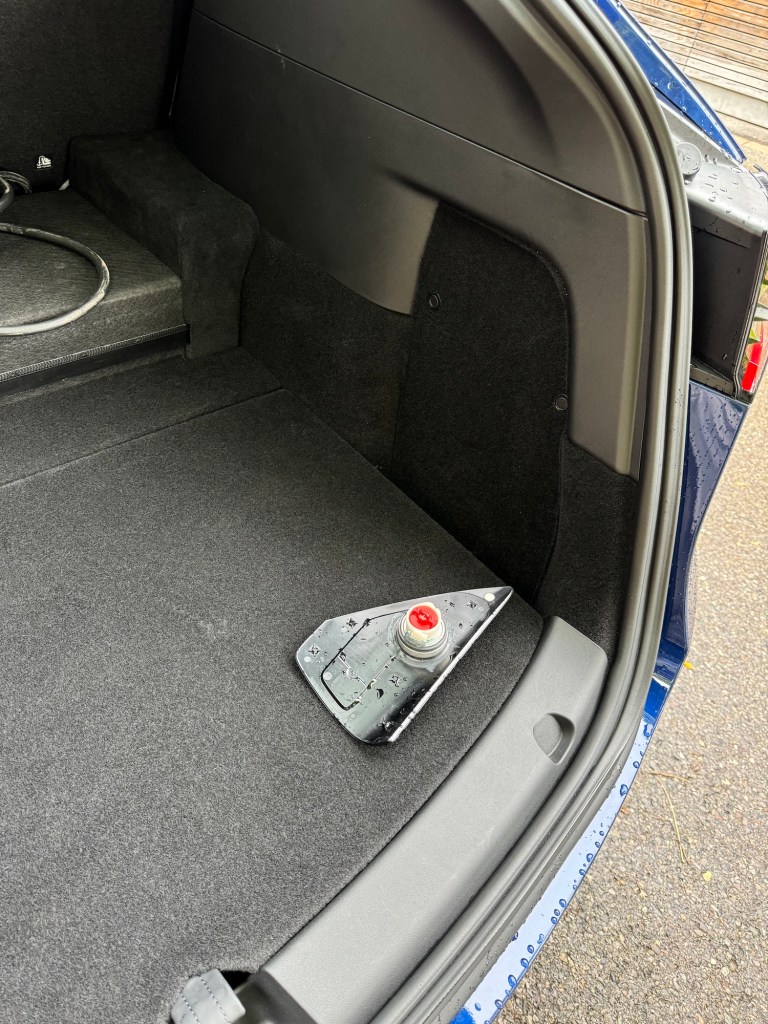
During a visit, I was able to test drive the converted Model Y and was given a tour of the test laboratory. Here are a few impressions.
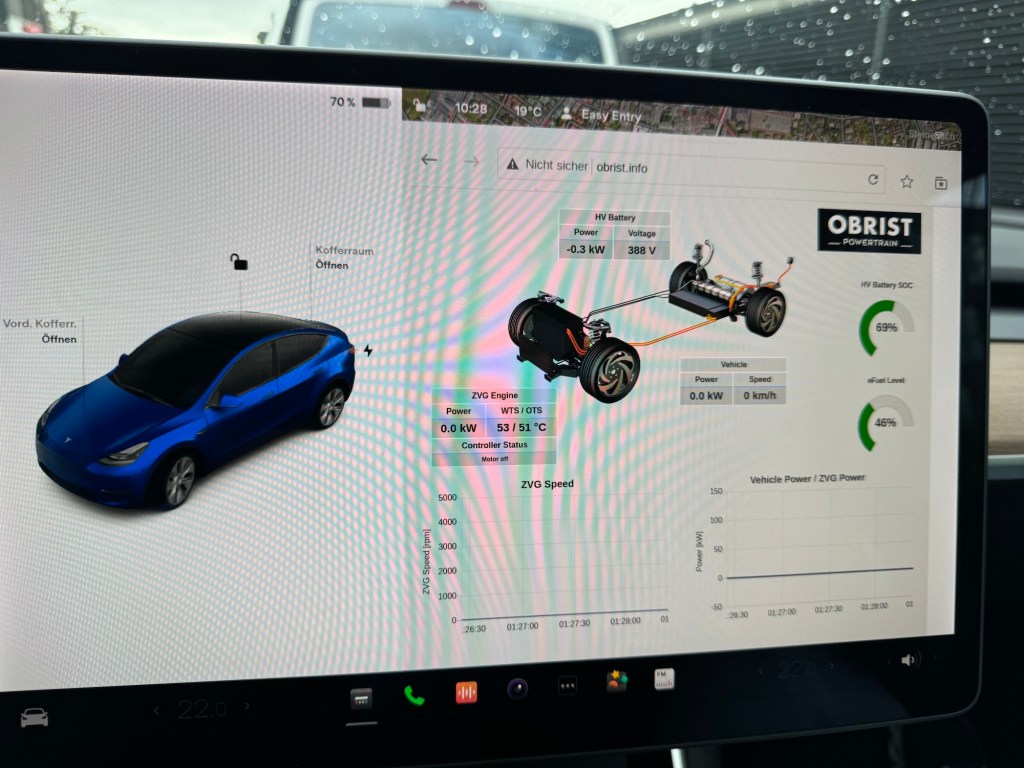
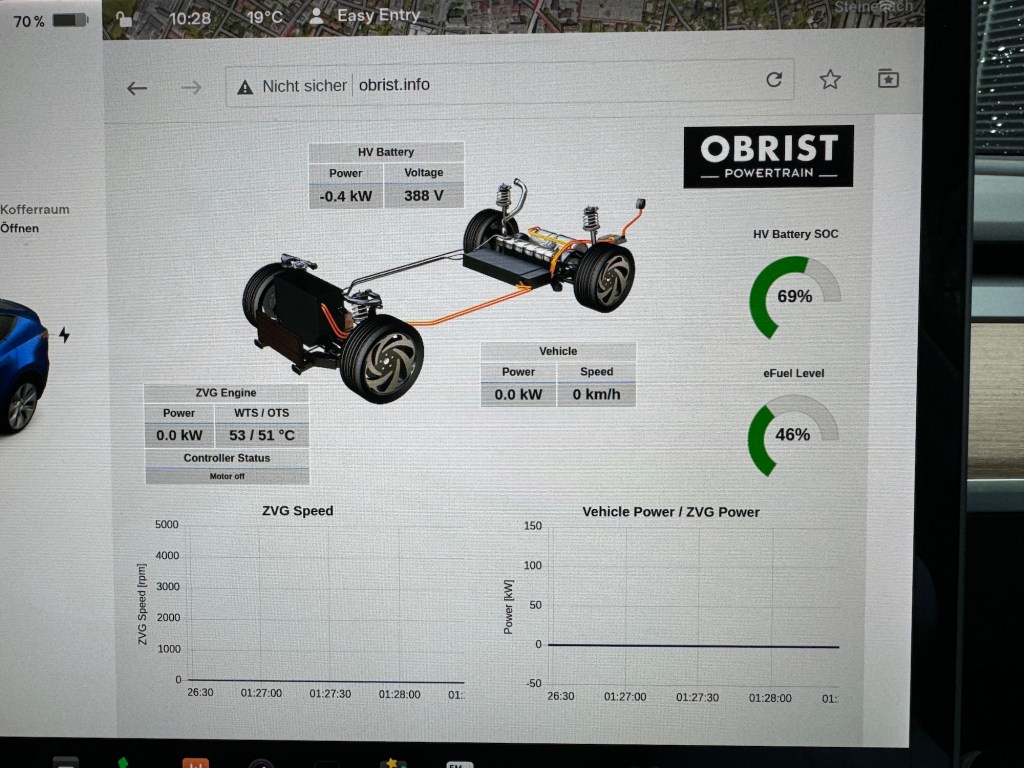
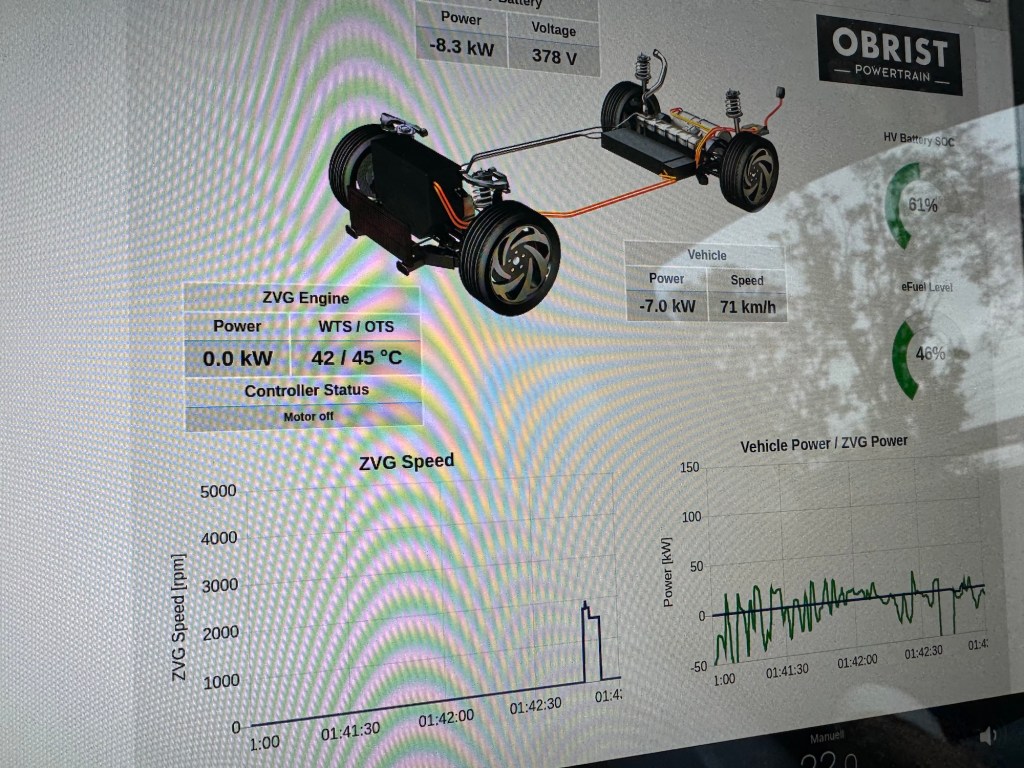
Here is a video of a test drive showing when the methanol engine switches on and when the vehicle is running on pure battery power.
This article was also published in German.

 The Last Driver License Holder...
2 Comments