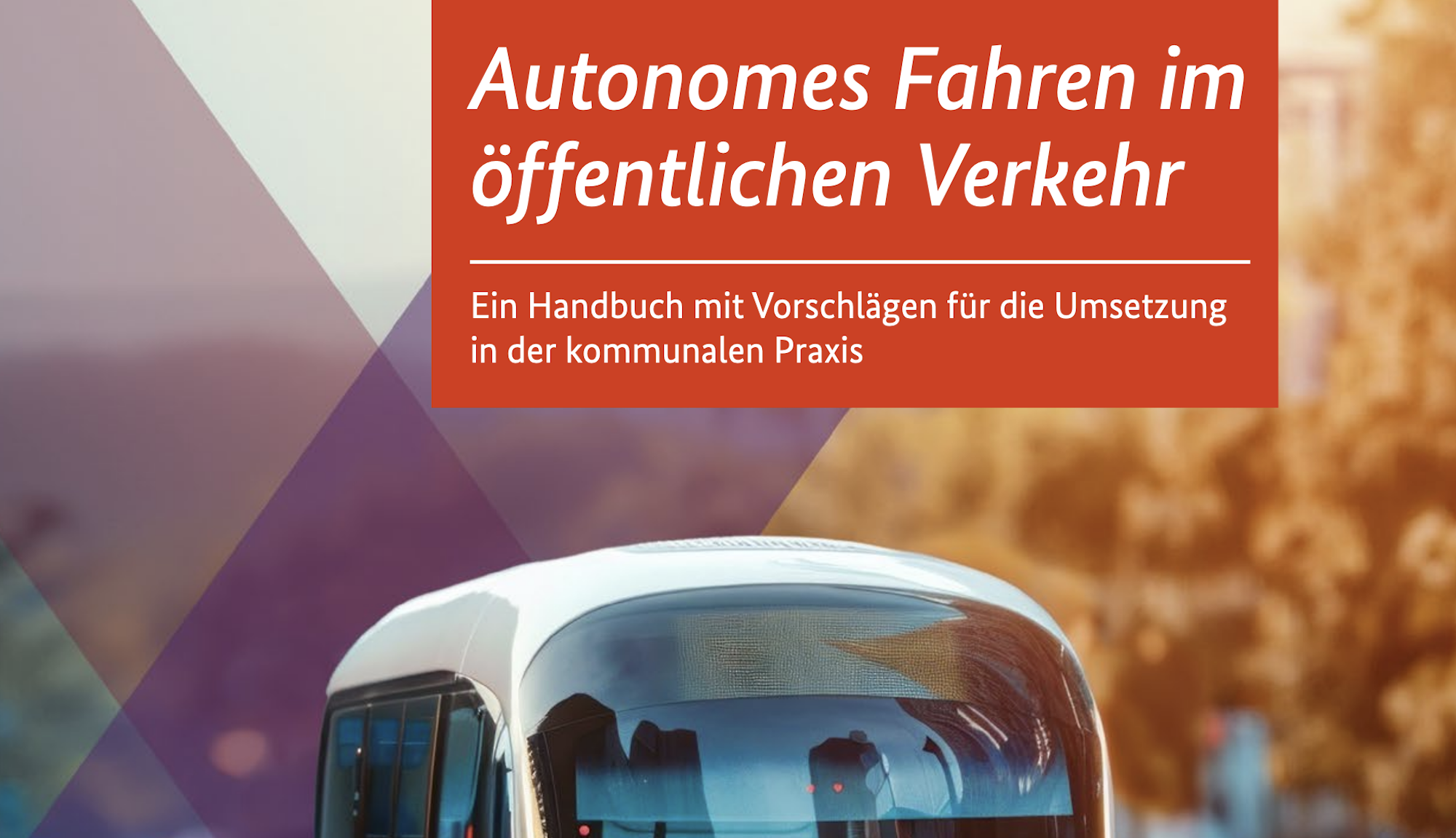
The German Federal Ministry for Digital and Transport Affairs (BMDV) has now published a handbook containing suggestions for the implementation of autonomous driving in municipal practice. On 122 pages, the authors of the handbook set out 4 phases on how such an implementation can be achieved:
- Planning framework & preparation
- Strategy development
- Operational planning
- Implementation & success control
The manual appendix also contains some checklists.
This practical handbook is in line with the Strategy for Autonomous Driving in Road Traffic presented today by the Federal Ministry (here the detailed, 52-page document in German). The strategy is intended to pave the way for autonomous driving in regular operation and create the conditions for further advancing this technology and exploiting its enormous opportunities. The aim is to develop Germany into one of the world’s leading innovation and production locations for autonomous driving.
Although Germany is a global pioneer in the legal framework for autonomous driving, there is an obvious lack of domestic start-ups and companies that are working on the technology or already have operational vehicles. While driverless robotaxis with passengers have been on the road in the USA since 2018 and on public roads in China since the pandemic and even in regular commercial operation since mid-2023, public test drives are only just beginning in Germany, such as Moia in Hamburg and Kira in Hesse.
This article was also published in German.

 The Last Driver License Holder...
1 Comment