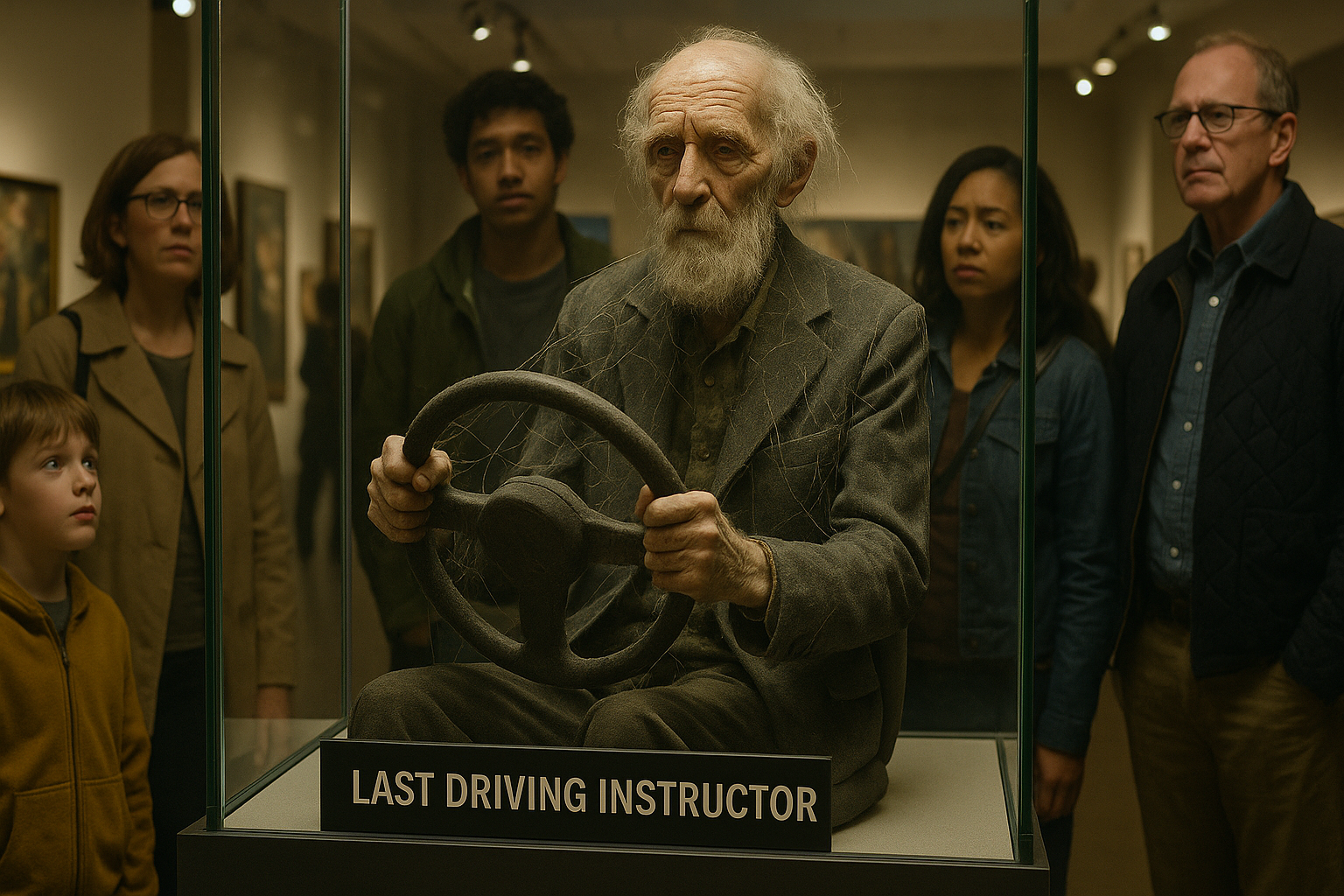
More than 120 years after the first driving school was founded in Germany, driving schools are on the brink of extinction. The architect Rudolf Kempf founded the “First German Car Driving School” in Aschaffenburg on November 7, 1904. The aim was to stimulate interest in the automobile by teaching how it works and can be operated.
The first driving school thus followed the trend of regulating the growing “automobile” phenomenon. The license plate was introduced in Baden as early as 1896, until it became mandatory throughout the German Reich in 1909. At the same time, a driving license was introduced to standardize the various regulations. Carl Benz had already received the first driving license in 1888, but only in his home region.
What has been good business for the driving school sector for 120 years, with the ever-increasing interest in cars in Germany and the number of vehicles that go with it, is now slowly beginning to crumble. While there were still almost 12,000 driving schools in 2010, by 2025 there will only be 9,000 to 10,000 (depending on the statistics), a decline of 20 to 25 percent. The decline is even expected to accelerate by 2030, when only 7,500 driving schools are expected to remain.
The causes cited by the driving school industry are, on the one hand, demographic change, in which there are fewer young people in a shrinking and ageing population and less interest in obtaining a driving license, especially in urban areas. On the other hand, the industry is struggling with the dwindling number of driving instructors, who are also becoming increasingly outdated. It doesn’t make it any easier that almost 90 percent of driving instructors are still male. The industry is failing to attract women and young people to the profession.
At the same time, the driving school industry is stubbornly ignoring another trend that will finish it off and wipe it out completely. This is the technology and business model shift that is already underway for drivers: autonomous cars and robotaxis are gradually taking over entire cities and regions. And with exponential growth. In May 2024, Waymo Robotaxis in San Francisco, Austin, Los Angeles and Phoenix were completing 50,000 driverless and paid rides per week; by May 2025, this figure had risen to 250,000. These are just the figures from Waymo, a Google sister company, which plans to be active in 10 cities and regions in the USA by the end of the year and is already targeting other countries such as Japan in addition to the USA by 2026.
Autonomous cars are not limited to passenger cars; trucks are also already in driverless operation, and Kodiak, Aurora, Gatik and many others are providing solutions for the transportation industry, which is suffering from a shortage of drivers.
Other robotaxi companies are set to receive commercial operating licenses this year, including Zoox and Tesla, as well as Chinese providers such as WeRide, DiDi, Baidu/Apollo, AutoX and Pony.AI, all of which already offer commercial and driverless robotaxi services in China and have already set up operations in Europe.
A domestic project in collaboration with Deutsche Bahn and the Rhein-Main-Verkehrsverbund has just started test operations in Germany with the KIRA project, as has MOIA, which is operated by Volkswagen with Nio and Mobileye. Safety drivers are still behind the wheel in both test operations, but the direction is clear: there will soon be no more drivers.
The news of partnerships and tests by car manufacturers such as GM with Cruise, Toyota with Waymo and Volkswagen with Mobileye also shows that private cars will soon no longer be able to manage and be delivered without autonomous driving functions. Even if, as can be seen in the following videos, autonomous cars still have room for improvement, fleets are gradually improving. Not so the humans. While some people make fun of the Waymo because it drove into the flooded section of road and came to a standstill, the same video shows a number of human drivers who had a similar experience. They also drove into the masses of water and got stuck.
People have had more than 130 years to become better drivers, and yet they still make mistakes like those in the video, driving drunk, angry, distracted and overtired. An autonomous car doesn’t do that. And if one of them gets into a new situation that it has never experienced before, all the other vehicles in the fleet learn from this one vehicle. As a result, the safety standards and capabilities of autonomous cars will inevitably rise, while those of humans as a whole will remain at the same level, despite all the efforts of the driver training industry and the built-in driver assistance systems of the manufacturers.
With the growing number of autonomous cars, the driving school industry is slowly, then suddenly no longer needed. Like the elevator operator, the lady from the office or the barrel maker, this industry will disappear without a sound. Is there any hope that the tasks of driving schools will change when there are no more drivers and AI takes over the driving? Like the book printer today no longer sets lead type, but does the layout and corrections on the computer? Like the doctor no longer works with leeches but with X-ray machines?
Perhaps, but the driving school industry would have to get seriously involved with autonomous cars for that to happen. But there is no sign of it. But time is pressing, because if developments continue as they have so far, the driving school industry will no longer exist in 2040.
Personal
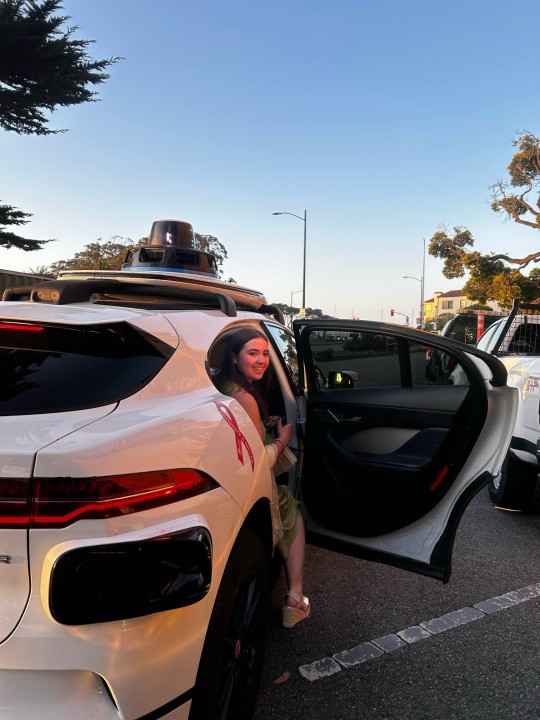
A friend’s daughter celebrated her 18th birthday at the end of May and drove to her prom (the traditional prom at American high schools) in style in a Waymo. She has no driver’s license and doesn’t want one.
This article was also published in German.

 The Last Driver License Holder...
2 Comments