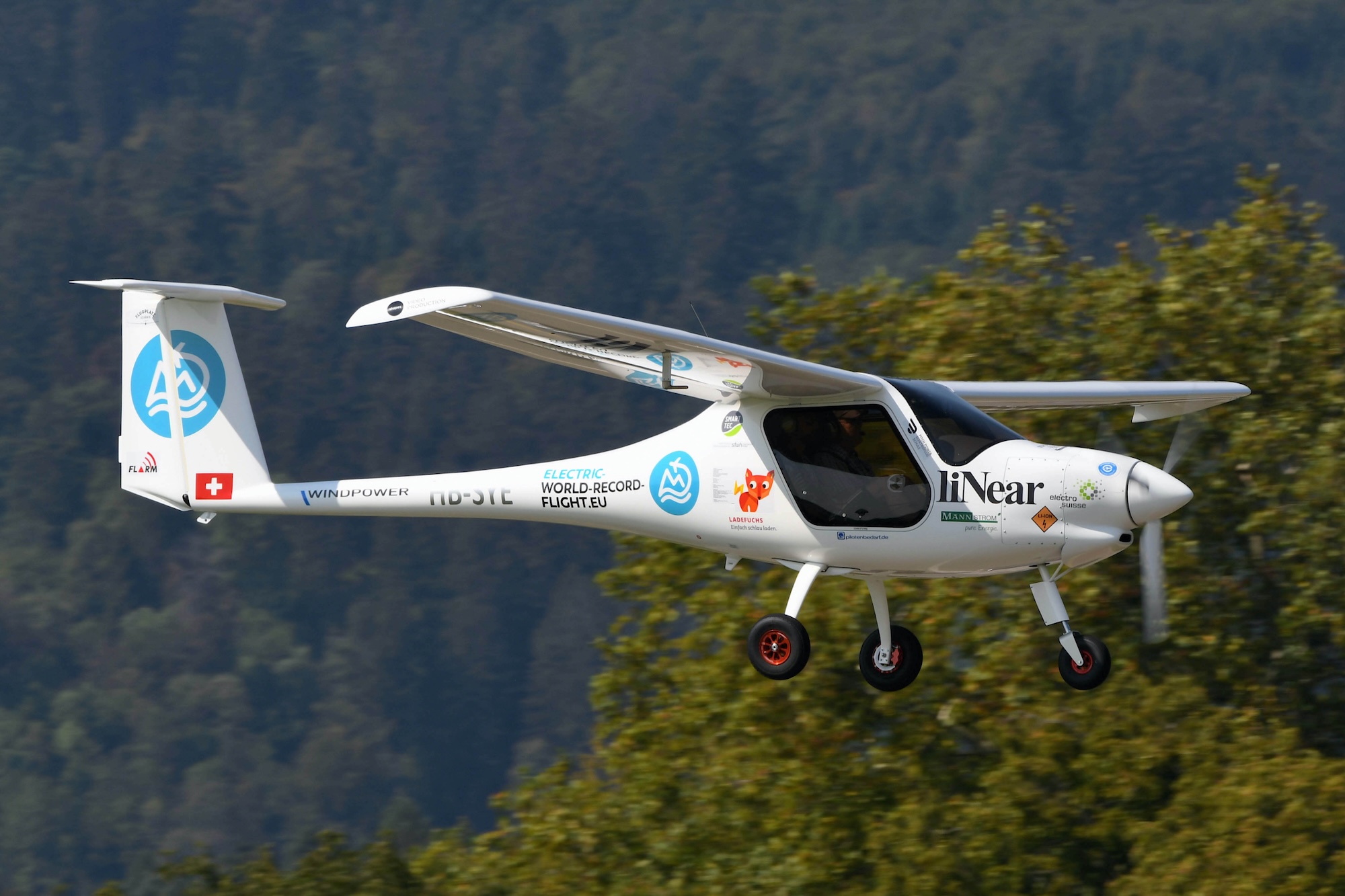
The electrification of aviation has reached a new milestone: electric flying has a second-hand market! For the first time, used, fully certified electric aircraft are coming onto the market – and at prices that are around 50 percent below the new price. We are talking about the Pipistrel Velis Electro, the world’s first EASA-certified electric aircraft.
What began five years ago with the world’s first certified electric aircraft in Switzerland is now a widely used training aircraft with over 120 aircraft delivered worldwide, thousands of flying hours and concrete experience in training operations.
Even Richard Hammond and James May, the petrol heads known from Top Gear, have already flown a race with the Velis (2.1 million views, as of 07/2025).
Five years after entering the market, an effect that we already know well from the automotive industry is becoming apparent: the Osborne effect – with far-reaching consequences.
The Osborne effect and what it has to do with electric airplanes
In the 1970s, computer manufacturer Osborne announced a new, superior model series before it was on the market. The result: nobody wanted to buy the current model, sales collapsed and the company went under. Since then, the term Osborne effect has been used to describe the phenomenon whereby the expectation of a better product devalues the existing one.
This effect has been observed in electromobility for years: Ranges are increasing, charging times are decreasing, prices are falling. Those who can, wait for the next generation. And thus unintentionally push down the prices of the current models. Analyzed in detail here.
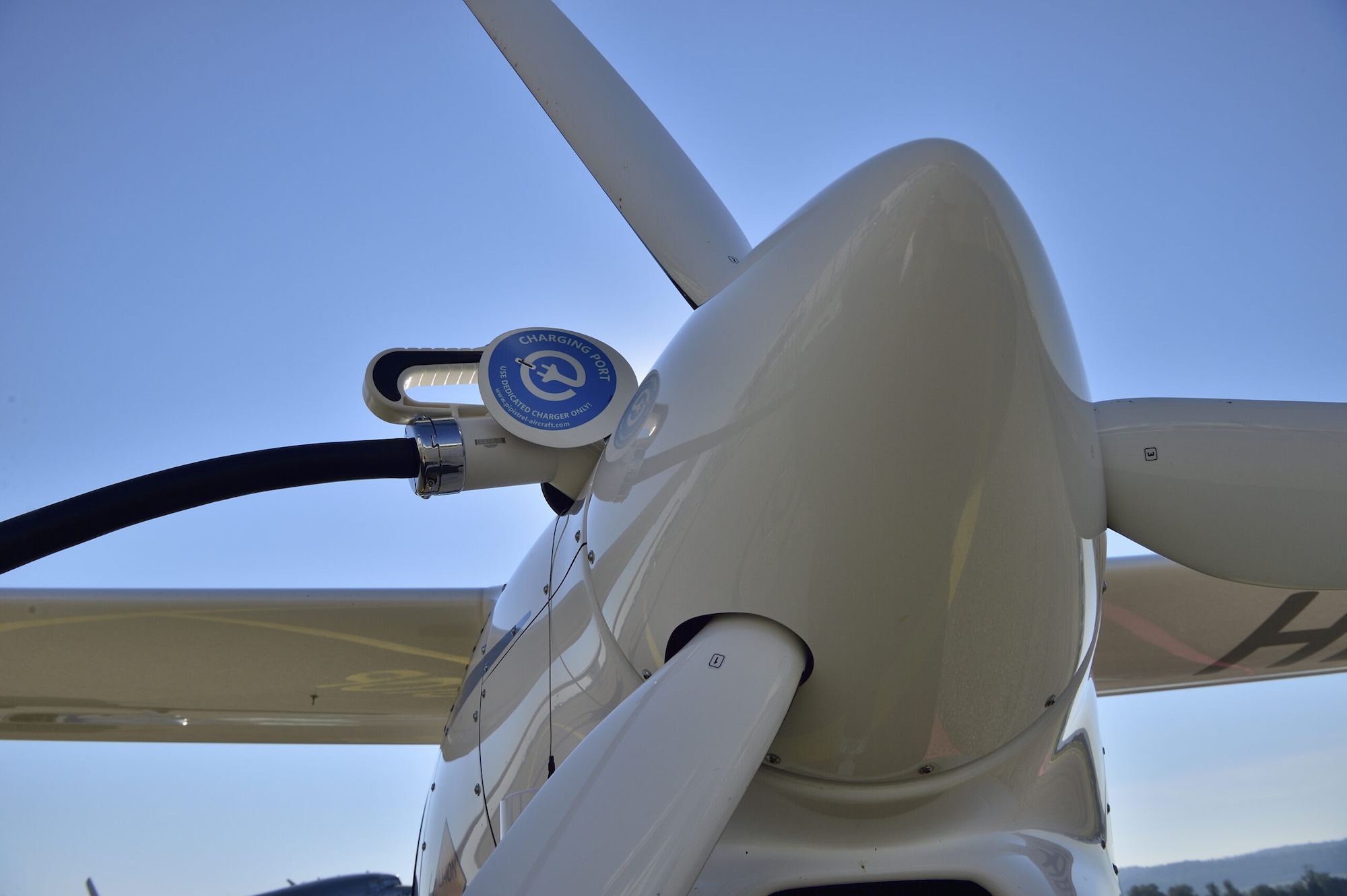
This mechanism is clearly recognizable in the Velis Electro:
- The Velis is now available, certified and flying in regular operations.
- Other, larger and more powerful electric aircraft have been announced but are not yet available.
- Flying schools and investors are asking themselves: buy now or wait?
This is where the second-hand market becomes interesting:
- Used Velis with a new battery and good maintenance are technically almost equivalent, but significantly cheaper.
- The drop in price makes them economically attractive – especially for clubs and schools with a limited budget.
Manufacturers of new electric aircraft must deliver quickly in order not to lose the first-mover advantage to the Velis. The longer the gap between announcement and delivery, the greater the impact of the Osborne effect.
The market will polarize. Suppliers with ready-to-fly, certified models will benefit immediately. Others are stuck between announcement and delivery – with the risk of being slowed down by the Osborne effect itself.
Why this is crucial for flight schools and pilots
Until now, an electric aircraft was only worthwhile for many schools if they flew several hundred hours per year. With used Velis for less than 100,000 euros, this threshold is shifting significantly. Private pilots also benefit, for example when it comes to obtaining their PPL at low cost.
Example calculation: With an electricity consumption of around 20 kWh/h, the energy costs are around 8 euros per hour. Combined with minimal maintenance requirements, this results in an extremely attractive operating cost profile.
From niche to standard?
While a Tesla Model S was still a technical statement in 2013, a Model 3 is now mainstream. The logic of the market also applies to aviation:
- The more Velis fly, the more likely airfields are to invest in charging infrastructure.
- The larger the e-Pilot:innen network, the faster the barriers to entry fall.
- The quieter the operation, the greater the social tailwind.
With the first used e-aircraft now available on the market, the trend will accelerate: Electric flying will have become a real business model by 2025.
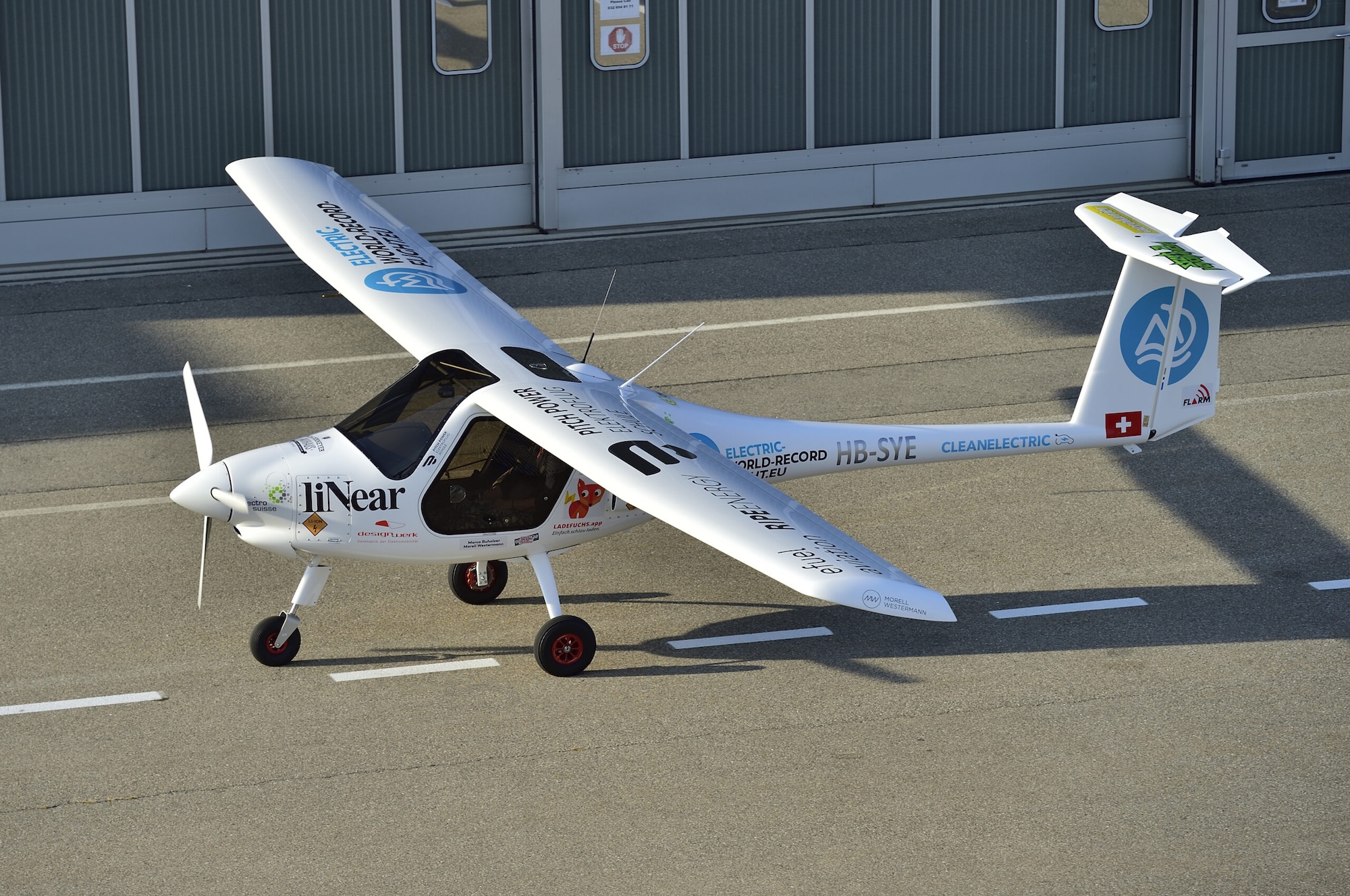
The Velis Electro is no longer a one-off. It has been part of numerous record-breaking projects, such as the electric world record flight from the Alps to the North Sea, the e-Flight Challenge (the race between e-airplanes and e-cars) and the eFORCE-Projekts (the world’s first air show with e-airplanes).
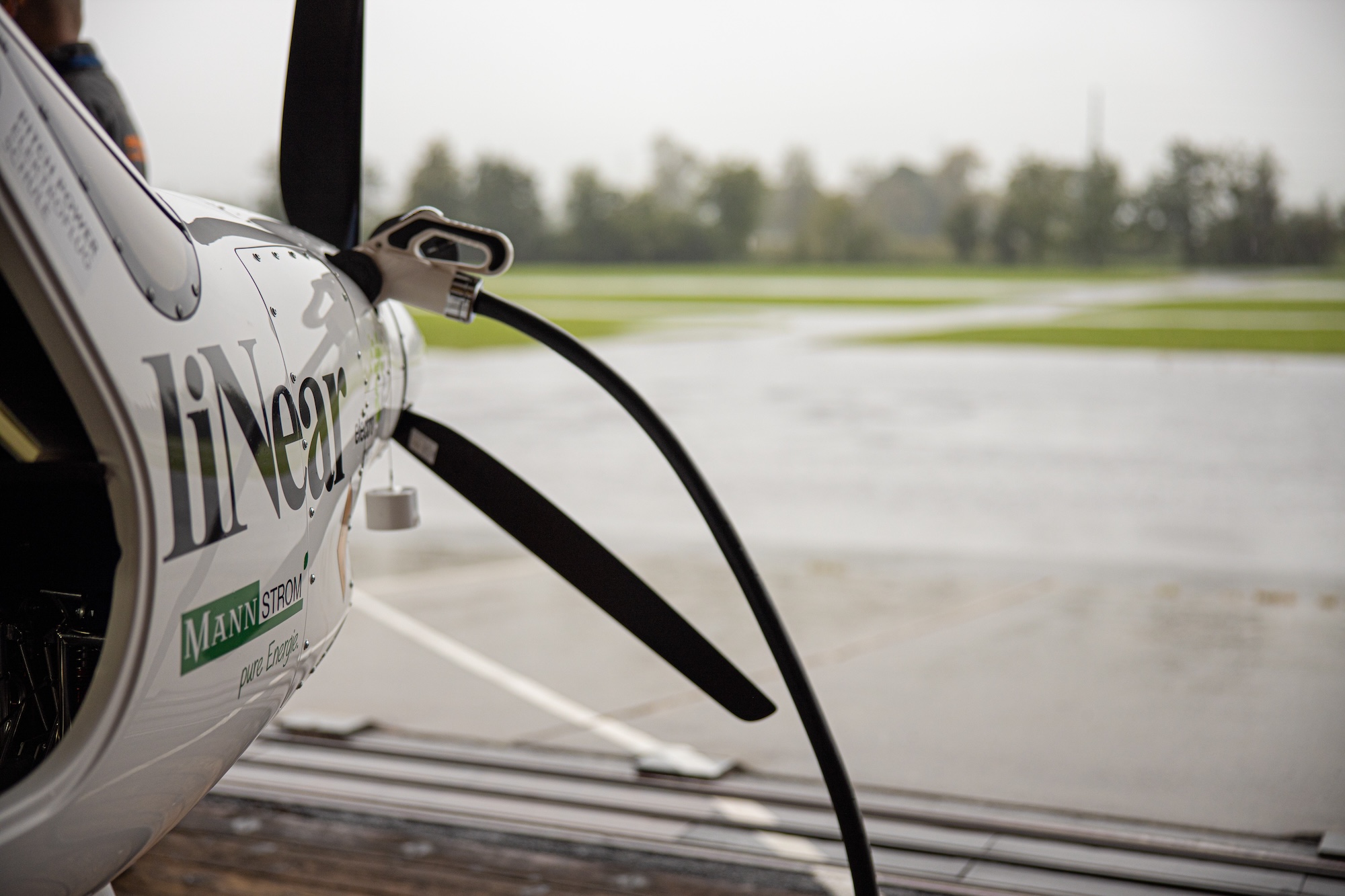
The aircraft have accumulated hours worldwide – under real conditions, with real student pilots and in daily operation. The learning curve was steep at the beginning, but the teething troubles have now been cured and solutions (for example for winter operation) have been established.
Now comes what often marks a breakthrough in the history of technology: A secondary market is emerging. This makes electric flying not only technologically but also economically accessible.
Conclusion
The electrification of aviation today is where we were 10 years ago with e-cars.
The market follows mechanisms, not ideologies. Electric aircraft like the Velis go through the same cycle as e-cars: high entry price, early adopters, experience, price reduction, secondary market. In aviation, change is slower – but unstoppable.
The next milestone, comparable to Tesla’s “Model 3 moment”, will come as soon as batteries with 400-500 Wh/kg are available. Then the electric sports aircraft will not only be equivalent, but better and cheaper than its fossil counterpart.
The first used Velis are one of these turning points. They make e-flying affordable and bring us a big step closer to emission-free aviation. We won’t be flying electrically on vacation in the next few years either, but the electrification of aviation has already begun for small and light aircraft. And just as we see e-trucks on the roads today, slightly larger aircraft will also be flying electrically in the next few years.
A further step has been taken on the road to sustainable aviation. E-flying will become cheaper and therefore accessible to a larger target group.
Further sources
- Landing page with Business Case
- Video for flight schools
- Video for pilots
This article was also published in German.

 The Last Driver License Holder...
1 Comment