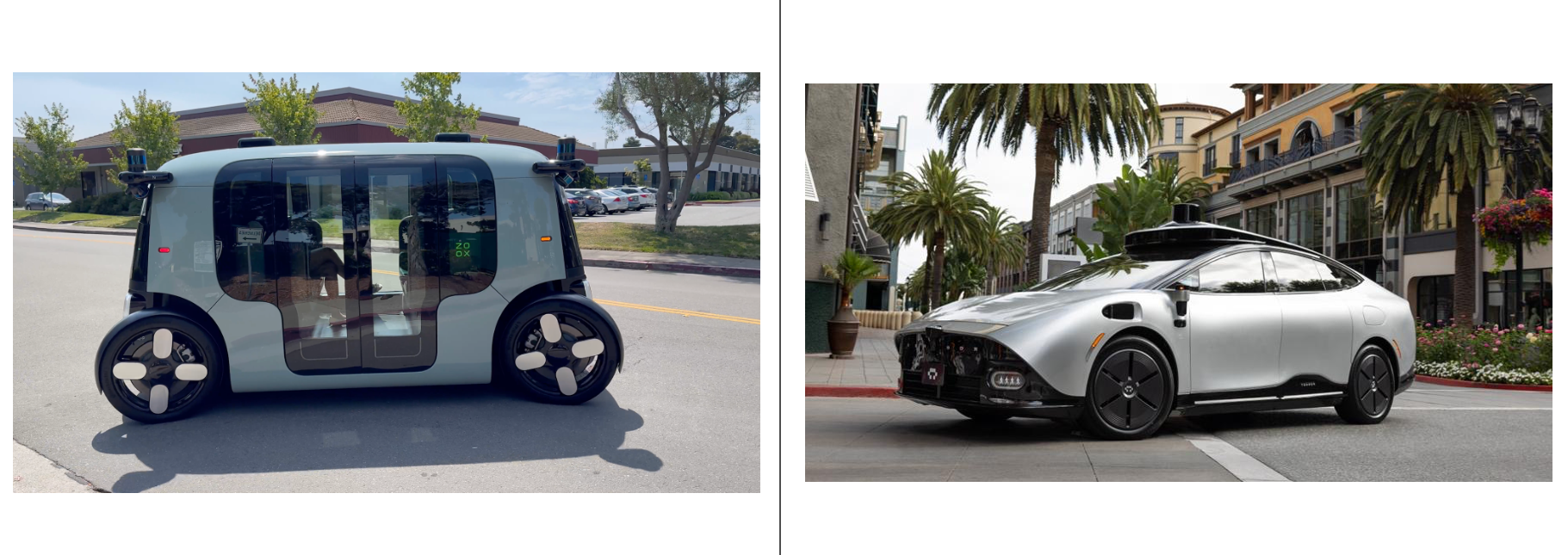
Robotaxis are almost old news in Silicon Valley. The technology works, as evidenced by the more than one million driverless commercial trips per month that Waymo already carries out. Now the focus is on scaling fleets to new cities and regions, which will bring additional complications such as snow, rain, and other road conditions.
While robotaxis in this category are still expected to cost between $200,000 and $250,000 per vehicle, the next milestone is already being targeted. Namely, that of private autonomous vehicles, or PAVs for short, or less cumbersomely, the robocar. Not every proud car owner will be satisfied with robotaxis, but will demand that private cars also be equipped with autonomous driving technology. The big obstacle here is the price. No one is willing to shell out six-figure sums for a private car that is parked 90 percent of the time. Perhaps this additional technology could cost a few hundred or even a low four-figure sum in euros, but who offers such a thing?
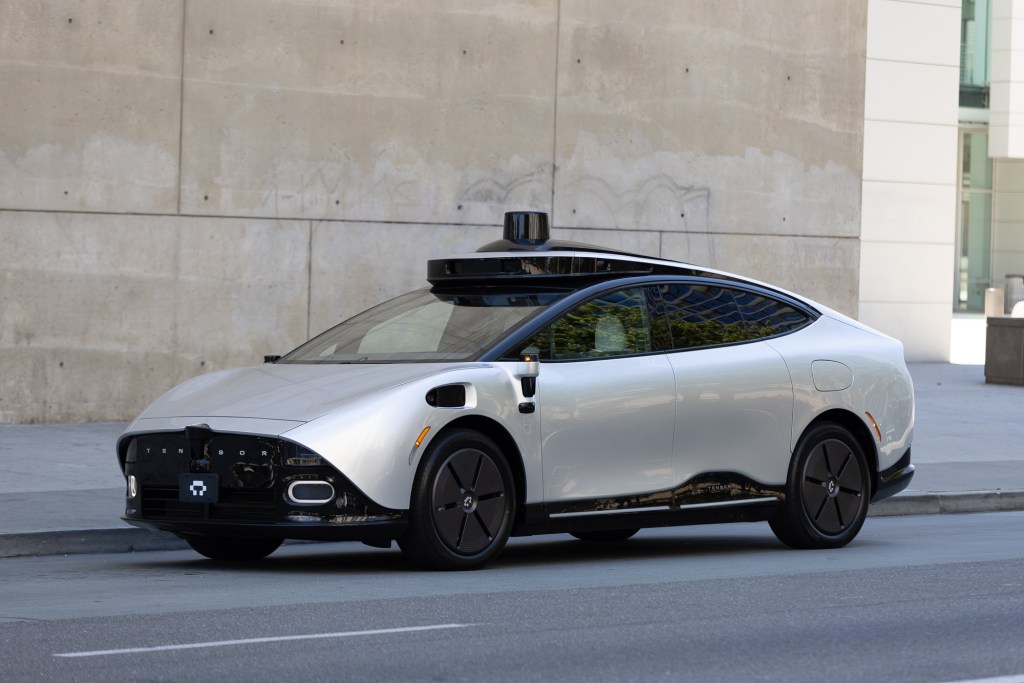
AutoX/Tensor
Tensor, formerly known as AutoX, has thrown down the gauntlet and kicked off the race for PAVs. The question is how good Tensor’s chances are of offering such robocars at attractive prices in partnership with Vinfast. The sensor suite is quite extensive and potentially quite expensive, with 37 cameras, 5 lidars, 11 radars, 22 microphones, and 10 ultrasonic sensors, and the schedule is quite aggressive, with delivery set to begin in the second half of 2026.
Tesla FSD
For years, Elon Musk has been promising that private, autonomous cars will be available in “six months,” “by the end of the year,” or “next year” with Full Self Driving (FSD). However, the camera-based software has not yet manifested itself in a way that allows Teslas to drive autonomously with complete safety. To make matters worse, there are repeated major disruptions in Tesla FSD and the supercluster team behind Tesla Dojo. The situation is not made any easier by the fact that, as many predicted, the hardware kit in older vehicles – and we are talking about cars no more than two or three years old – is not up to the requirements of the current FSD. There are no plans for a retrofit, which is not exactly pleasing to many customers who have paid for Tesla FSD.
GM and Cruise
Following GM’s disastrous decision in December 2024 to shut down its self-driving technology subsidiary Cruise, GM now appears to be regretting that decision. According to Bloomberg, GM now wants to rehire former Cruise employees to take the technology from Cruise’s robotaxis and develop it further for robocars.
But who among the former Cruise employees in their right mind would still trust GM and want to put themselves back in the hands of their erratic parent company, risking being fired again at the next shareholders’ meeting? Not to mention that almost the entire technology infrastructure is gone and key figures in development have already found new jobs with a much more motivated competitor. Several former employees also reported how the replacement of Cruise’s management team with Detroit veterans (with the corresponding attitude) after the incident, which was not their fault, led to a complete collapse in motivation and numerous departures of top talent.
Interestingly, there have been repeated sightings of former cruise ships in the San Francisco Bay Area in recent months.
CARIAD/Bosch
After Volkswagen recently announced the imminent launch of a driverless robot taxi service with Moia (my skeptical assessment of this can be found here), a few weeks later VW subsidiary CARIAD and Bosch announced that they had achieved a “breakthrough in automated driving.”
However, upon closer inspection, this “breakthrough” is nothing more than a Level 2 driver assistance system, which is to be delivered to vehicles from mid-2026 and will initially only be permitted on highways. In the long term, the partners are aiming for a Level 3 system.
In other words, Volkswagen and Bosch will definitely not be able to offer a robocar in the near future, especially not with their own, i.e. German, technology.
Nvidia/Mercedes
The Stuttgart-based company, which has focused its strategy on luxury cars, was actually a pioneer in autonomous driving. As early as the mid-1980s, self-driving technology was being researched as part of the Prometheus project.
In recent years, Mercedes has invested considerable energy in developing self-driving technology, launching Intelligent Drive Pilot, a Level 3 system approved for use on highways in Germany, California, and Nevada, and Intelligent Park Pilot, a Level 4 system. However, before we get too excited, it is important to note that both of these systems are very limited and not particularly practical.
However, Mercedes seems to be a long way from developing a robocar.
Summary
With the introduction of the Tensor Robocar, the race for a private autonomous car has begun. Every traditional car manufacturer will strive to find salvation in it. Their familiar business model is not the operation of a robot taxi fleet (see GM with Cruise, Volkswagen with Moia, but also Tesla with Robotaxi), but the sale of cars to private and business customers. The first to succeed in producing an affordable vehicle with self-driving technology and possibly even a dual mode, where the owner can switch between manual and autonomous driving, will have an advantage and a chance of survival. Tensor has thrown down the gauntlet and become the hunted. The company now faces the challenge of delivering as promised.
This article was also published in German.

 The Last Driver License Holder...
1 Comment