
Whereas the focus on autonomous cars has so far been on robotaxis, which can be ordered via an app and used in fleets as ride-hailing vehicles, attention is now shifting to autonomous cars that replace private cars.
Tensor is the first company to introduce the Tensor Robocar, which was specifically designed for private ownership with a dual operating mode—both manual and autonomous. The vehicle can be controlled by a human driver or used as a Level 4 vehicle.
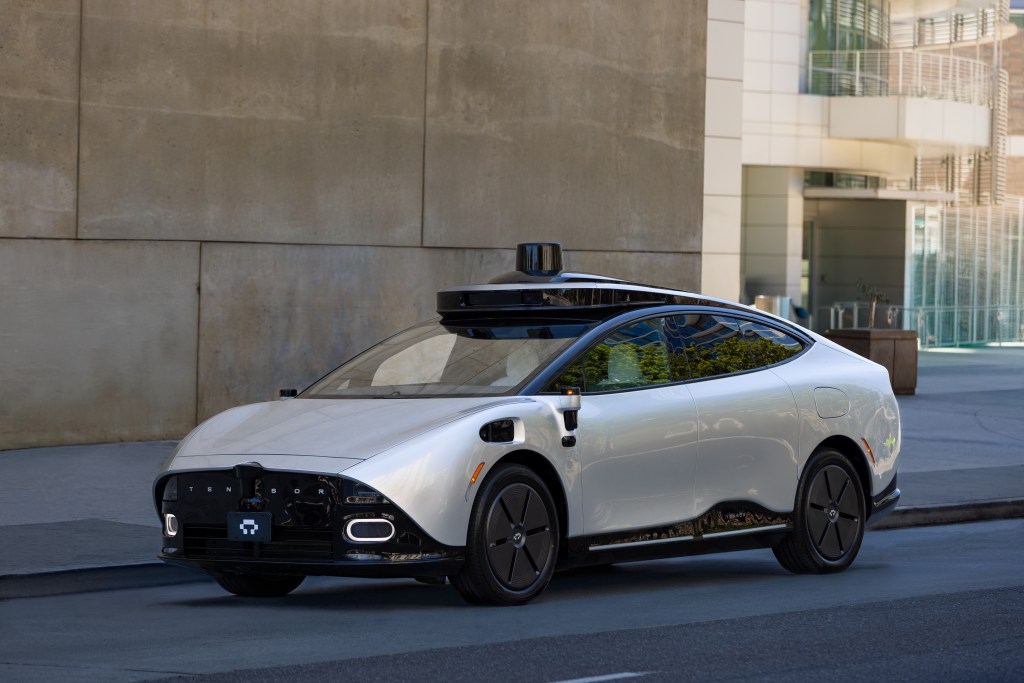
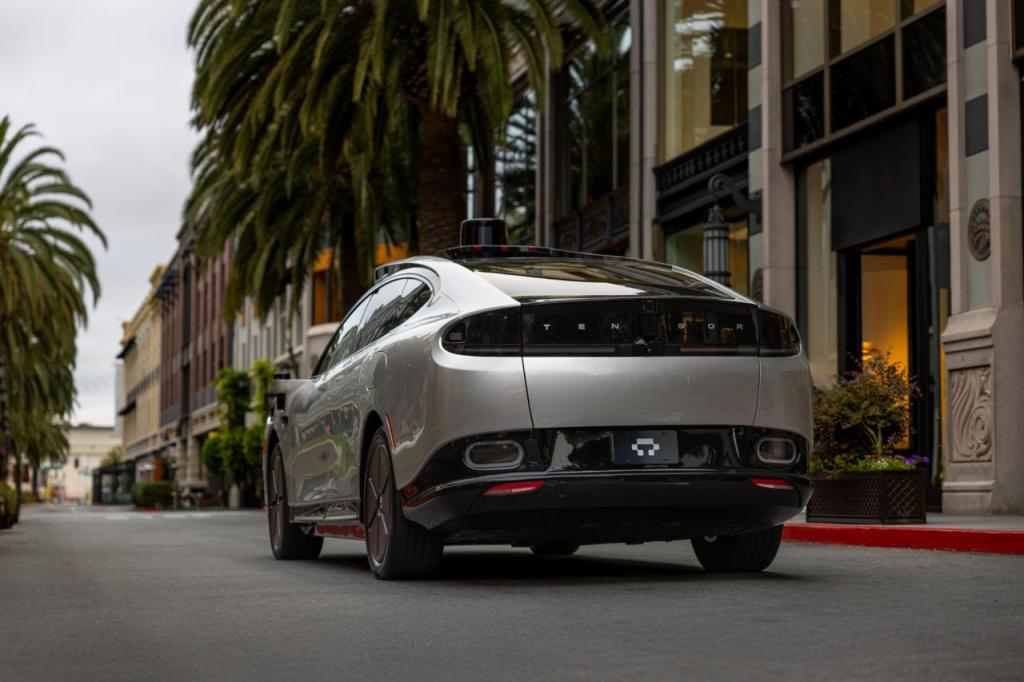
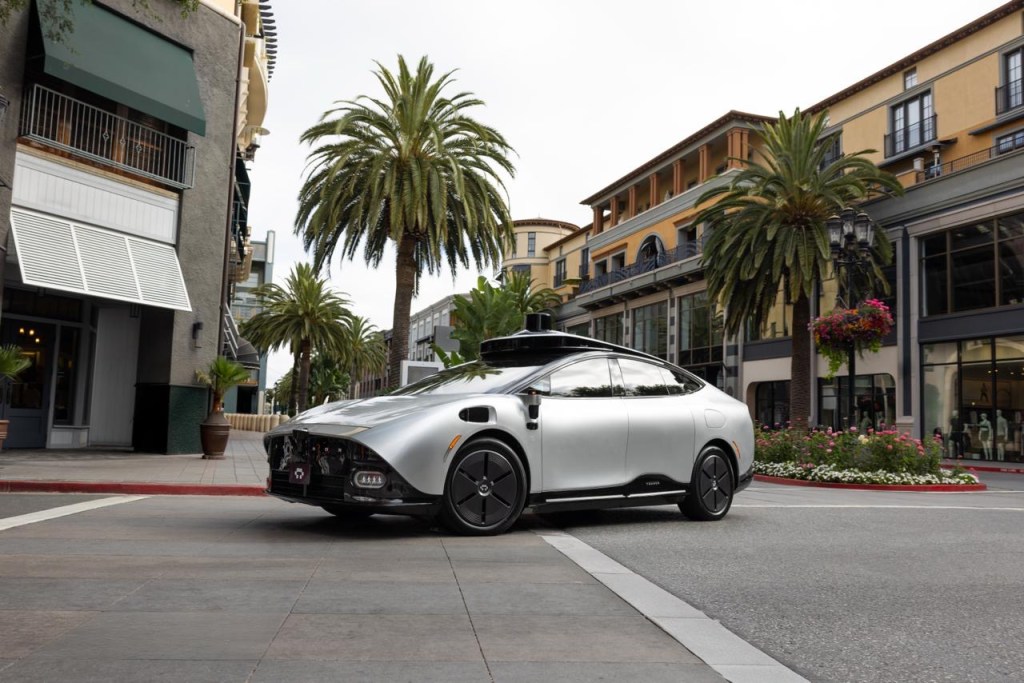
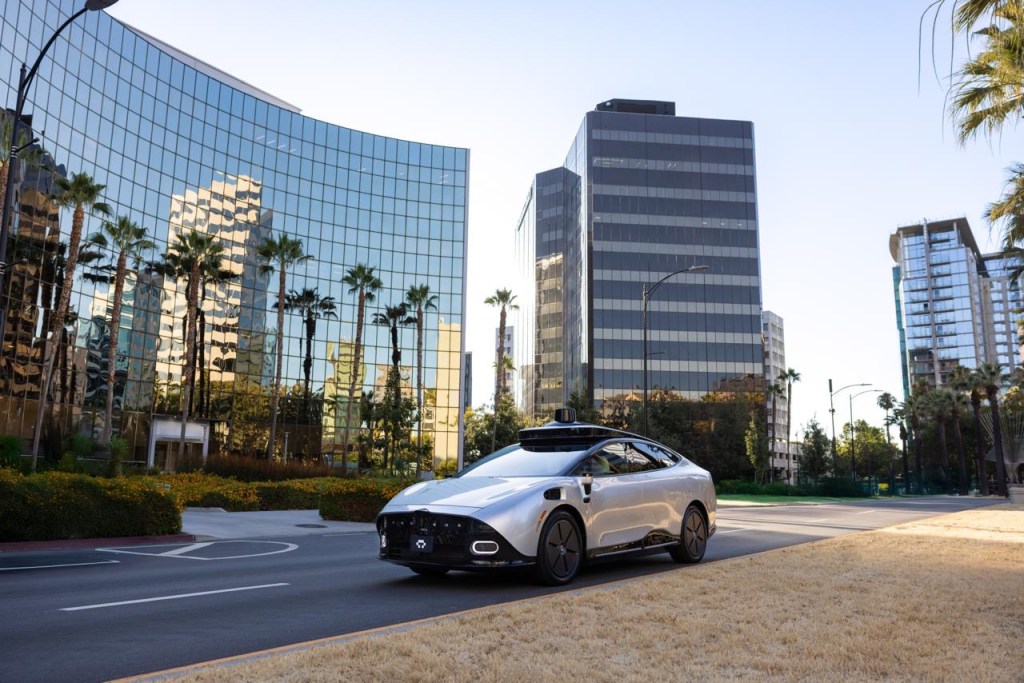
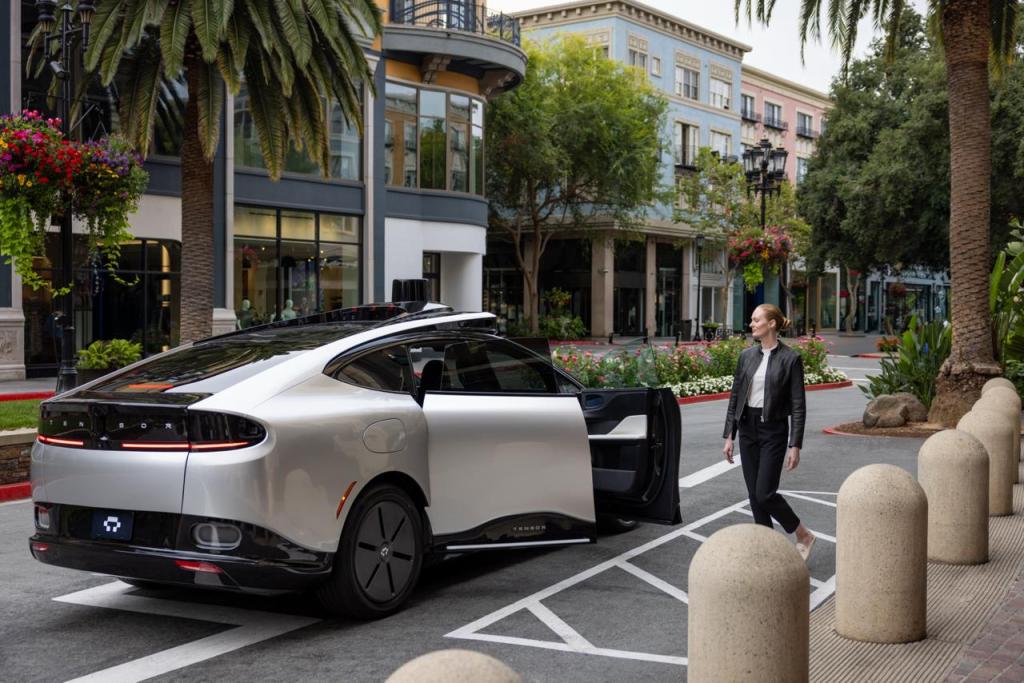
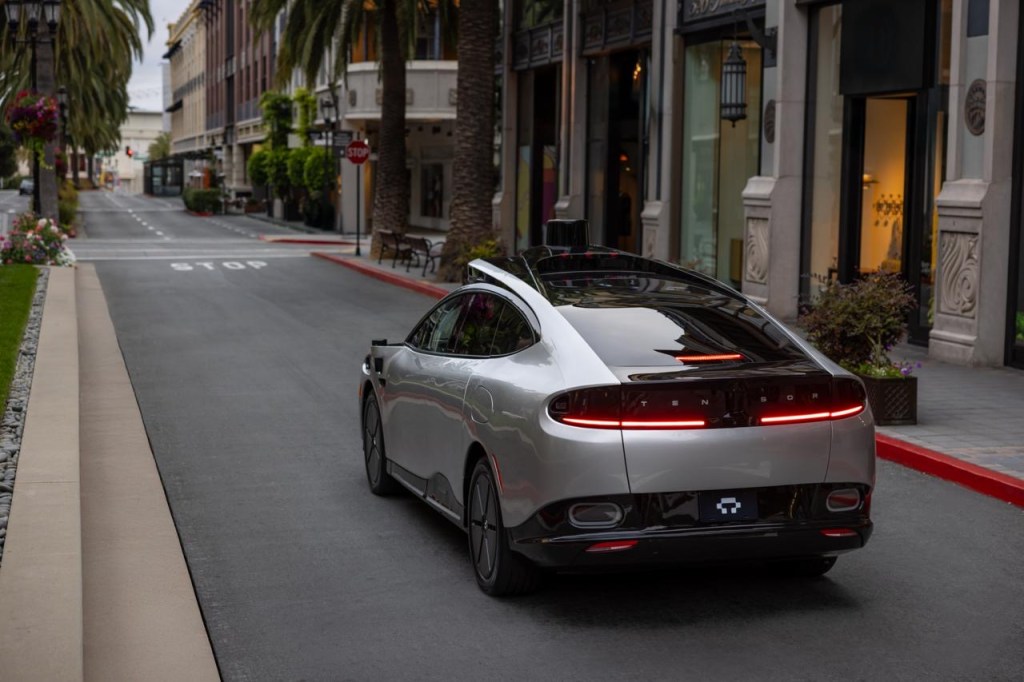
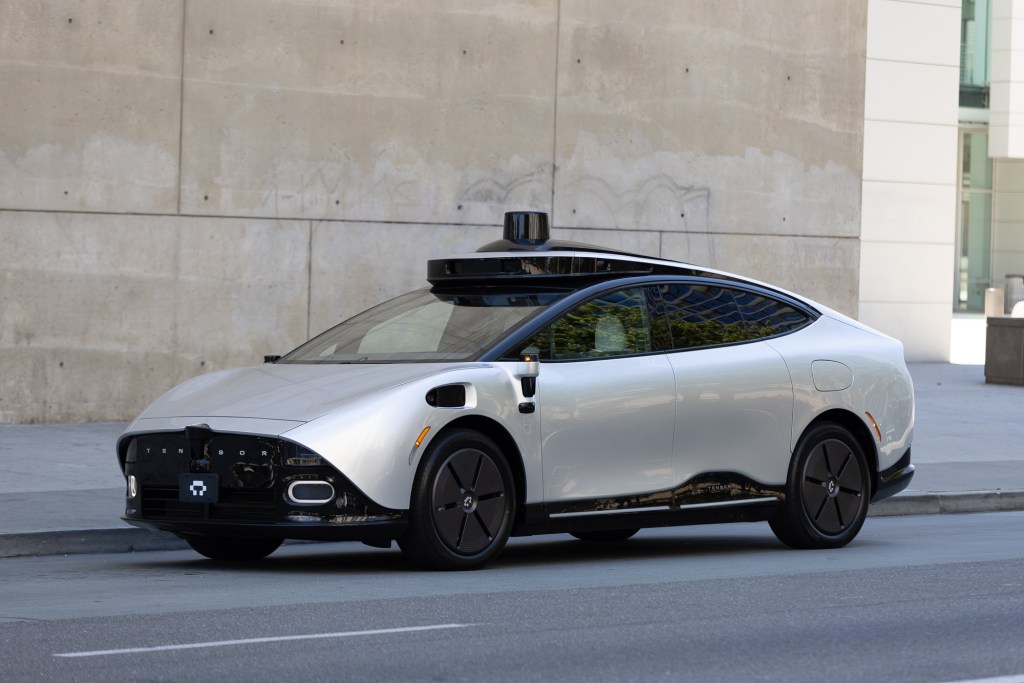
Tensor is the only fully autonomous L4 Robocar that you can own.
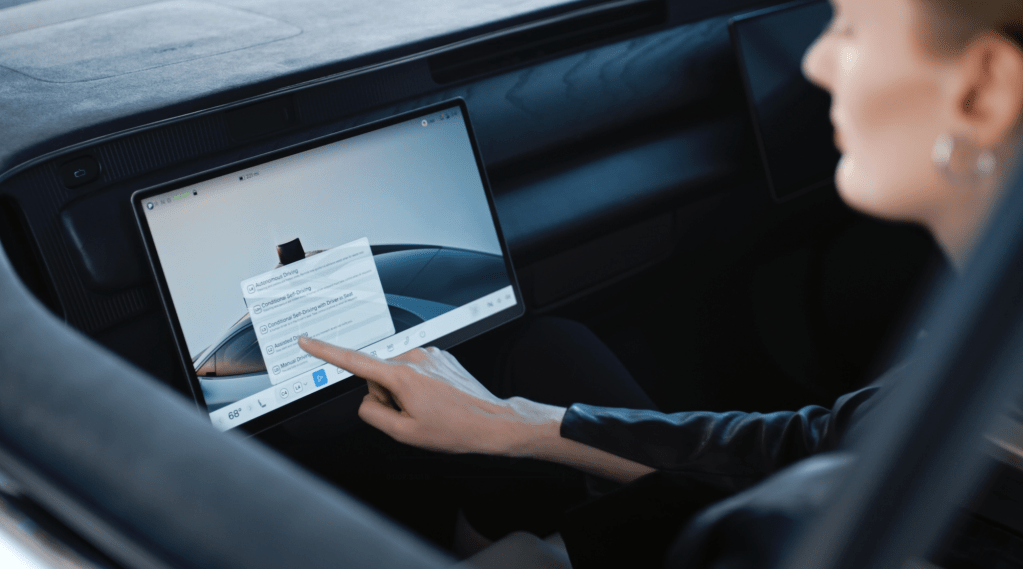
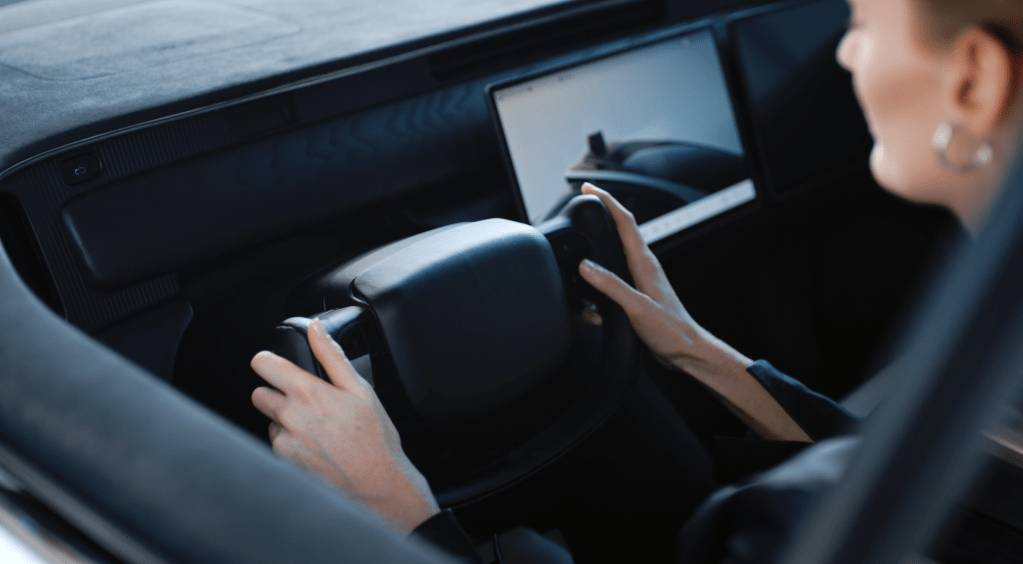
An interesting feature is the dual mode, which includes a retractable steering wheel and pedals, as well as a touchscreen that can be moved from the center to the driver’s position on the driver’s side. The vehicle can be controlled entirely manually, in which case a yoke steering wheel is available and the touchscreen is located in the center of the vehicle and displays driving data. If the driver selects autonomous Level 4 mode, the steering wheel retracts into the console, the pedals also retract, and the touchscreen moves from the center to the driver’s side. The front passenger and the two passengers behind the front seats also have a touchscreen of the same size.

Sensors
The sensor equipment includes 37 cameras, 5 lidars, 11 radars, 22 microphones, 10 ultrasonic sensors, 3 IMUs and GNSS for navigation, 16 collision detectors, 8 water level sensors, 4 tire pressure sensors, 1 smoke detector, and three-channel 5G.
The vehicle interior includes four coverable cameras, one each at the front of the driver and passenger seats, and one each for the passengers in the rear of the vehicle, which can be used for online meetings from inside the vehicle.
The 22 microphones, which are installed both inside and outside the vehicle, allow the owner or passengers to talk to the vehicle and give instructions using a proprietary, multimodal speech model. It is also possible to communicate with the vehicle using voice commands via the Tensor app on a smartphone. Thanks to this integration, the vehicle is also being promoted as an agentic AI vehicle.
NVIDIA provides the onboard supercomputer with 8,000 TOPs, enabling AI and safety through redundant systems.
Vehicle Design
Access to the vehicle is via the app, buttons on the B pillar, or facial recognition. The doors are so-called coach doors, as used by Rolls Royce or Bentley, for example. The front doors open to an angle of 89 degrees, while the rear doors open to an angle of 81 degrees.
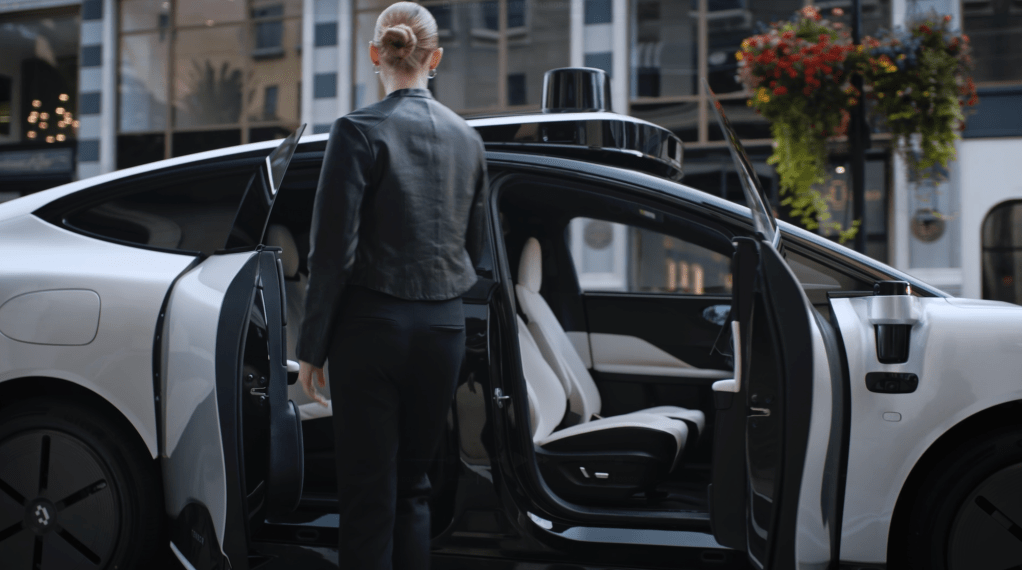
The vehicle design takes the sensors into account. Both the front and rear are designed so that the lidar mounted on the roof has an unrestricted viewing angle. The lidars on the sides, front, and rear are also mounted so that they are embedded in the car’s shape without restricting visibility. Additional retractable sensors are also mounted on the undersides of the doors, which can detect objects that are trapped or located near the vehicle. Small wipers and spray nozzles are also attached to the sensors to remove dirt or moisture from the cameras, for example. The most important sensors are even equipped with covers that protect them when the vehicle is parked.
The waste heat from the sensors and processors is used to heat the vehicle interior in colder weather conditions. The thermal management system is also designed to be redundant. For example, the systems required for autonomous driving are separated from the main cooling unit for the battery.
The front grille is flexible and opens at lower speeds and closes at higher speeds to protect the electric motor and battery pack from damage caused by objects.
The steering wheel is drive-by-wire from partner Autoliv, and the brakes are brake-by-wire from partner Bosch.
Great importance was also attached to redundancy. Tensor’s electrical and electronic architecture offers complete redundancy in the areas of power supply, communication, and control. This is intended to ensure fail-safe performance in every scenario.
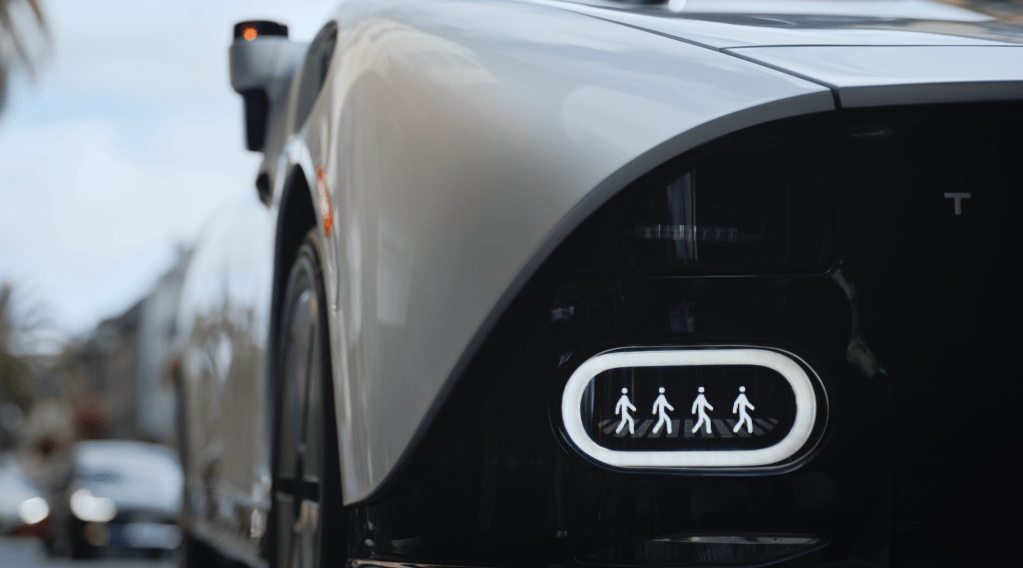
Messages for pedestrians and other road users are also integrated into the LED headlights on the exterior of the vehicle. This shows pedestrians crossing the road that the vehicle can see them by displaying figures on a zebra crossing. It also indicates whether someone is getting in or out of the vehicle.
Vehicle Dimensions
The Tensor Robocar is surprisingly large.
The trunk is very spacious, but the frunk is much smaller.
Vehicle Production
The Tensor Robocar is manufactured by Vinfast, a Vietnamese electric car manufacturer, at the Hai Phong factory in Vietnam. The design, self-driving technology, and sensor selection and arrangement are all provided by Tensor.
Artificial Intelligence
Tensor’s AI is based on the Tensor Foundation Model. Unlike traditional rule-based systems, it is fully data-driven and learns perception, prediction, and planning from real and simulated datasets. Based on transformer architecture and sensor fusion, it also navigates difficult conditions such as nighttime, glare, fog, and rain. Tensor’s dual-system AI mirrors human perception: System 1 provides fast, reflexive responses through imitation learning from experienced drivers, while System 2 uses a sophisticated multimodal visual language model to think through rare and complex edge cases. This should enable Tensor to handle not only predictable but also unforeseen situations.
Owners can choose whether they want to share their own vehicle’s driving data with Tensor so that new data can be used for training and further developing the Tensor Foundation Model.
Privacy
Great importance was placed on data protection and privacy. Owners can choose whether or not to share data with the Tensor Cloud. The AI learns the preferences and driving routes of the vehicle owners, or their location, from their interactions with the vehicle, but does not share this information with Tensor or third parties; instead, it is stored locally on the vehicle. In addition, physical covers for the cameras and microphone mutes are built in.
Updates
Software and AI updates are delivered via over-the-air (OTA) updates, as is the case with smartphones and other advanced manufacturers.
Availability and Price
The Tensor Robocar is expected to be available in selected markets in the US, Europe, and the Middle East starting in the second half of 2026. The vehicle can already be pre-ordered here. The company has not yet disclosed the exact price. There are also no details yet regarding range.
Company

Tensor was founded in August 2016 in the US under the name AutoX and operated robotaxis under this brand in several cities in China. These activities have now been discontinued in order to focus entirely on Robocars. Tensor has offices in Barcelona, Spain, Luxembourg, Dubai, and Singapore.The CEO is Jay Xiao and the COO is Jewel Li, CMO Amy Luca, and Chief Business Officer Hugo Fozzati.
This article was also published in German.

 The Last Driver License Holder...
4 Comments