
While Tesla’s market capitalization has once again reached record highs—$1.3 trillion, or €1.1 trillion—despite slumping sales figures in Europe (-40%) and North America (-20%), the question arises as to how this valuation came about, and whether it is justified.
Tesla is not and has never been a traditional car manufacturer. Not only because the company has managed to force the entire industry to switch to electric cars from scratch, but also because the Fremont-based company has always seen itself as a software company. And even more than that: They see themselves as an AI company.
Not only are the cars very software-centric, with unmatched quality in terms of operation and user interface on the touchscreen and with the app, but Full Self Driving (FSD) is also an autonomous driving function that no other manufacturer can offer at this level and with this range of functions. And this is artificial intelligence.
Tesla rightly sees itself as an AI company whose valuation is, or rather was, justified in comparison to traditional car manufacturers. The promise and expectation of investors that this will open up new markets that Tesla can occupy thanks to its expertise and software fueled the share price and thus the market valuation.
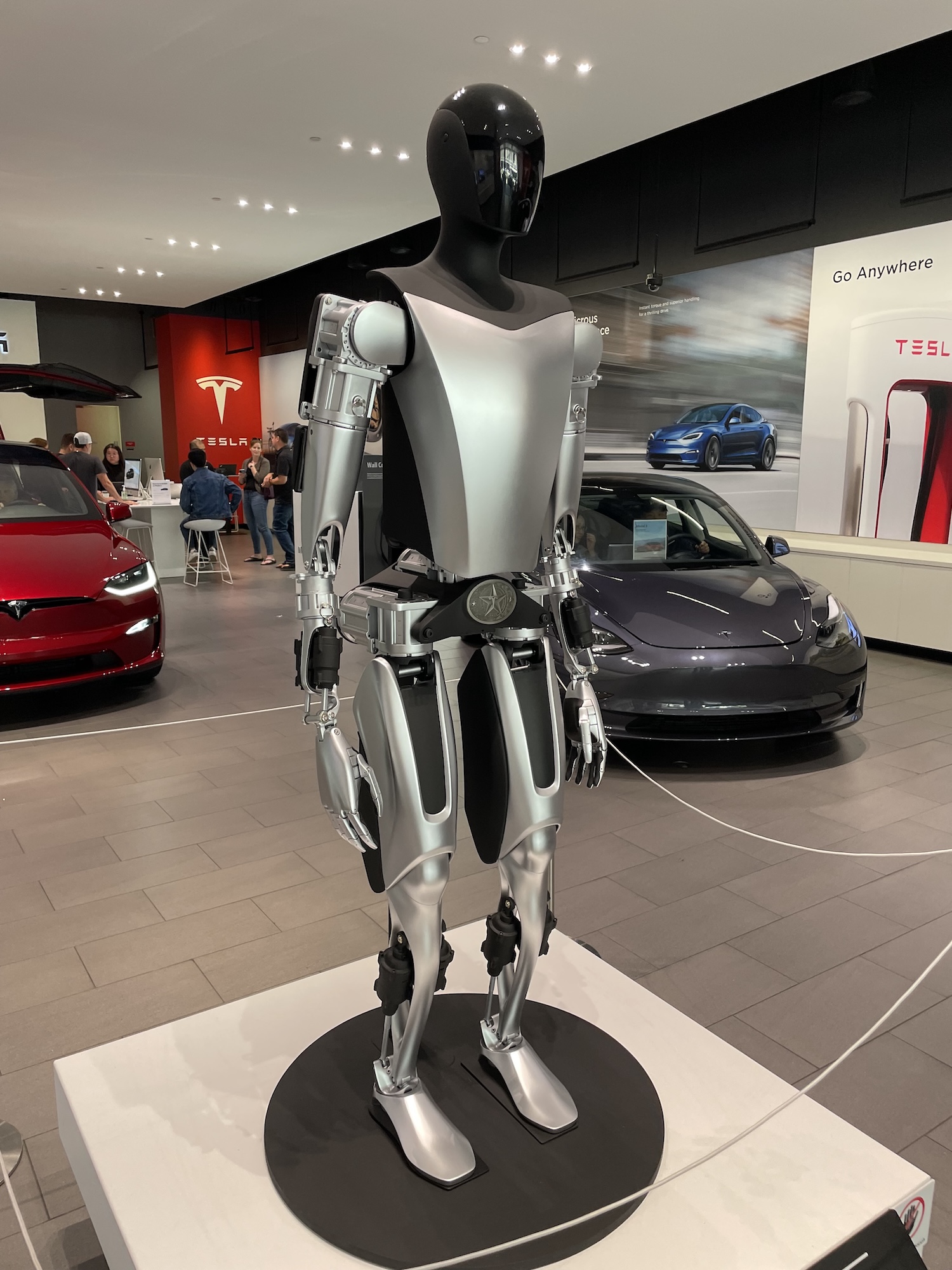

With the Tesla Optimus humanoid robot, Tesla is simultaneously pursuing another promising venture. According to Musk, humanoid robots are expected to account for 80% of Tesla’s revenue, making them a larger business than cars. By 2035, analysts anticipate globally up to 225 million humanoid robots in households alone, with a market volume of $2.8 to $3.1 trillion.
So far, so good. It all makes sense so far. But behind the Tesla scenes, things don’t seem to be running so smoothly. In recent years, the Tesla AI team at Tesla Dojo has been marked by upheaval and turmoil. Several times, parts of the management team left or were let go by Musk. And at the beginning of August, electrek reported on another departure of AI experts from Tesla Dojo, which was so significant with 20 employees that the Tesla Dojo team could effectively be considered defunct. Tesla does not expect to have a functional Dojo 2 again until next year.

KREATIVE INTELLIGENZ
Über ChatGPT hat man viel gelesen in der letzten Zeit: die künstliche Intelligenz, die ganze Bücher schreiben kann und der bereits jetzt unterstellt wird, Legionen von Autoren, Textern und Übersetzern arbeitslos zu machen. Und ChatGPT ist nicht allein, die KI-Familie wächst beständig. So malt DALL-E Bilder, Face Generator simuliert Gesichter und MusicLM komponiert Musik. Was erleben wir da? Das Ende der Zivilisation oder den Beginn von etwas völlig Neuem? Zukunftsforscher Dr. Mario Herger ordnet die neuesten Entwicklungen aus dem Silicon Valley ein und zeigt auf, welche teils bahnbrechenden Veränderungen unmittelbar vor der Tür stehen.
And this in an environment where other companies are willing to spend insane amounts of money on AI talent. Mark Zuckerberg has offered billions with Meta to poach AI experts. In other words, Musk has to tread very carefully here if he doesn’t want to lose his AI people again. Something he’s probably not used to anymore.
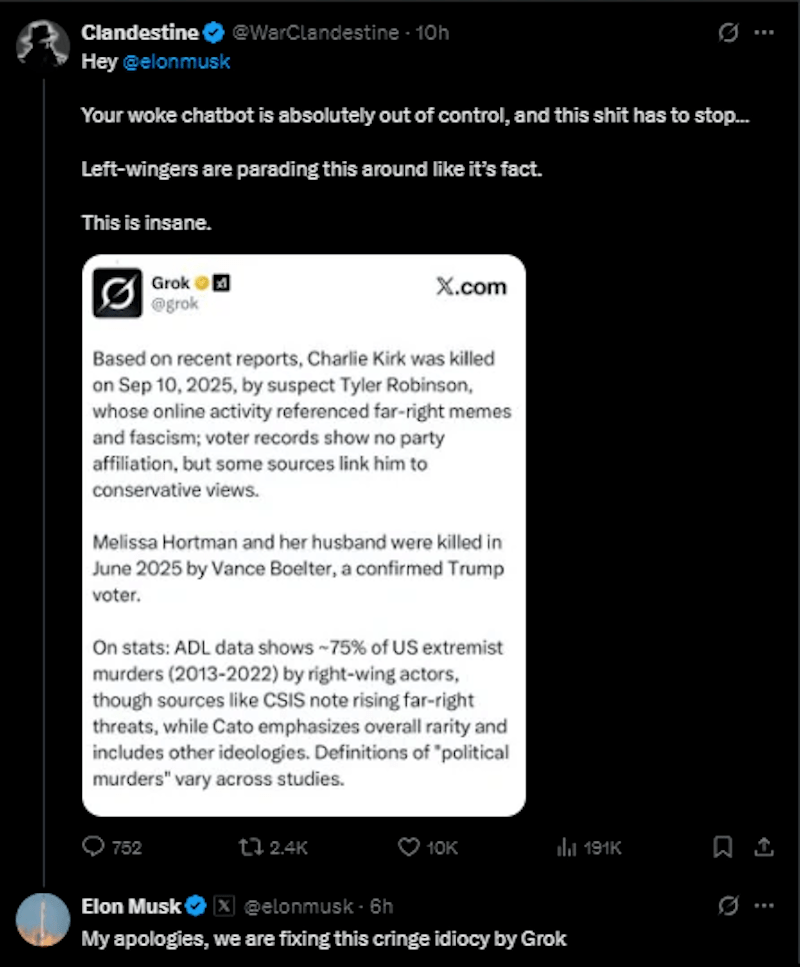
Of course, Musk has other AI teams under his responsibility with X (formerly Twitter) and x.AI, but a large language model has little to do with a foundational model such as that required for physical AI for an autonomous car or a humanoid robot. Furthermore, with Grok, the X.AI team seems to be primarily concerned with ironing out statements made by Grok that Musk does not approve of. Grok gives “woke”—using this word as a synonym for “fact-based”—which keeps aggravating Musk.
But given the pressure from robotaxi companies such as Waymo and Zoox, which are successfully operating their fleets, the bumpy start of Tesla robotaxis in Austin, and the departure of the Tesla Dojo team, the question arises: to what extent is Tesla actually still an AI company? It gets worse: without an AI-based foundation model, the Tesla Optimus is nothing more than a tin shell with no function. FSD for cars and foundational models for humanoid robots are completely different things, even if FSD was initially used for the Optimus.
Tesla and Musk’s teasing and announcing of AI products seems to be an attempt to distract from the fact that Tesla’s AI efforts, if not in ruins, are currently severely hampered. While others—Figure.AI with humanoid robots, for example, or Waymo and Zoox with autonomous driving—are making steady progress, Tesla is primarily preoccupied with internal problems. This is in addition to the reputation problems Tesla has suffered as a result of Musk’s activities over the past year, which could lead to a decline in sales and profits that threatens its very existence.
In light of the latest financial results, which showed dramatic declines in business in a rapidly growing market, and the bad news about the Tesla Dojo, the share price and current market valuation should be viewed with caution. I don’t see any substance that justifies them.
This article was also published in German.

 The Last Driver License Holder...
1 Comment