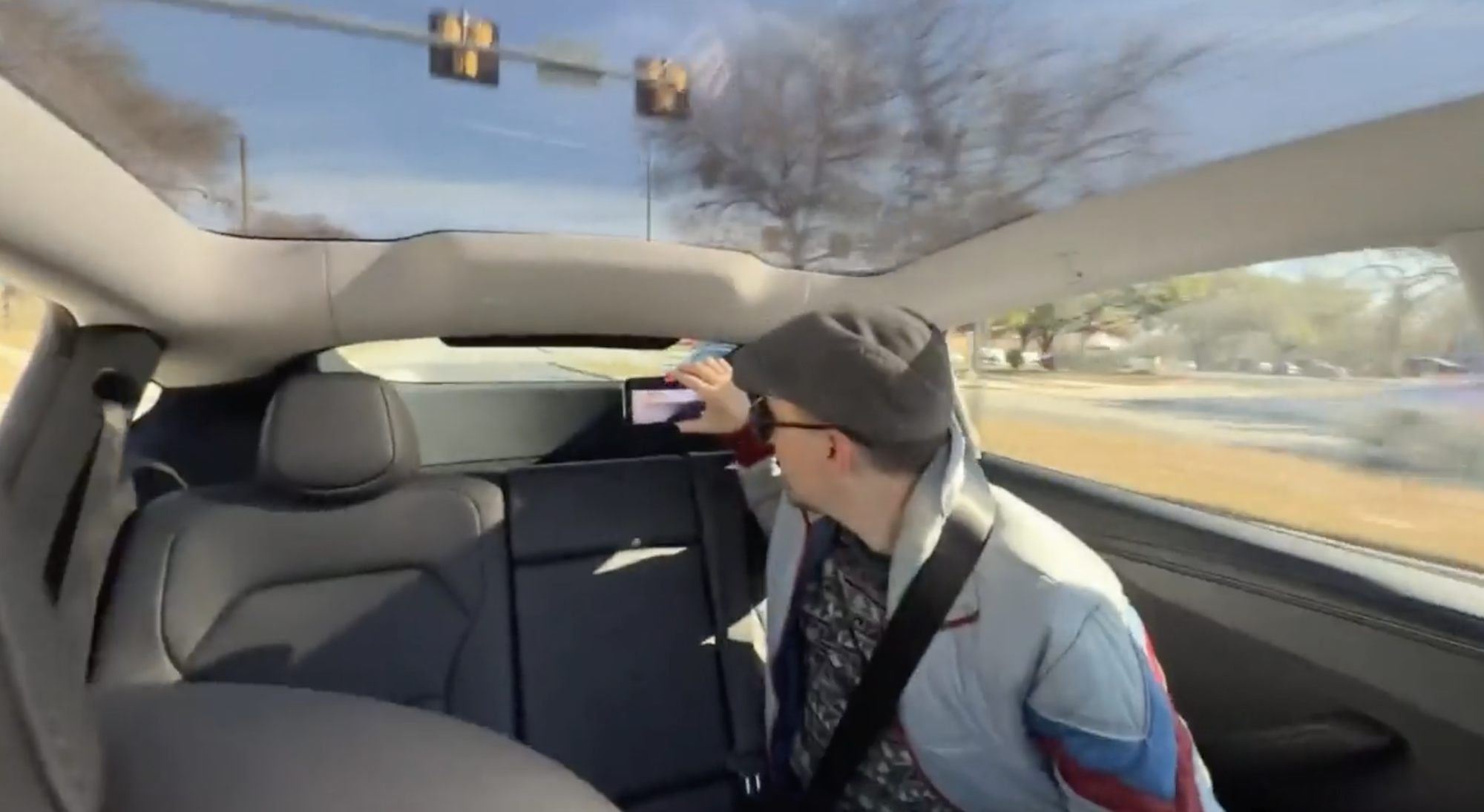
When Tesla began putting robotaxis on the roads in Austin six months ago, it quickly became clear that although there was no longer a driver in the driver’s seat, there was a safety engineer in the passenger seat who could intervene at any time. In the next stage, the safety engineer sat in the back seat, and in the latest stage to date, in a so-called chase car, i.e., a vehicle that followed behind the robotaxi.
Now, videos have been released showing Tesla robotaxis on the roads without this last iteration—a chase car. James Merryman and David Moss published several videos showing Tesla robotaxis on the road without a chase car following behind.
But does that really mean that Tesla robotaxis are now operating without supervision? No and no. Why twice no? Every robotaxi company, including Waymo, monitors its vehicles. Just as trucking companies today know where their trucks are, robotaxi operators also know where their vehicles are at any given moment. However, that does not mean that they track every vehicle in real time. At Waymo, the best indication of this is that the vehicles still sometimes make silly mistakes or hesitate, which a human and active supervisor would avoid. If Waymo encounters difficulties and needs help, a tele-assistant dials into the vehicle, assesses the situation, and instructs the vehicle with a few prompts on how to resolve the situation. Such a human assistant monitors several vehicles at the same time.
This should not be confused with teleoperation, which is a type of remote control. In this case, a person actually sits in an office and steers the vehicle. The ratio of remote driver to car is 1:1. More on this in the following video:
The fact that Tesla robotaxis are now operating without safety drivers in the car or in chase cars does not rule out the possibility that someone is either remotely controlling the vehicle (teleoperation) – which, in my opinion and based on my knowledge of Full Self Driving (FSD), is rather unlikely – or at least monitoring the car remotely and is ready to intervene at any time. Since Tesla is keeping a low profile, nothing more specific is known.
However, anyone familiar with the capabilities of FSD and its recurring sudden difficulties would be justified in assuming that Tesla robotaxis currently still have a 1:1 ratio of one safety driver per robotaxi who remotely monitors the car and can intervene at any time.
In other words: No, Tesla certainly still has human teleoperators, a.k.a. drivers, on duty who constantly monitor the robotaxis and can intervene immediately if the FSD encounters difficulties.
This article was also published in German.

 The Last Driver License Holder...
1 Comment