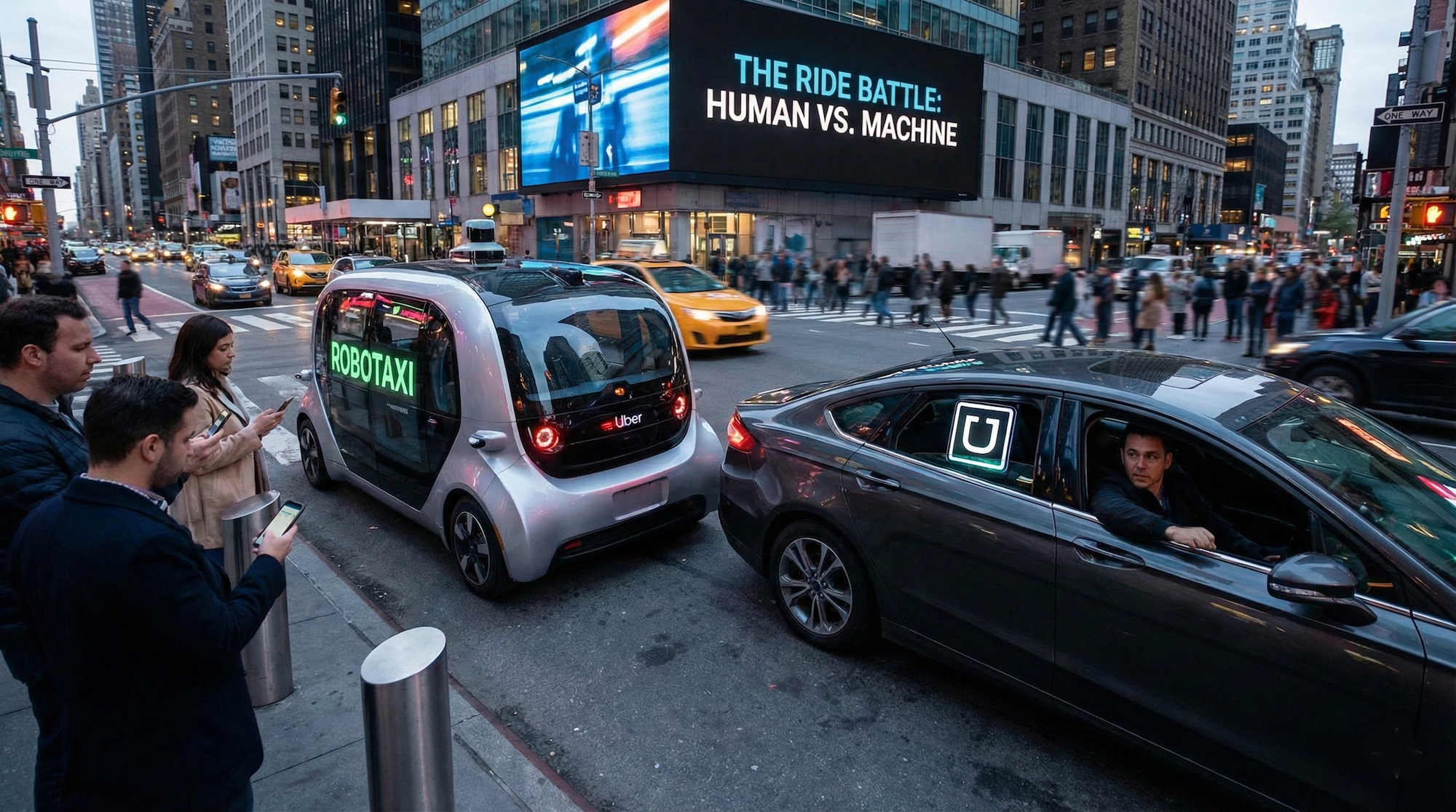
With the increasing number of robotaxis and their expansion into more and more cities, the question arises as to what extent they will affect human-driven alternatives such as taxis and ridesharing companies. This question is addressed in the 2026 AV Impact Report by Gridwise Analytics.
According to this report, the results are hardly surprising. Robotaxis are having an impact on ridesharing, and this is not good news for Uber or Lyft drivers. Analysts found that both the number of trips and the average trip duration decreased, and with them, income, in cities and regions where robotaxis are active.
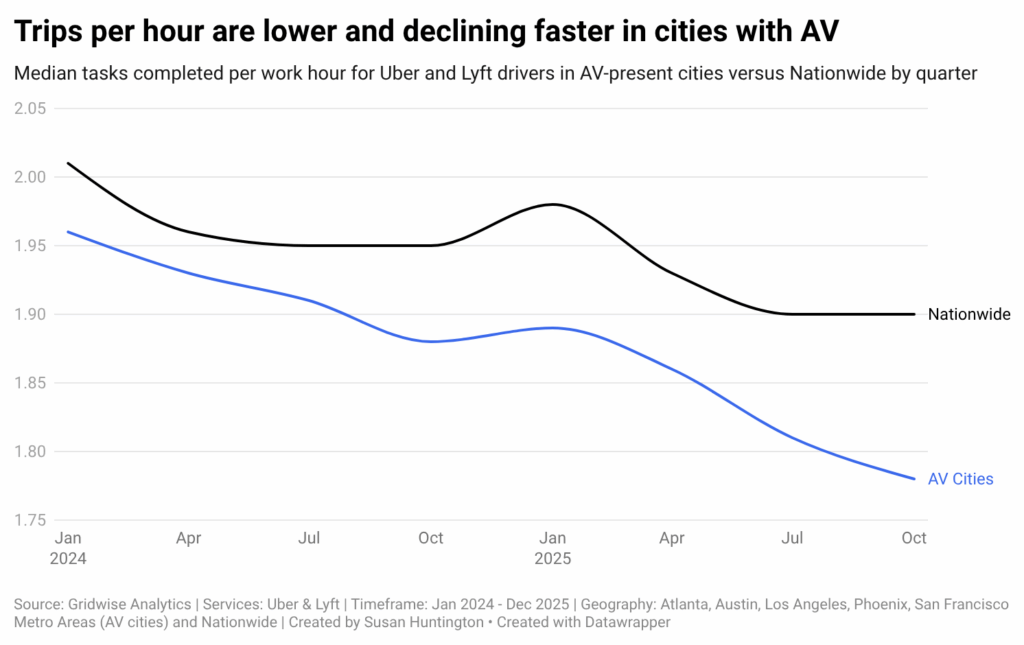
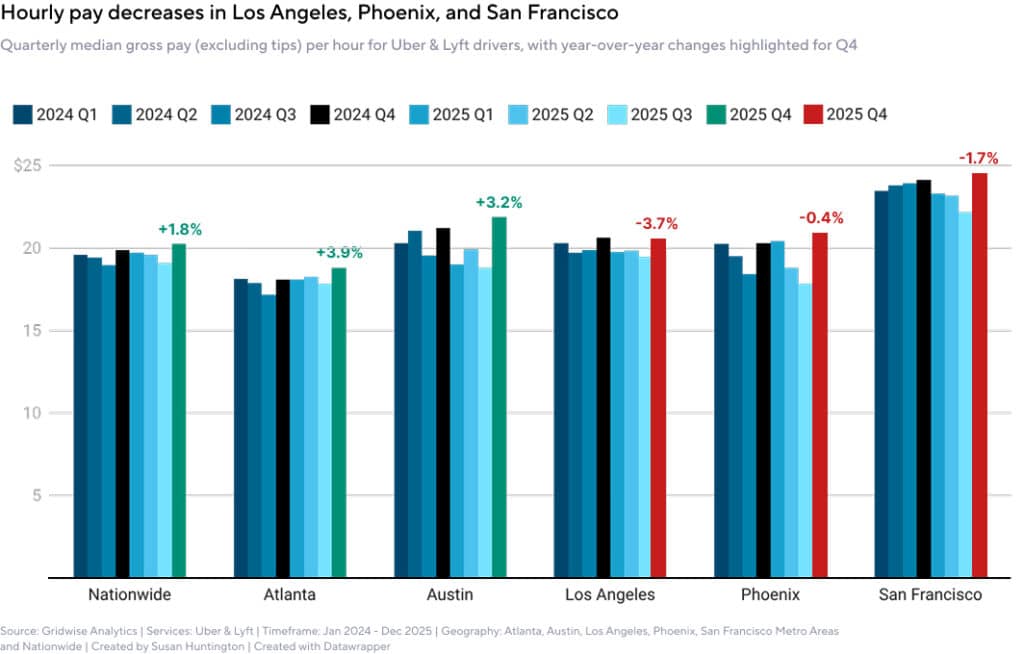
This travel time decreases more in cities with robotaxis than in cities without them. While hourly wages (excluding tips) for rideshare drivers have increased nationwide, they have decreased in Los Angeles, Phoenix, and San Francisco, which have active robotaxi fleets.
Note: However, the following graph does not reflect this. I wonder if there isn’t a creative interpretation in favor of one side.
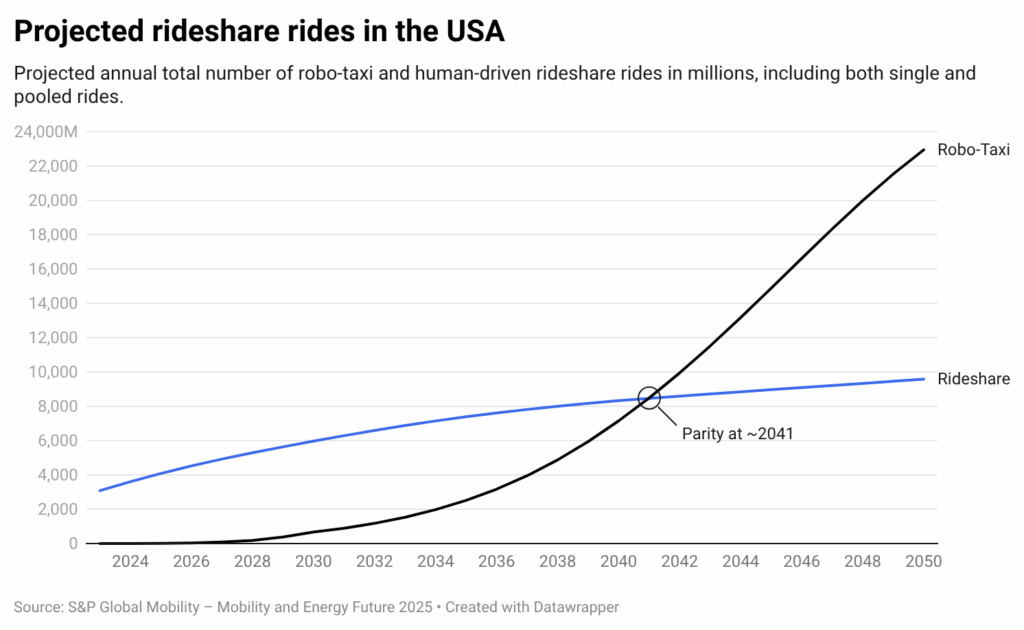
In any case, the trend is quite clear. The proportion of robot taxi rides is increasing and, according to Gridwise Analytics, will overtake ridesharing by 2041.
What is interesting is that it seems that this report contradicts Lyft CEO John David Risher, who explained in a Q2 2025 shareholder meeting that Lyft saw rides and pay increasing stronger in exactly those metropolitan regions, where robotaxis are active. How about that?
The full 2026 AV Impact Report can be downloaded from the Gridwise Analytics website.
This article was also published in German.

 The Last Driver License Holder...
The economic impact of robotaxis would also be interesting. This only focuses on drivers.
LikeLike
I wrote an entire book on that: https://www.amazon.com/dp/1260441385
LikeLiked by 1 person
I should read it!
How are your book’s predictions doing? Are they still on schedule? Are they progressing more slowly or more quickly than you originally thought?
LikeLike