Whenever the topic of self-driving cars comes up, authorities and regulators regularly point to what appears to be the most serious offense committed by robotaxis: namely, that they block roads and driveways and attempt to enter restricted areas. For a time, activists even kept their own lists, in which they sought to document both alleged and actual violations by robotaxis. This list was discontinued in early 2024.
Transportation officials view the behavior of robotaxis while waiting for passengers to get in and out as particularly problematic and unresolved. Cities like San Francisco, for example, stipulate that a vehicle picking up passengers may not stop more than 12 inches (about 30 centimeters) from the curb. Anyone familiar with the parking situation in San Francisco knows how unrealistic that is.
That is why cities are working to establish dedicated pick-up and drop-off zones (PUDO zones) where taxis and robotaxis can pick up passengers. However, this noble goal misses the real issue. The real question should be: why are there so many private cars that are allowed to use public space to park their private vehicles for free or at a price that is far too low and subsidized by the public? Miguel Anxo Fernández Lores, the mayor of the Spanish city of Pontevedra who has been re-elected six times, introduced a car-free downtown area in 1999, making the city internationally famous and significantly improving the quality of life for its residents. He is quoted as saying the following:
It is not part of my job as mayor to make sure you find a parking spot. To me, that’s like buying a cow or a refrigerator and then asking me where to put it.
In the meantime, however, city officials are attempting to track and document violations committed by robotaxis. For example, in 2024, San Francisco issued 589 parking tickets to Waymo for illegal parking—specifically, while the cars were waiting for passengers, since the vehicles otherwise continue driving empty when there are no passengers on board.
What completely gets overlooked, however, is how often human drivers block the streets with their cars. Double parking, parking in driveways, “just popping out for a quick pick-up or drop-off,” “I’ll be right back anyway”—people even park right in front of fire hydrants. Are these violations being recorded? Are strict measures taken against them? Do we even know how big this problem is? In any case, it’s much bigger than what robotaxis represent today.
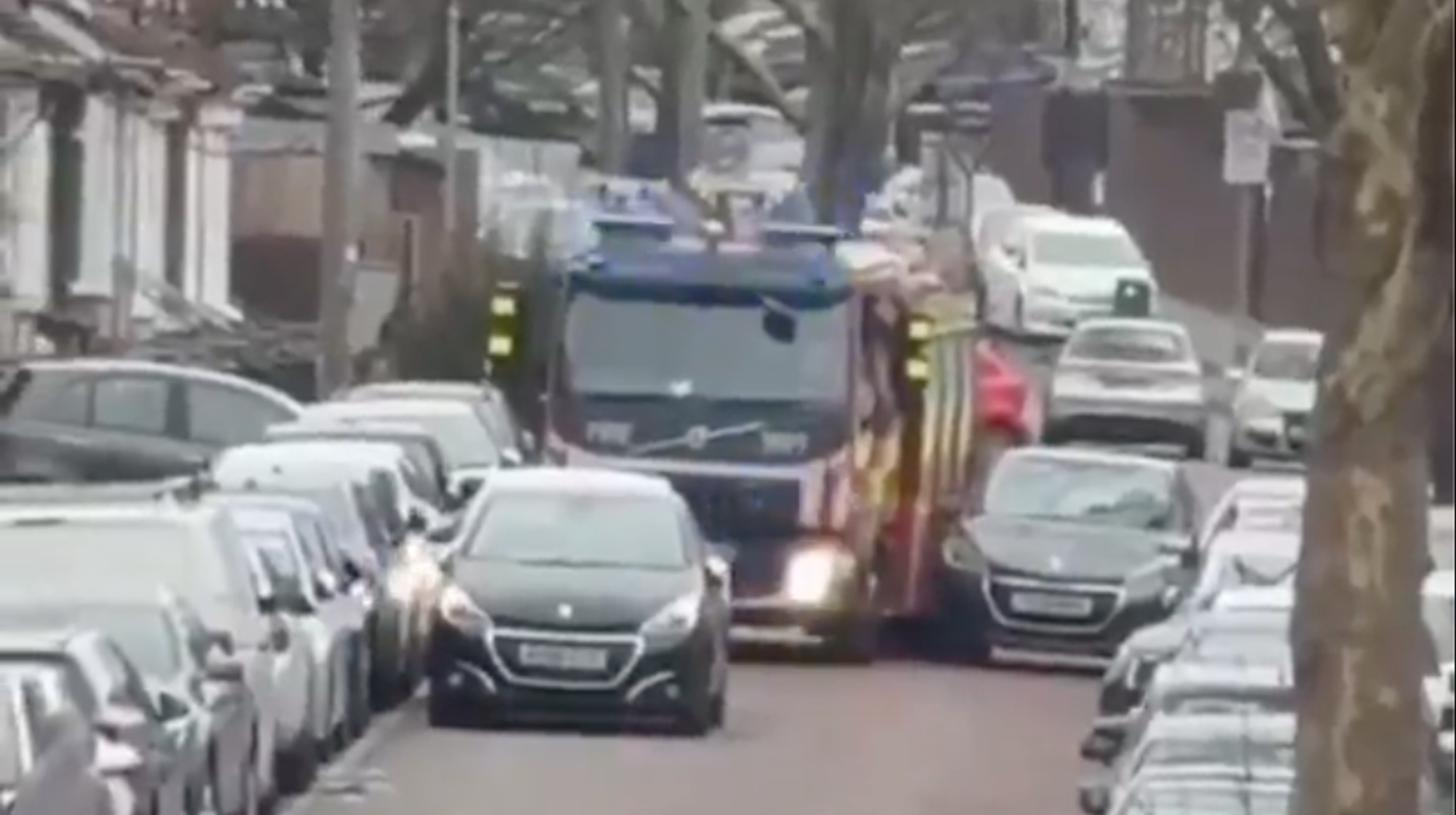
The following video from Birmingham is telling: streets packed with parked cars and reckless drivers block the road for a fire truck on a call, delaying help. We’re also all familiar with examples where reckless drivers treat emergency lanes as their own private lane, thereby blocking emergency vehicles.
Sometimes, priorities are completely out of touch with reality.
This article was also published in German.

 The Last Driver License Holder...
1 Comment