
When I was young, movies came to our cinemas about six months after they premiered in the US. Only if you were on a plane might you have the chance to see them early. What I learned soon: you have to travel to meet the future.
Coming to Munich straight from Silicon Valley feels like a journey into a parallel universe. I could not even call it travel from the future to the past, because there might be a lot of future talk in Munich as well. It feels more like what a friend used to call “masturbating away from the market” (pardon my French).
Here is what I found in Munich: a massive (and impressive) auto show. Installations that make Burning Man look like a five o’clock tea. Kuka bots dancing with huge mirrors: beautiful, I could watch for hours. A giant LED-illuminated car grill welcomes the Mercedes visitor (and a vintage model, next to the electric G-Wagon).
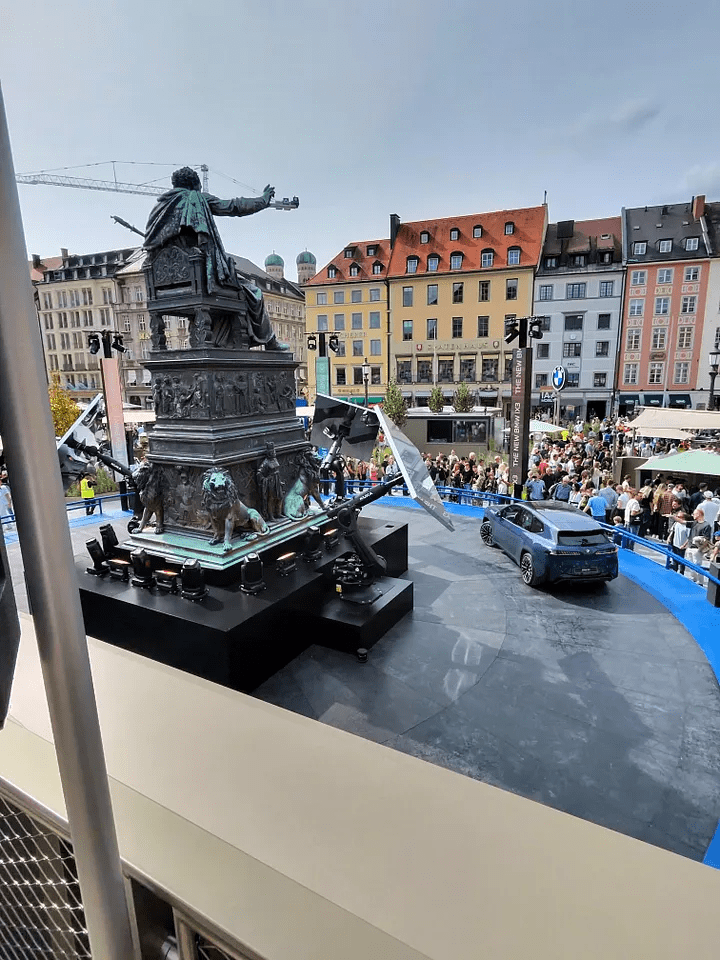
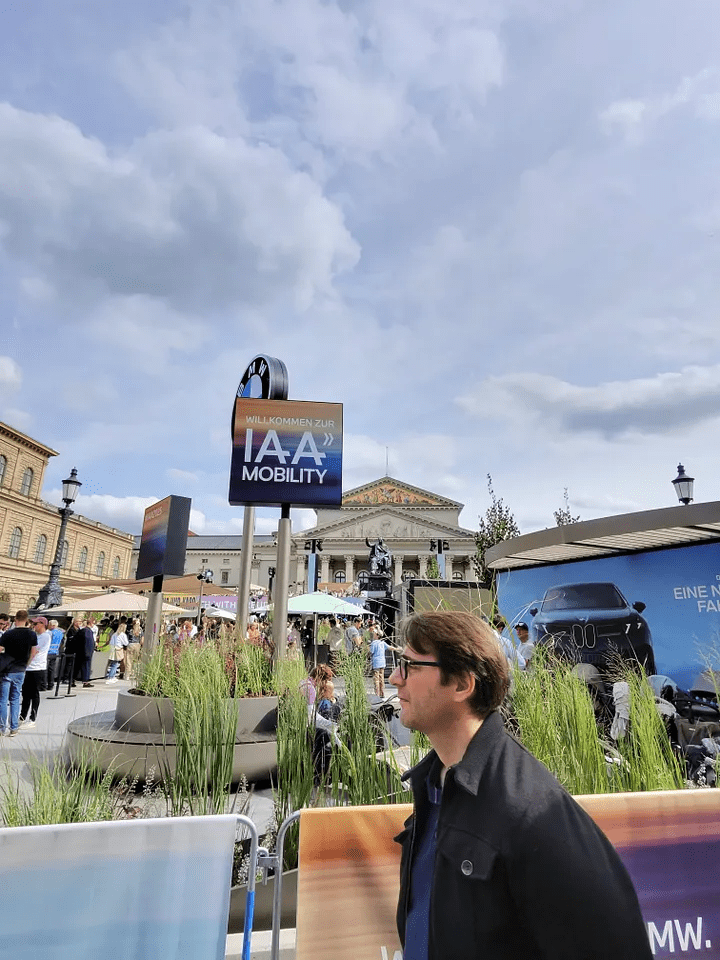


Massive queues, everywhere. Everyone wants a MINI, BMW, VW… tote bag, free colorful water bottles, and family entertainment. Actually, queues everywhere—I could not even find out all the freebies people wanted to go home with. Or at least walk away with; I do not want to know how many of these goodies just made it to the next trash bin.
Tech talk was about electric engines and charging time. I did not see a hydrogen car this time—but I am sure I just missed it. It must have been somewhere.
I remember when Silicon Valley turned cars into computers with wheels, must have been around 20 years ago. Back in Europe I only overheard conversations about Tesla losing money with every car they sold, soon about to go belly up anyway. That conversation seems off the table now. Despite Elon Musk’s questionable character, Tesla is a respected brand—an icebreaker, definitely. The other Silicon Valley carmaker, Lucid, has a strong presence in Munich as well (at least at the IAA and a pretty showroom in the center).
When it comes to automotive innovation in Europe, the discussions mainly circulate around the engine.
To me, an outdated discussion. After years of on-and-off between going all-in for electric or back to gasoline, it just surfaced what I personally don’t find surprising: people do not really care which engine drives their car. I think the conversation about the engine is off the table, maybe already since 2017.
What I did not see (at all!) in Munich was anything about the new operating system of the street. How will people, cars, and devices share the real estate of what’s a street today? What will be the future jobs of robots on the street, taking autonomous decisions? What are the form factors of devices with wheels on the street, following these new tasks and jobs?
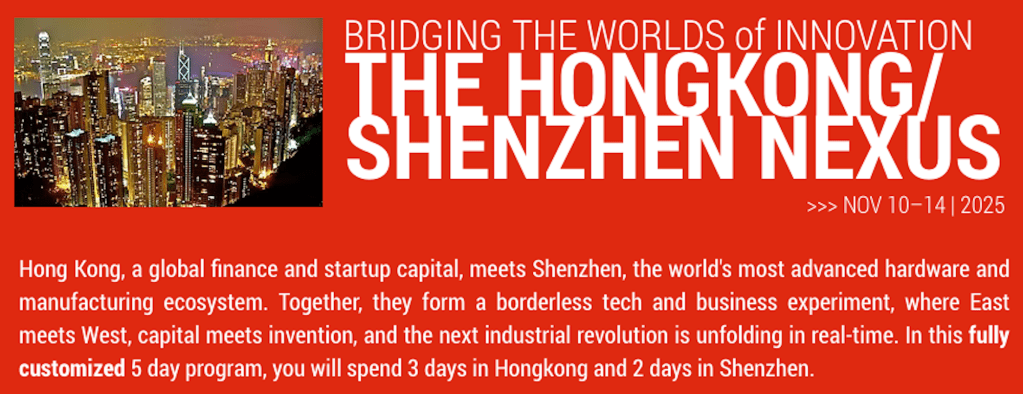
Author Niki Skene also organizes global innovation tours. The next one will take participants to the Chinese innovation hubs of Hong Kong and Shenzhen. More details can be found here.
But maybe I just totally got it wrong and IAA was not about the automotive future anyway. As a display of mechanical engineering and making cars even better, the event was really impressive.
Just not sure if that’s the conversation we should have. In just a few weeks (Nov 11–14), I will take a group to Hong Kong and Shenzhen, and I already know today that we will not talk about electric self-driving cars (we will use them, though), but a lot about how quickly we can execute into a future we already know more about than we might admit. If you prefer to talk about birds and not just ducks, we should talk.
By the way, I took all the photos with my meta-shades, while I was carrying our 5 months old son. “meta, take a photo” – the germans for sure would not have liked that.
This article was originally published here, and was also published in German.

 The Last Driver License Holder...
If they don’t talk about the type of engine, do they talk about the RANGE of the vehicle between fill-ups and/or charges?
LikeLike
@bredemarket. Cars are devices that are built to stay in motion. Everything that STOPS these devices from being in motion can be considered a problem and needs to be solved: Parking Garages, Workshops, Gas Stations, Red Lights,..
However, there are two kinds of innovation strategies: 1) improve the status quo (battery, range,…) and 2) sign the 20 years contract and pave the way for this anticipated future (robots with wheels, making autonomous decisions to complete their task). Both need attention, I am personally more interested in 2) because it is about strategic question, while 1) is “just” about improving technology.
Best, Niki
LikeLiked by 1 person