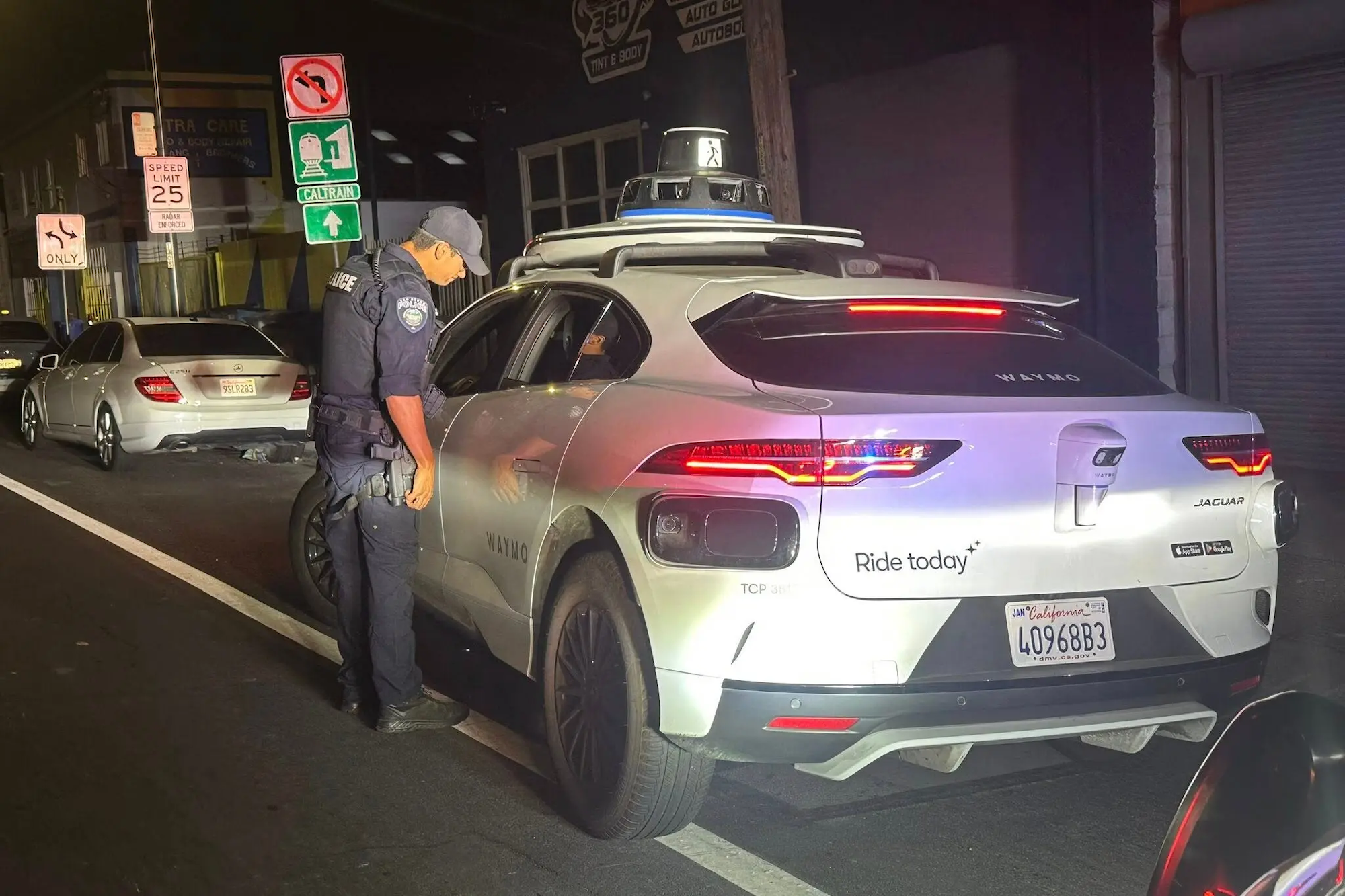
During a DUI checkpoint operation on September 27, 2025, in San Bruno, a suburb south of San Francisco, police officers observed a Waymo autonomous vehicle make an illegal U-turn at a traffic light right in front of them.
The officers stopped the vehicle and contacted Waymo’s operations center to report the incident. Since there was no human driver, no ticket could be issued. Furthermore, there is no field for “robot” in police ticket books. This was a first for both officers.
This incident is not the first time autonomous vehicles have interacted with emergency services.
In April 2022, police in San Francisco stopped a cruise ship, which appeared to be attempting to flee, but the reason for its behavior was entirely different. Here are more details.
In July 2024, police in Phoenix stopped a Waymo vehicle because it was driving on the wrong side of the road. Here you can see how this action unfolds.
Training of Emergency Responders
In every city and region where driverless robotaxis are used, emergency services are trained in how to deal with the vehicles before they are launched. They learn how the technology works and how to interact with the vehicles in the event of an incident and notify the operations center. This ensures that these vehicles do not drive into an accident scene, for example, or that emergency services know how to report a traffic violation. The two examples shown above follow such a protocol, even though in the case of the Cruise, other protocols were applied first (“stop in a safe place that does not obstruct traffic”).
Traffic Ticket
But what is the actual situation regarding issuing parking tickets to autonomous, driverless cars?
First, it is important to note that in 2024, California Governor Gavin Newsom signed a law authorizing police to issue “autonomous vehicle violation notices” when they determine that driverless cars are violating local traffic laws. However, the law does not specify the penalties associated with these notices and will not take effect until July 1, 2026.
Until then, there are no clear rules in California for enforcing local traffic regulations for autonomous vehicles. Waymo stated in a statement that its autonomous driving system, known as Waymo Driver,
designed to comply with traffic regulations.
After reviewing the traffic control in San Bruno, the company stated that
immediate measures have been taken to resolve this issue.
In fact, issuing a ticket to a robot taxi makes little sense. A ticket for a human driver is intended to discourage them from violating traffic rules in the future. With robot taxis, however, it’s a little different. This traffic rule must be programmed and is then available to all vehicles in the fleet. It therefore makes no sense to issue a ticket to an individual robot taxi, but rather to report the traffic violation to the operating company so that it can take fleet-wide measures. Only if the company fails to comply despite repeated warnings and requests should penalties be imposed.
Illegal Parking
Waymo received a total of 589 parking tickets in San Francisco in 2024. The vehicles received these tickets because they had to wait for passengers to get in and out. And that points to another problem: there are not enough pick-up and drop-off zones for robotaxi passengers. The question is whether parking should be banned altogether. San Francisco regulations stipulate that a taxi may not be more than 18 inches (approximately 46 centimeters) from the curb when passengers are getting in and out. With streets packed with parked cars, this is impossible.
Drunk Under the Influence is the Real Problem
But what is being overlooked in all the excitement surrounding Waymo’s illegal U-turn is why there was an alcohol checkpoint here in San Bruno (or anywhere else for that matter). A Waymo doesn’t drink, but humans do. And that’s the real problem: humans take drugs and then get behind the wheel. In Germany, 156 people were killed by drunk drivers in 2023, and in the US, the figure was a staggering 12,429. So the problem is not Waymo making an illegal U-turn, but the fact that millions of people continue to get behind the wheel while under the influence of drugs.
This article was also published in German.

 The Last Driver License Holder...