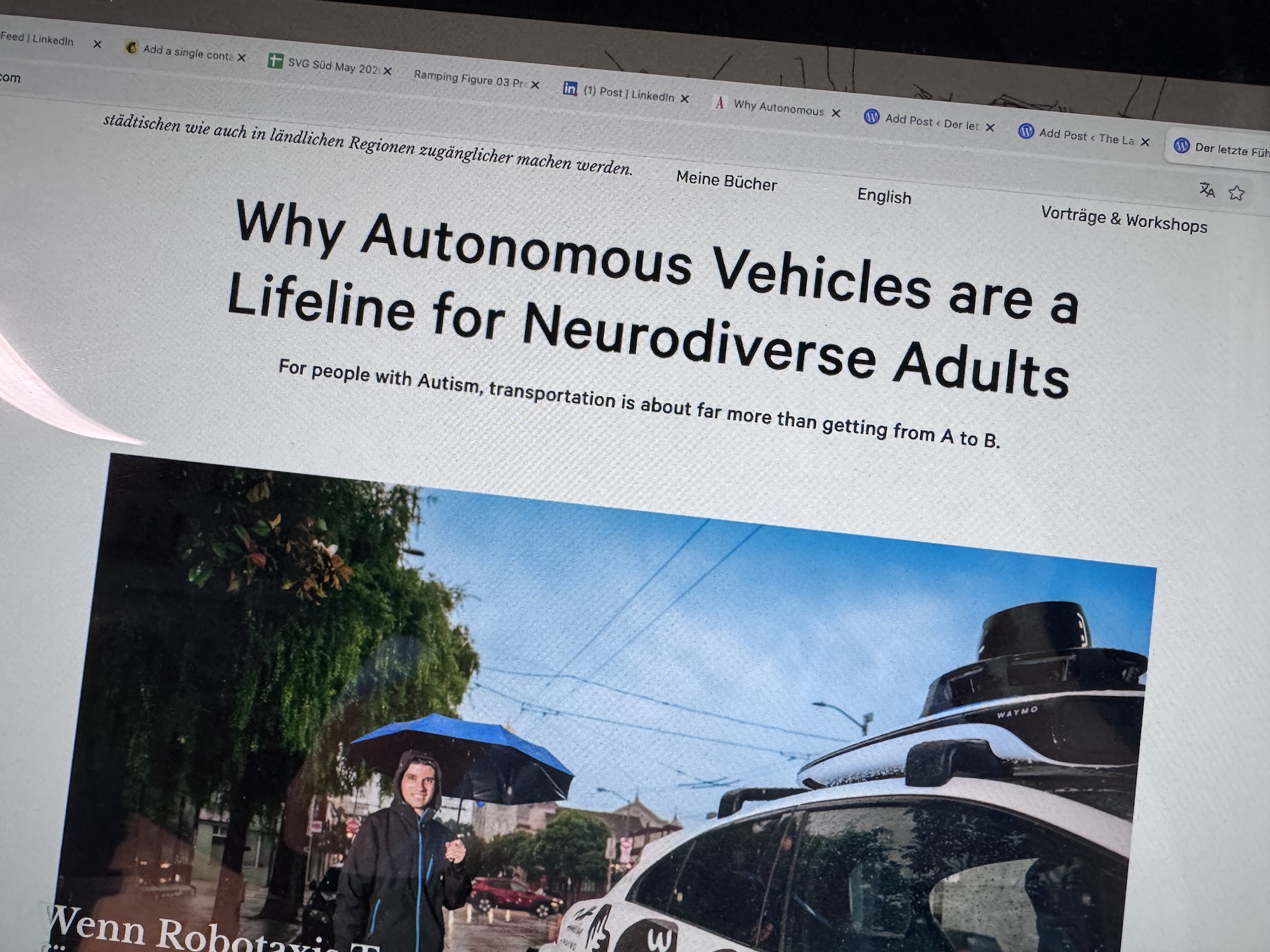
When Waymo applied for a license to operate a driverless robotaxi service in California in 2024, one detail almost went unnoticed. Not only did Waymo apply for the license, but the company was also supported in its application by over 80 organizations, including the Association for the Blind and Mothers Against Drunk Driving (MADD).
This also demonstrated that there is a whole segment of the population that currently has to forgo personal mobility for various reasons and for whom owning a car, a chauffeur service, or public transportation are not viable alternatives. I have already written several times on the advantages of robotaxi services like Waymo for women, who feel safer in Waymo vehicles for a variety of reasons and choose this alternative over taking a taxi, a ridesharing service, or public transportation.
In another example, The Atlantic introduces Christopher Hamilton, who is autistic and neurodivergent. For him, using public transportation was a challenge. Conversations with the driver, finding the vehicle, or the crowds on public transit caused him stress. Not so with Waymo. The display of his initials on the vehicle, the ability to choose his own music and adjust the temperature without having to speak to anyone, allow him to arrive at his destination relaxed and stress-free. Whereas Hamilton’s parents previously had to help him arrange transportation, he can now do so independently.
Click here for the full article in The Atlantic.
This article was also published in German.


2 Comments