It’s amazing how much has changed in more than 10 years—but also how little.
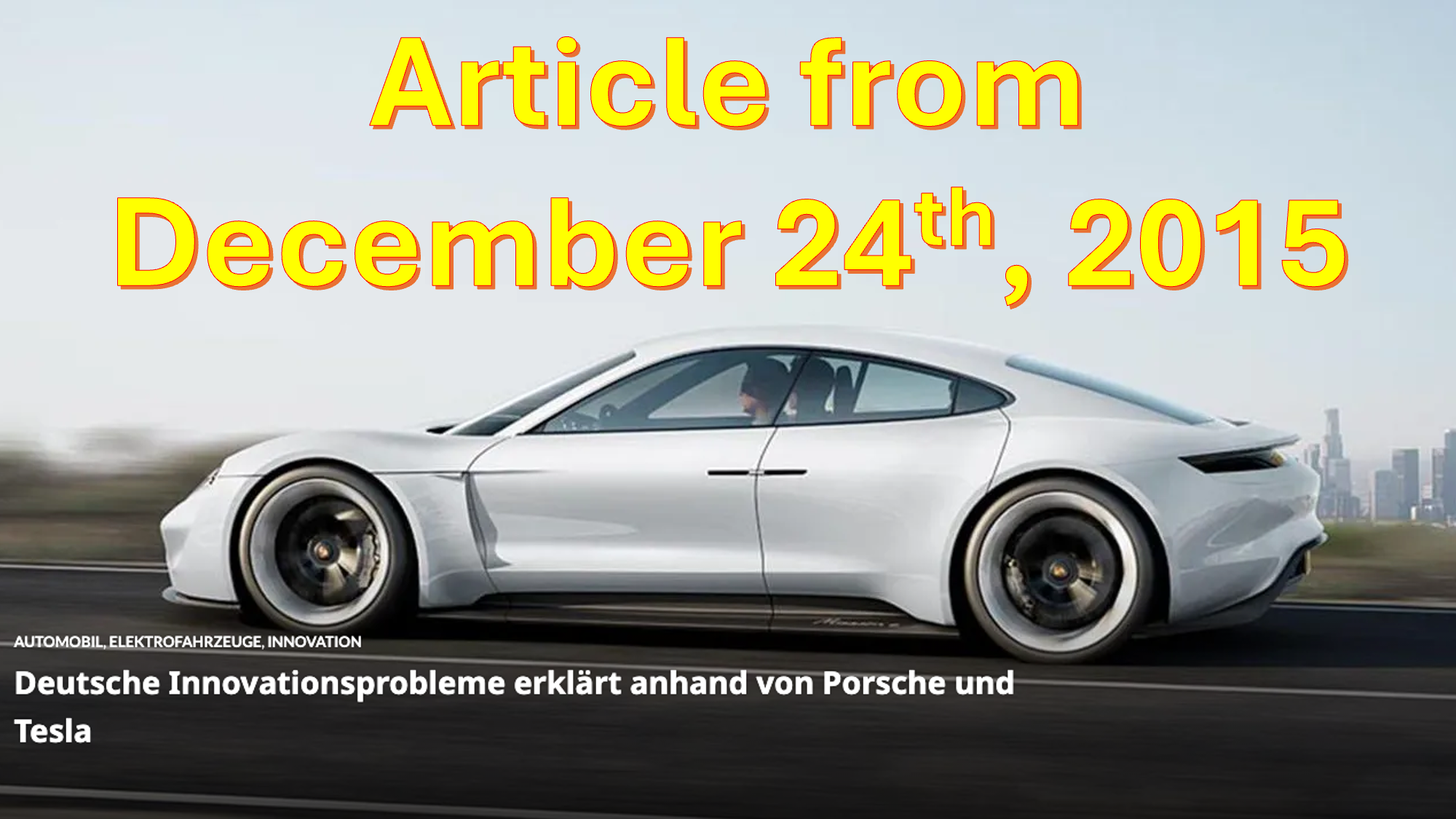
On December 24, 2015, I published the post “German Innovation Problems Explained Using Porsche and Tesla” (the original in German here, after I set up my own website, namely this one), which I had originally intended simply to fill up my new website. Within a few hours, the post went viral, and I realized that I needed to write a book about it and start my own blog.
That’s how the book The last driver’s license holder… (2017 in German, 2019 in English) came to be—it has since been published in four other languages—as well as the blog of the same name, where I’ve published more than 2,100 posts in both German and English on topics mostly such as electric and autonomous driving.
In 2015, Tesla was still a small car company that only had the Roadster and the Model S to its name and was still losing hundreds of millions of dollars a year. Porsche was the nearly 100-year-old company known and loved for its sports cars.
In 2026—or, more precisely, yesterday—the unveilings of a Porsche and a Tesla sports car happened to take place on the same day, and the differences couldn’t have been greater. While Tesla is profitable and has now delivered more than 10 million cars, Porsche is in dire straits. Profits and revenue are plummeting, its electric-car strategy is in shambles, and the once-proud company from Zuffenhausen looks pretty battered.
And what was presented there is even more significant and thought-provoking: while Tesla is redefining the limits of what’s possible—with a Roadster that can fly, perform stunts, and accelerate from 0 to 60 miles per hour in under 1 second—and leaving the audience in awe, Porsche is reveling in history, the past, and nostalgia. Not just in design, but in all aspects of technology.
Almost eleven years later, the article from December 24, 2015, is, to my surprise, more relevant than ever.
This article was also published in German.


1 Comment