Operating in 15 metropolitan areas in the U.S., preparing to expand to another dozen cities, and planning an international expansion to Canada, Japan, Singapore, South Korea, England, France, Germany, Spain, Switzerland, and the Netherlands.
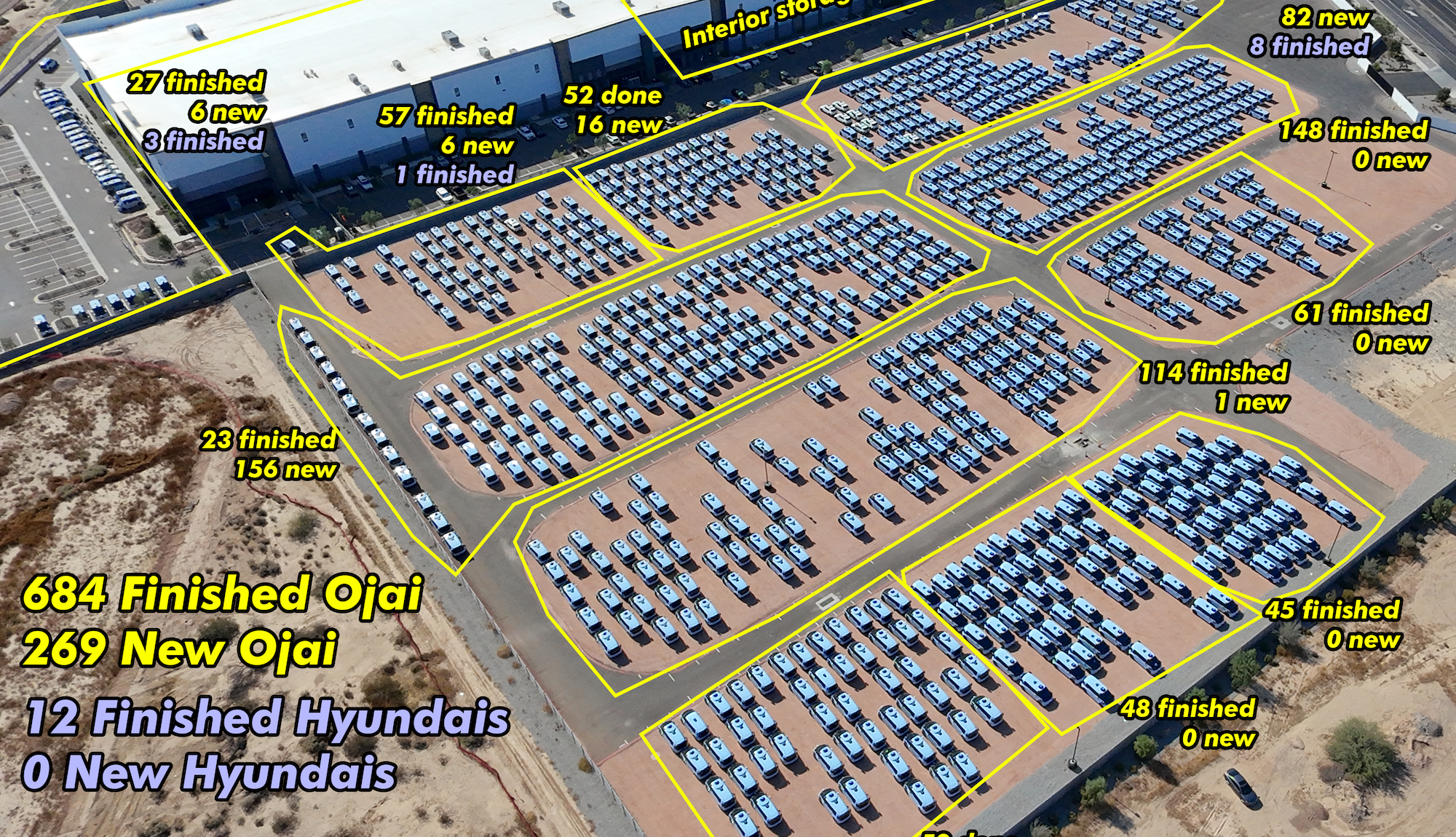
Waymo is preparing for a global expansion of its robotaxi service, but to do so, the Google subsidiary needs vehicles. And they’re on their way. Waymo already has around 4,000 to 4,500 vehicles in operation, and by the end of this year, the company plans to have imported a total of 5,100 Zeekr vehicles from China to the U.S., as reported by the New York Post. The Waymo fleet is expected to reach 8,000 vehicles by the end of 2026.
Production of the previous platform—the Jaguar I-Pace—was discontinued in December 2024, which is why Waymo is working to use other vehicles. In addition to the Zeekr vehicle, which Waymo calls the Ojai (pronounced “Oh Hey”), the Hyundai Ioniq 5 is also planned, though very few of these vehicles have been spotted so far.
In any case, Waymo’s goals are ambitious. According to Semafor, Waymo aims to have around 20,000 vehicles in operation as part of its global robotaxi fleet by the end of 2027—despite a ban by the U.S. government prohibiting the import of Chinese and Russian cars that contain connected or autonomous software. Even Chinese vehicles that do not contain such software are subject to a 127.5% tariff.
Despite the tariffs, it is estimated that it will cost Waymo between $98,000 and $115,000 to integrate a vehicle chassis manufactured by Zeekr with its sensors—compared to an estimated $200,000 for Waymo’s Jaguar I-Pace robotaxis.
This article was also published in German.


1 Comment