
In 2009, Google began in earnest to develop self-driving cars under the leadership of Sebastian Thrun, a native of Solingen, who—as a professor of artificial intelligence at Stanford University—had won the second DARPA Grand Challenge, with his team in 2005. The vehicle? A Volkswagen Passat, affectionately nicknamed Stanley. Today, this vehicle is on display at the Smithsonian Institution, the most important technology museum in the U.S., as a milestone in automotive history.
Listen to this episode as a podcast hosted by two hosts.

U.S. and Chinese manufacturers
Since 2009, dozens of American and Chinese companies have followed Google’s lead in efforts to develop self-driving cars. The most serious contenders among them had one thing in common: they did not come from the traditional automotive industry. Even though Mercedes-Benz had been a pioneer in the development of self-driving cars as early as the mid-1980s with the Prometheus project, despite its successes, the timing was simply too early, the technology was not yet advanced enough, and ultimately, Mercedes-Benz was not interested enough to keep the flame burning and maintain its lead.
Investing in the Future
We’ve been talking about autonomous cars, robotaxis, and self-driving trucks for so long, and yet these technologies are only now slowly making their way to the market. But how much money have companies spent on them so far? It’s not always easy to break this down, since the complex technology is often closely intertwined with other technologies developed by the same companies. Here are estimates based on data from analysts, court records, and company disclosures.
$27 billions: Google / Waymo
Google—and later, after it was spun off as Project Chauffeur and then as a Google X project, as a separate company under the name Waymo—and their shared parent company, Alphabet, are said to have invested vast sums in the development of self-driving cars. According to court documents and analyst estimates, Google invested $1.1 billion (€940 million) between 2009 and 2015, which averages out to about $150 million to $160 million (€129 million to €137 million) per year. During the expansion and commercialization phase since 2016 as an independent company, costs rose dramatically. Between 2016 and 2020, these costs are said to have amounted to $2.7 billion (€2.3 billion) annually. From 2021 to the present, these investments have ranged between $1.5 and $2 billion (€1.3 to €1.7 billion).
The total amount has thus been estimated at $27 billion (€23.2 billion) since 2009. This is a staggering sum for a technology whose success was far from certain, and for which it is still unclear whether a profitable business model can be developed and whether the investments made will pay off.
$10 billions: Amazon / Zoox
The funds required to develop this technology are enormous. Even for Amazon, which acquired the startup Zoox in 2020—a company that is developing not only the self-driving technology itself but also a new type of vehicle designed specifically for it—expenses have so far been estimated at between $8 billion and $10 billion (€6.9 billion and €8.6 billion). And the annual expenses are on the same order of magnitude as those Waymo must cover: about $2 billion (€1.7 billion).
>$10 billions: Tesla
Tesla is right up there with the competition when it comes to Full Self-Driving (FSD). In 2024, Tesla CEO Elon Musk mentioned that Tesla had spent $10 billion (€0.86 billion) on development so far. That figure has likely increased since then, as production of the Tesla Cybercab and test drives have also begun in the meantime.
$2.1 billions: Pony.AI
Through its initial public offering and subsequent international funding rounds, Pony.AI has raised a total of over $2.1 billion in funding from investors, nearly all of which is being channeled into the development and deployment of its autonomous vehicle platforms (primarily robotaxis and robotrucks).
Several billions: Baidu / Apollo
Since entering the field of autonomous driving research in 2013, Baidu has invested several billion U.S. dollars in the development of its robotaxi platform “Apollo Go,” but the company does not break down the exact cumulative total expenditures for the robotaxi division separately in its public financial reports, as the development is closely intertwined with massive group-wide investments in artificial intelligence, cloud infrastructure, and in-house AI chips.
As early as 2017, Baidu launched its own investment fund worth approximately 1.5 billion U.S. dollars (10 billion yuan) to specifically drive the development of hardware and software projects related to the Apollo ecosystem. Year after year, the Chinese company invests a significant portion of its revenue in research and development. In the areas of core AI and autonomous driving systems alone, billions are continuously being invested to bring the technology to market readiness.
$1 billion: WeRide
It is estimated that since its founding in 2017, WeRide has invested between $800 million (€687 million) and over $1 billion (€860 million) in its overall system.

HOMO SYNTHETICUS
Wie Mensch und Maschine verschmelzen
Künstliche Intelligenz wird sichtbar. In „Homo Syntheticus“ beschreibt Zukunftsforscher Dr. Mario Herger den Aufbruch in ein neues Zeitalter, in dem Maschinen nicht mehr nur denken, sondern fühlen, handeln und lernen. Humanoide Roboter mit künstlicher Haut und autonomem Bewusstsein treten in unser Leben – als Helfer, Kollegen, vielleicht Partner. Gleichzeitig erweitern wir Menschen uns selbst: durch Implantate, Schnittstellen und KI im Körper. Mensch und Maschine nähern sich an, verschmelzen – und stellen unsere Vorstellung von Identität, Ethik und Fortschritt auf die Probe. Ein faszinierender Blick auf die Ära des synthetischen Menschen.
German Manufacturers
Given the enormous sums that financially strong companies like Google, Amazon, and Baidu have invested in the development of self-driving technology, it’s easy to use this as an excuse for a lack of success in their own research. German automakers simply cannot keep up financially with these internet giants. They have to keep an eye on costs and generate profits, and they simply cannot afford such high losses.
Investments for the Past
Is that true? Of course not. We all still remember the emissions scandal involving the defeat devices, don’t we? Eleven years after the fog has cleared a bit, we can see not only the costs it imposed on the companies, but also the consequences that are only now really taking effect. But let’s take a look at the fines that VW, Mercedes-Benz, and BMW had to pay as a result of this disastrous decision.
$34 billions: Volkswagen
The total global costs for Volkswagen resulting from the emissions scandal amount to more than 33 billion euros (over 34 billion U.S. dollars). Of this amount, more than 22 billion euros were attributable solely to regulatory penalties and fines, while the remainder was spent on civil settlements, compensation, and buyback programs.
>$3.55 billions: Mercedes-Benz
The global penalties, fines, and regulatory settlements imposed on Mercedes-Benz (formerly Daimler AG) in connection with the emissions scandal have totaled approximately $3.55 billion (€3.4 billion) since 2015. In addition to these costs, there are hundreds of millions of euros in additional expenses for software updates, the recall of millions of vehicles worldwide, and ongoing litigation and legal fees.
€381.5 millions: BMW
Since 2015, BMW has been subject to regulatory penalties and fines totaling approximately 381.5 million euros for violations related to emissions control and related collusion.
Unlike competitors such as Volkswagen, the authorities have never proven that BMW intentionally installed illegal defeat devices (“cheat software”). The total amount consists of two regulatory proceedings: an EU antitrust fine of €373 million imposed in 2021 and a fine of €8.5 million imposed by German authorities in 2019.
There would have been enough money
When you look at the amounts German manufacturers had to pay in fines, one thing becomes clear: there would have been enough money. But they chose to invest in the past—to cling to it—rather than in the future—to shape it.
What could VW, Mercedes-Benz, and BMW have done with that money? Buy several Teslas, for example. Or perhaps develop self-driving technology on par with Waymo? And even if not quite at that level, there would still have been some spin-offs as a result. The domestic automotive industry would look different—stronger, more forward-looking, and regarded as a role model for the rest of the world.
It’s true that, for example, the Mercedes-Benz supervisory board approved a 60-billion-euro “future package” for the five-year period from 2022 to 2026, with the aim of focusing investments on the three pillars of electrification, digitalization, and automated driving. Late, very late, but still. And yet, now that we’re nearing the end of 2026, the question arises: what has come of it? Are Mercedes electric cars still slow sellers, and are autonomous cars still just PowerPoint presentations?
The fairy tales we tell ourselves—and even believe
The reason the future has been so messed up comes down to other arguments that are regularly put forward with conviction. For instance, the Americans are supposedly much better at marketing and allegedly pull off one PR stunt after another to hide the fact that they’re just like everyone else. The Germans, on the other hand, are said to be quietly testing and developing technologies behind closed doors, with safety and flawless performance as their top priorities. And they’re supposedly much further along with these technologies than anyone realizes.
Of course, that’s complete nonsense, as I’ve already meticulously broken down in a two-part series on German robotaxis (Part 1—Myths and Part 2—Reasons to read again). I’ve also explained in other posts how each phase of development in autonomous driving manifests itself and thus becomes visible.
The house of cards is collapsing
Since 2015, German manufacturers have acted as if the emissions scandal had been nothing more than a minor offense. Did they learn from it? Did they become more humble? Did they set their sights on the future?
Of course not.
They concocted the fairy tale of “technological openness” to protect their own, slowly obsolescent technologies—the internal combustion engine—threw in the smoke screens of fuel cells and e-fuels, convinced gullible politicians, the media, and society of all this, siphoned off research funds here and there in an attempt to spur on a dead horse from the moment of its birth, and didn’t hesitate to send the chancellor to Brussels multiple times to push back emissions limits by a few more years or to block a ban on internal combustion engines.
Meanwhile, things have taken a turn for the worse in China. German cars, which for years dominated the streets there and were proudly driven by the Chinese as a sign of success, have become slow-moving inventory. Not just slow-moving inventory: their entire reputation is gone. They’re seen as uninnovative, boring, and too expensive—especially when compared to the new Chinese manufacturers. What really stung was the comment from a young Chinese woman who, when asked if she would consider German models, simply replied, with a look of bewilderment, that German cars were more for the older generation—the “well-behaved” car, well-suited for older people without many demands.
And 2026 is the year when the bill will be clearly presented to everyone. Boos at employee meetings with the VW board, and—for the first time ever—plant closures in Germany that cannot be prevented. One hundred thousand employees—whom VW has actually been unable to afford for quite some time—are now finally set to be laid off. Slumps in revenue and sales, along with profit warnings, are coming in as bad news. Manufacturers are discussing an increase in working hours without compensatory pay. Furthermore, even before their planned market entry, Chinese manufacturers are already present in Europe in greater numbers than anyone could have expected.
Servus Waymo
On top of these upheavals—which have so far centered on electric propulsion and are already causing enough chaos at German corporate headquarters—Waymo has now come along and dealt a blow to the top dog, BMW, in Munich.
Just how lost Germany seems to be is evident from the press release issued by State Secretary for Transportation Christian Hirte, who welcomed Waymo with the following warm words:
Our goal must be to ensure that we in Europe not only use these technologies but also develop and operate them here. After all, autonomous driving makes a tangible contribution to improving everyone’s quality of life – across all age groups, circumstances and regions.
First of all, this Waymo technology doesn’t come from Europe. It comes from the U.S. Even in the case of the much-hyped VW MOIA project, the core technology—namely, the software that’s supposed to enable the car to drive autonomously—doesn’t come from Germany, but from the American-Israeli company Mobileye. Without it, the ID Buzz AD is nothing more than a stationary couch with four useless wheels attached.
Do you know who he should have directed that second sentence at? Exactly—the domestic automakers. The so-called experts there are still going on and on, explaining to us that robotaxis only operate in the sunny parts of the U.S. on wide, well-maintained roads, but that this will never, ever work in Germany—because of medieval roads, the weather, the sun, the unlimited speed limits on German highways, and the lack of smart road infrastructure.
The fact that Waymo will begin test operations in a few weeks and expects to launch driverless commercial operations in less than 18 months feels like the hammer blow Bud Spencer delivers to his opponent. All those overinflated OEMs, with their “Agnoranz”—arrogance paired with ignorance—already struggled with the shift to electric cars. And now Waymo is coming (followed in its wake by robotaxi manufacturers like Pony.Ai, WeRide, Zoox, Tesla, and Wayve).
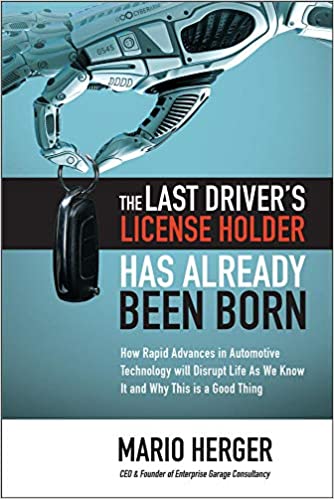
Let no one say that no one could have foreseen this. It had been predicted for years in numerous books and newspaper articles, including my book published in 2017 in German and 2019 in English with the same title as this blog.
Well, this slap in the face really hurts, and there’s no point in sugarcoating it anymore. Waymo’s entry into Munich shows that the three emperors had no clothes. And now everyone can see it.
This article was also published in German.


1 Comment