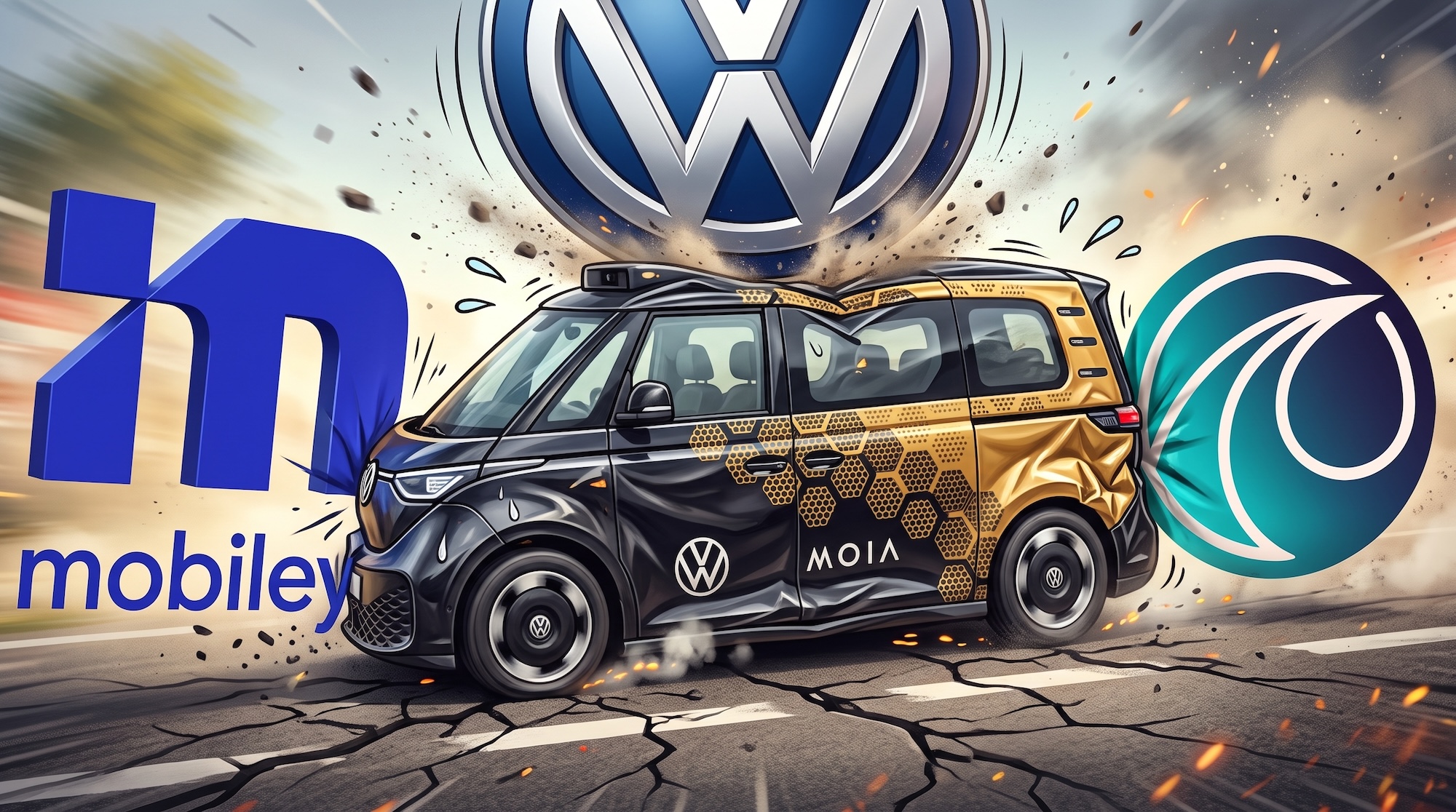
Volkswagen’s strategy for autonomous driving leaves questions unanswered and raises doubts. What exactly does VW want? Billions are being spent, only to have the project shut down. That’s exactly what happened with the joint venture with Ford, which was supposed to develop autonomous driving technology in collaboration with Argo.AI, but was then unexpectedly discontinued.
This was followed by a partnership with the U.S.-Israeli company Mobileye, which was supposed to provide the self-driving technology and, together with its subsidiary MOIA, develop robotaxis. VW provided the ID Buzz AD, and MOIA developed the MaaS system. But from the very beginning, it was clear to everyone except VW and MOIA that Mobileye simply couldn’t be the right partner. I myself had repeatedly expressed my concerns.
Then there was a series of announcements that raised doubts about MOIA’s future. For one thing, MOIA discontinued its ride-hailing service in Hanover, just at the moment when it should have been transitioning such existing services to autonomous test operations. Then VW announced the sale of shares in MOIA—but not, for example, to bring in strong partners like Uber and Lyft and reinvest the proceeds back into MOIA. No, the money was intended to shore up VW’s struggling balance sheets. Unsurprisingly, this was followed by the announcement that neither Uber nor Lyft wanted to join MOIA. The financing prospects and the technological platform were simply too weak. And when it comes to MaaS systems, the two ride-sharing services simply have much more experience and superior technology.

HOMO SYNTHETICUS
Wie Mensch und Maschine verschmelzen
Künstliche Intelligenz wird sichtbar. In „Homo Syntheticus“ beschreibt Zukunftsforscher Dr. Mario Herger den Aufbruch in ein neues Zeitalter, in dem Maschinen nicht mehr nur denken, sondern fühlen, handeln und lernen. Humanoide Roboter mit künstlicher Haut und autonomem Bewusstsein treten in unser Leben – als Helfer, Kollegen, vielleicht Partner. Gleichzeitig erweitern wir Menschen uns selbst: durch Implantate, Schnittstellen und KI im Körper. Mensch und Maschine nähern sich an, verschmelzen – und stellen unsere Vorstellung von Identität, Ethik und Fortschritt auf die Probe. Ein faszinierender Blick auf die Ära des synthetischen Menschen.
Now, the German weekly Der Spiegel reports that Volkswagen plans to drop Mobileye and instead move forward with the British startup Wayve as a partner. Wayve is certainly the most promising European company in the field of autonomous driving and has raised 2.8 billion euros in venture capital to date. Other partners include Mercedes, Stellantis, and Nissan, which offer continuity and can provide technical expertise in vehicle platforms.
This doesn’t make the situation any easier for MOIA, and it raises the question: Does VW even need MOIA anymore? Wayves’ approach is geared more toward autonomous private cars and less toward robotaxis, which is what MOIA is aiming for. Operating a ride-hailing service is a different business model than the one VW has been familiar with for a hundred years: selling cars.
Everything will depend on whether Volkswagen is willing to commit additional funding to enable MOIA to finance the technological transition and the resulting delays in the deployment, testing, and integration of MOIA robotaxis into public transportation. And these phases, as I’ve outlined here, will take time.
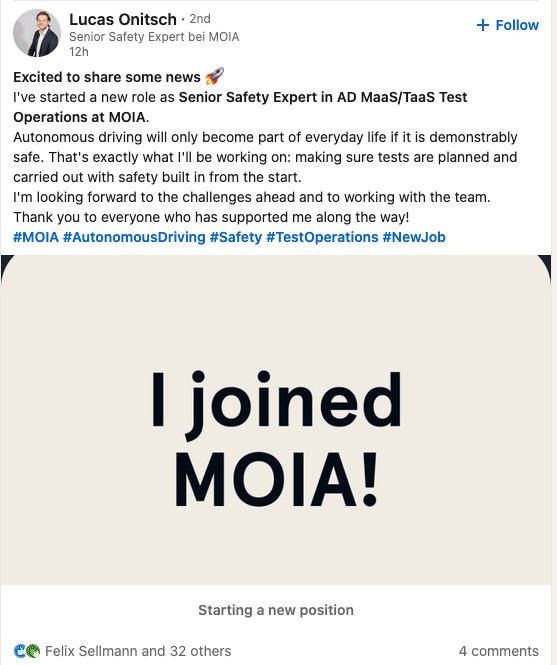
There is at least one optimist at MOIA who believes in the company—he has just started his new job there. Let’s wish him the best of luck!
This article was also published in German.


1 Comment