If one is to believe studies on autonomous cars and their impact on urban traffic, researchers often arrive at the following conclusions based on their simulations and analyses: autonomous vehicles
- increase traffic;
- thereby cause more traffic jams;
- block roads by parking in the second lane;
- make many empty trips, that is, without passengers;
- do not obey the law (such as parking in the second lane).
The conclusions are therefore as follows: autonomous cars do not solve the traffic problem; rather, they exacerbate it. And the solution to this problem lies, on the one hand, in autonomous cars—specifically in the form of autonomous buses or shuttles, or as robotaxis operating within a “pooled” system, that is, one in which multiple passengers with similar destinations share a single robotaxi.
However, these studies, findings, and proposed solutions contain a fatal flaw: they are based on linear thinking. They extrapolate the future based on past and present conditions. They assume that
- autonomous cars will resemble today’s private passenger cars in form and function—for example, having five seats, most of which are occupied by only one person, and being the same size as such a private passenger car;
- autonomous cars in the form of robotaxis will not affect private car ownership;
- the management of public space in a city—that is, which road users are allocated which traffic areas—remains unchanged;
- public transportation is the sole and preferred solution for urban travel and is the mode of transportation suitable for all segments of the population;
- sustainability is the primary consideration in selecting and prioritizing modes of transportation.
Let’s take a closer look at these results and the proposed solutions, and compare them with the developments and possibilities that were barely addressed in these simulations and conclusions.
Past Developments in Transportation Technology
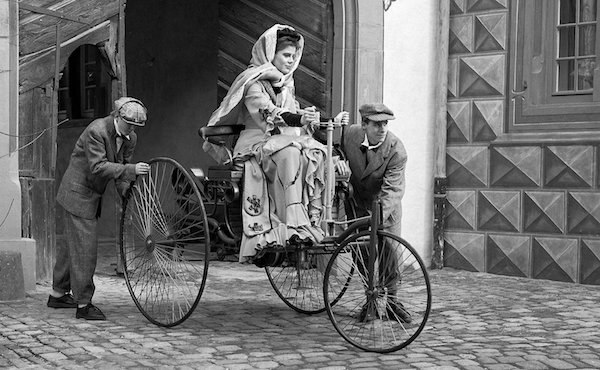
When the first car hit the roads, it still looked very much like a horse-drawn carriage—or a tricycle, as Carl Benz’s Motorwagen 1 had been. It wasn’t until some time later that these vehicles developed their own design language, which led to the appearance of cars as we know them today—vehicles that, aside from their four wheels, have little in common with horse-drawn carriages.
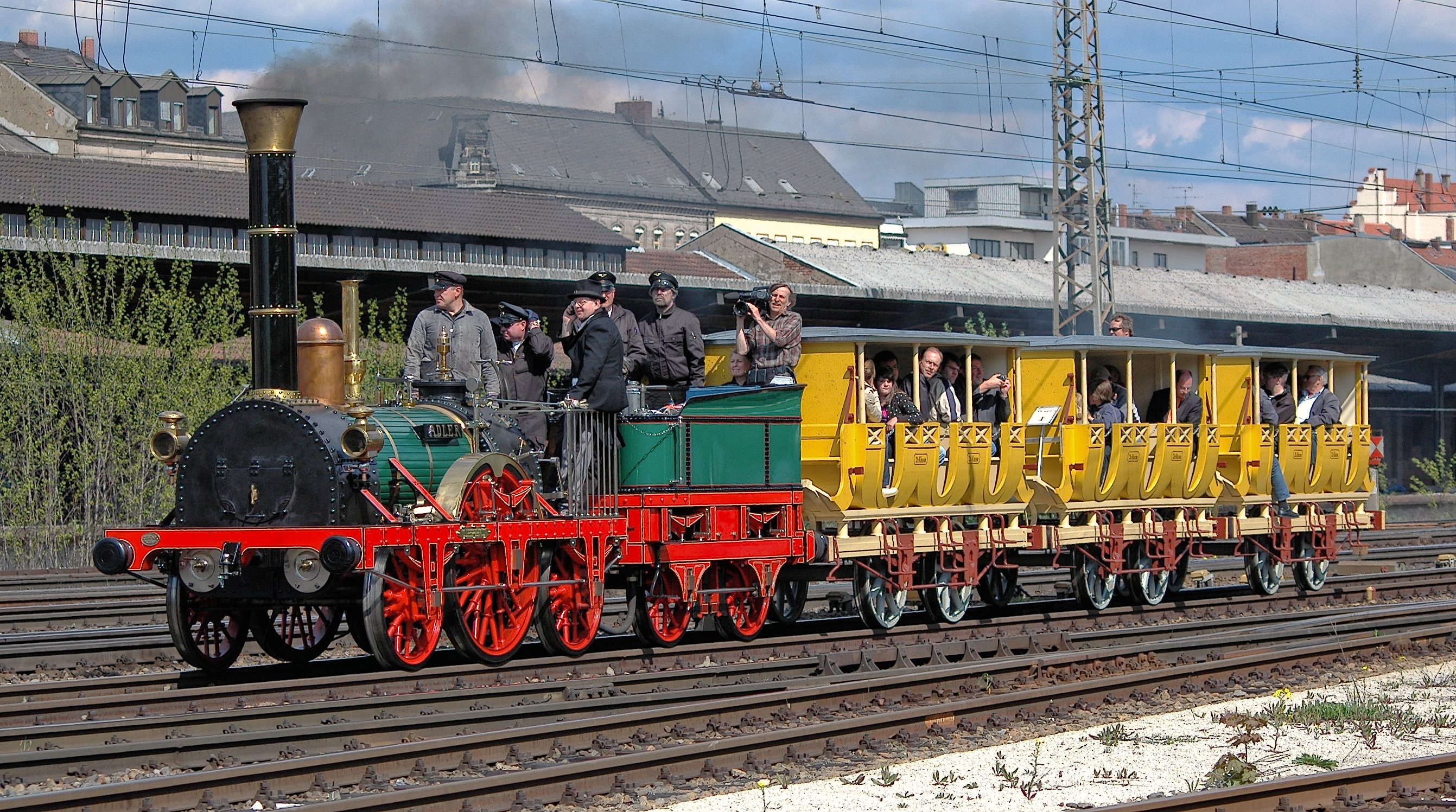
The railway industry followed a similar path. While the first trains still looked like carriages—linked together by chains and placed on tracks—the ICE, TGV, and other high-speed trains are entirely different systems.
What might autonomous vehicles look like?
Every innovation offers different and new possibilities compared to the technology that came before it. And the same is true for autonomous vehicles. For one thing, they will not be constrained by the form and limitations of today’s cars, which are designed for a driver and private ownership. A driver’s seat and steering controls will no longer be needed. This means these vehicles can be designed differently. They could be driverless single-seaters that are only a quarter or a third of the size of current vehicles. They could be two-seaters, models with cargo space for transporting bulkier purchases, or shuttles carrying more passengers.
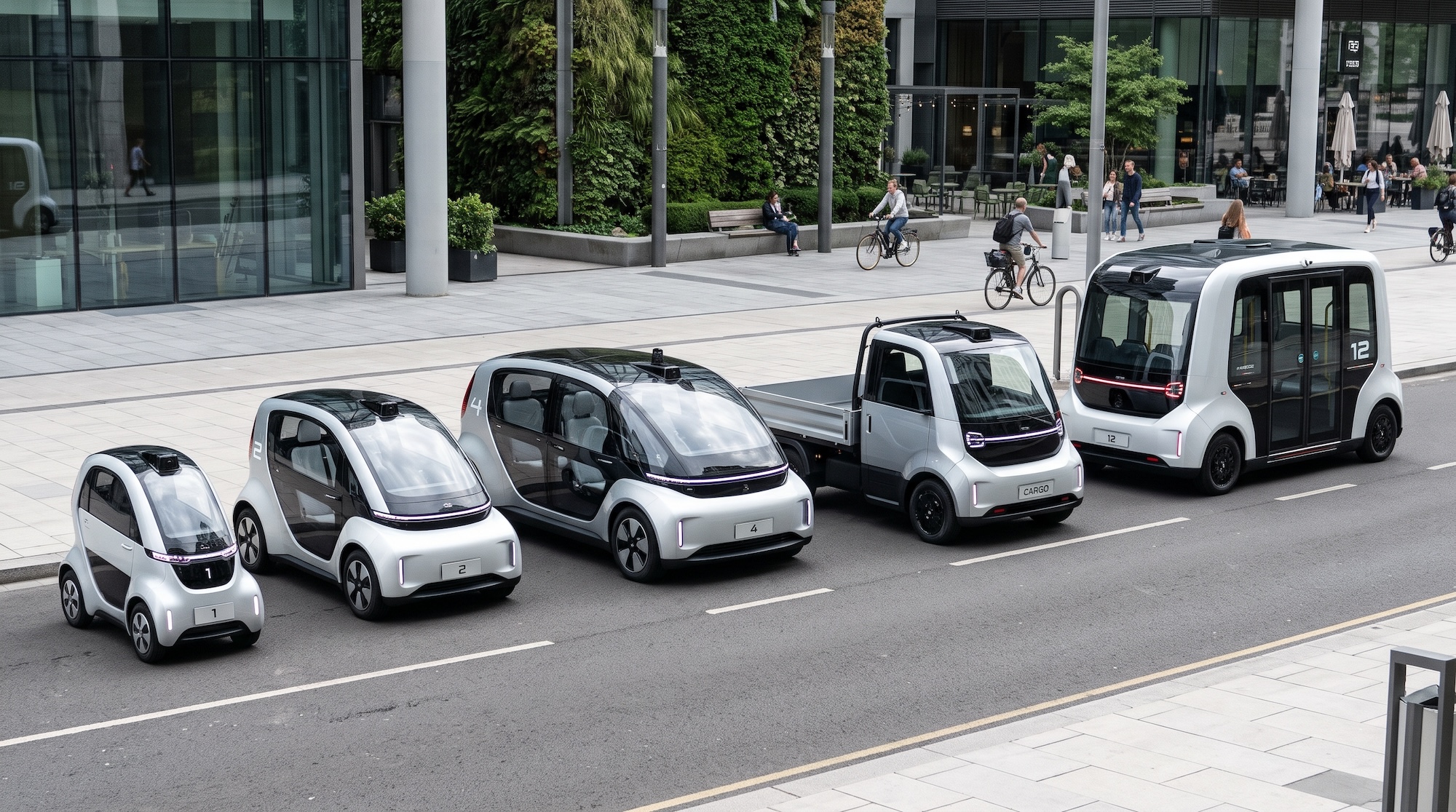
If they’re available quickly through apps, then as a passenger I can request the type of vehicle I need at that moment. So I no longer have to buy a vehicle that can handle the—as a rule—rare extreme scenario of having many passengers and a lot of cargo, even though I spend most of the year sitting in it almost exclusively alone. The five- or seven-seaters common today, which also take up a lot of space on the roads and in parking lots and consume a lot of energy, will become a minority among vehicle types.
Nor should we forget that many trips today are already incredibly wasteful. A two-metric-ton car sent out to deliver just a small one-kilogram package, or an Uber Eats or DoorDash driver delivering two kilograms of food, is simply irrational. Autonomous systems expand the range of possibilities available to us. From small, six-wheeled delivery robots the size of a cooler that travel on sidewalks, to refrigerator-sized delivery robots on roads equipped with cooling elements, shelves, or even a pizza oven, to package stations, or even a supermarket’s produce section on four wheels—everything is conceivable and already in use today. Humanoid robots can even deliver goods right into the living room or kitchen.
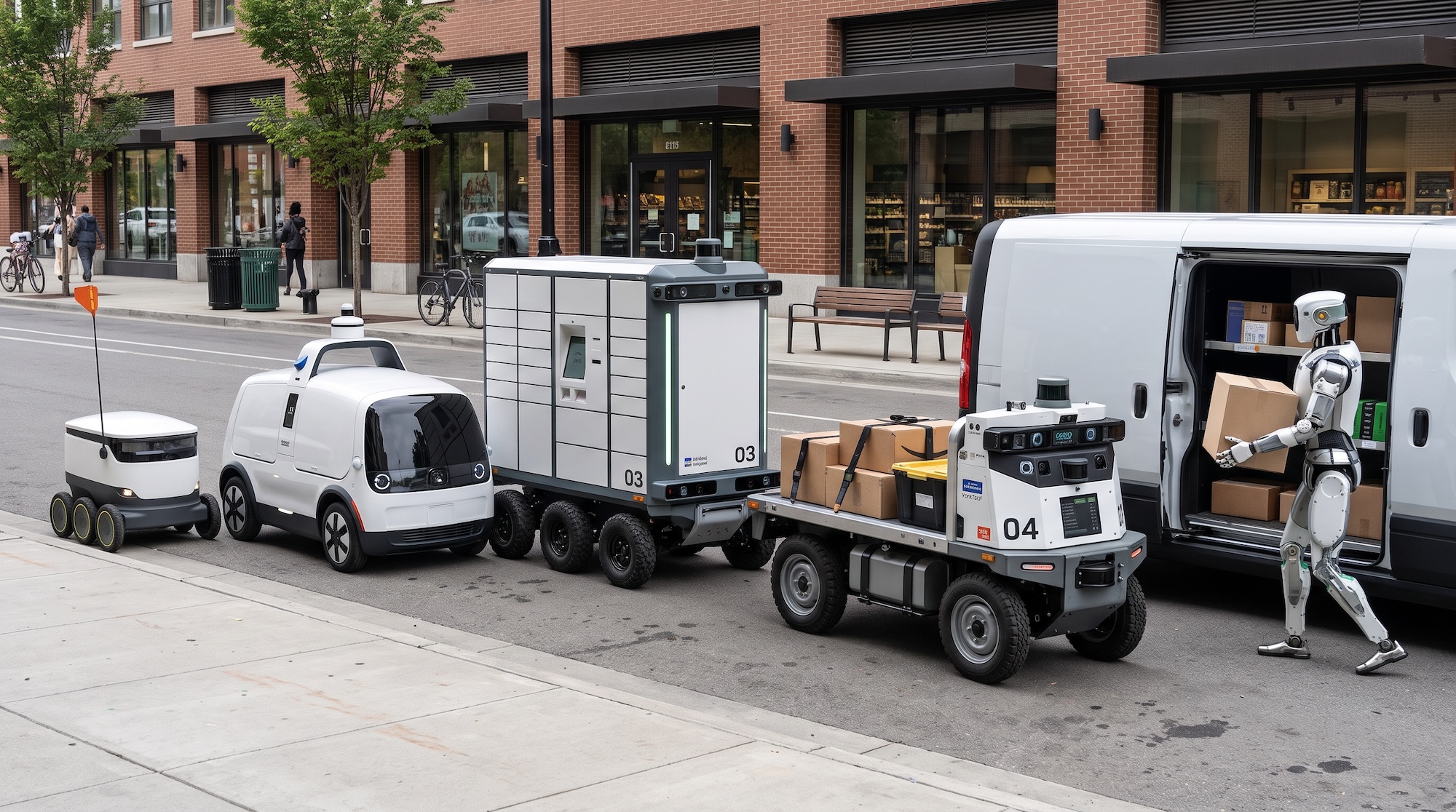
These autonomous mobile systems will take today’s cars and delivery vans off the roads, along with all the challenges that come with them, such as double-parking and traffic jams, etc.
Parking Spaces for Autonomous Cars
However, these vehicles require far less parking space within the city itself, since they are constantly on the move, already picking up their next passengers. Cheaper spaces outside the city can then be used for maintenance, charging, and parking. Even though operators of such autonomous fleets need strategically located depots within the city, these are negligibly small compared to today’s parking garages and public parking areas.
In San Francisco, for example, nearly 500,000 vehicles are registered, with a population of 810,000 people. As of today, Waymo operates 1,400 robotaxis throughout the San Francisco Bay Area, which stretches along an 80-kilometer corridor from San Francisco to San José in the south. Of the 500,000 vehicles, around 95%—or about 475,000—are parked at any given time, and “only” 25,000 are currently on the road. The claim that the additional robotaxis would therefore cause traffic jams is completely unfounded.
The parking space required for 475,000 cars is enormous and generates massive overhead costs. Regulations requiring the construction and provision of parking spaces for every apartment, office, and commercial space increase rental and purchase prices for residential and office space by 15% to 25%—costs that everyone must pay, regardless of whether they own a car or not.
Illegal Parking, Loading and Unloading Zones
The reports that Waymo’s robotaxis have received thousands of parking tickets in just 18 months tell only half the story. After all, why are they parking illegally? They aren’t actually parking—they’re waiting for passengers to get in. The regulation stipulating that they may only do so at specific locations—so-called pick-up and drop-off zones—is impractical, as there are far too few of them. City and transportation planners must ask themselves why there are hardly any such pick-up and drop-off zones today and why so much of the city’s public space is allocated to cars for parking.
Interestingly, the city of San Francisco—which has issued thousands of parking tickets to robotaxis parked in the second lane or in driveways—cannot provide comparable figures for human-driven cars. Nor can emergency responders say how often they are blocked by human drivers during their calls.
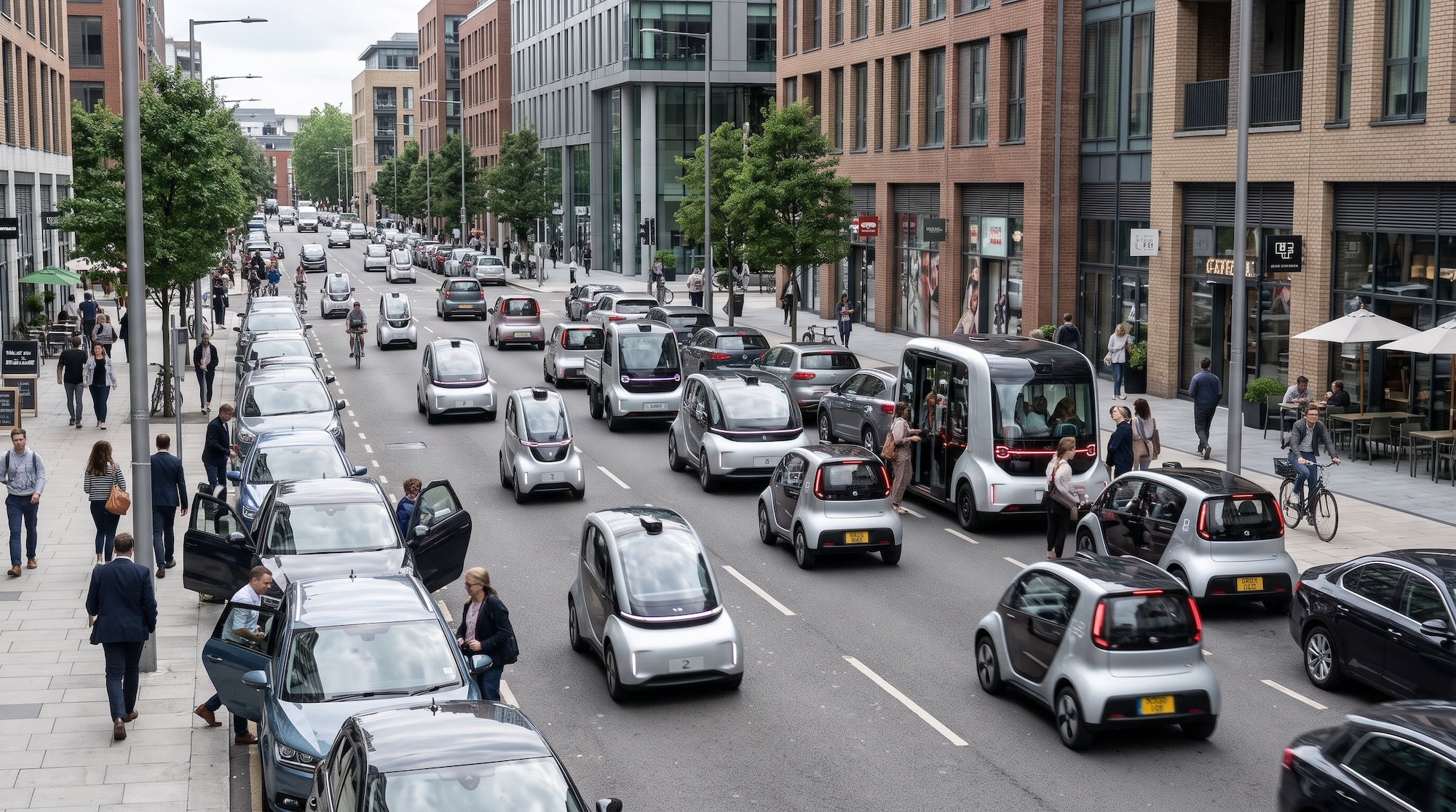
Will autonomous vehicles ever replace private cars?
Mobility studies often assume that autonomous vehicles will not dissuade people from getting rid of their private cars. According to these studies, residents of Hamburg and San Francisco will not sell or deregister the 800,000 and 500,000 cars, respectively, registered in those cities. The reverse conclusion drawn by researchers and opponents of robotaxis is that the additional autonomous vehicles will contribute to worsening traffic problems.
In fact, studies conducted some time ago calculated, for various cities, how many robotaxis would be needed in each case to replace the kilometers traveled by private cars. The following text is taken from my 2019 book, The Last New Driver’s License Holder…
A study that analyzed commuter data from Lisbon concluded that the same level of mobility could be achieved with one-tenth as many vehicles. A fleet of 26,000 taxi-bots could cover the mileage of the 203,000 vehicles currently crisscrossing Lisbon. This would free up an area equivalent to 210 soccer fields for other uses. A study conducted for Singapore concluded that even today, one-third of all vehicles could handle all traffic in the city-state. And for New York City, the MIT Institute for Artificial Intelligence calculated in a simulation that 3,000 self-driving taxis could replace the current taxi fleet of 13,000 cars for 98 percent of all trips. Ann Arbor, Michigan, which currently has 120,000 cars, could get by with 18,000 shared autonomous vehicles. And a study on Munich, where 700,000 cars are currently registered, concluded that 200,000 private cars could be replaced by 18,000 robot taxis without any loss of mobility.
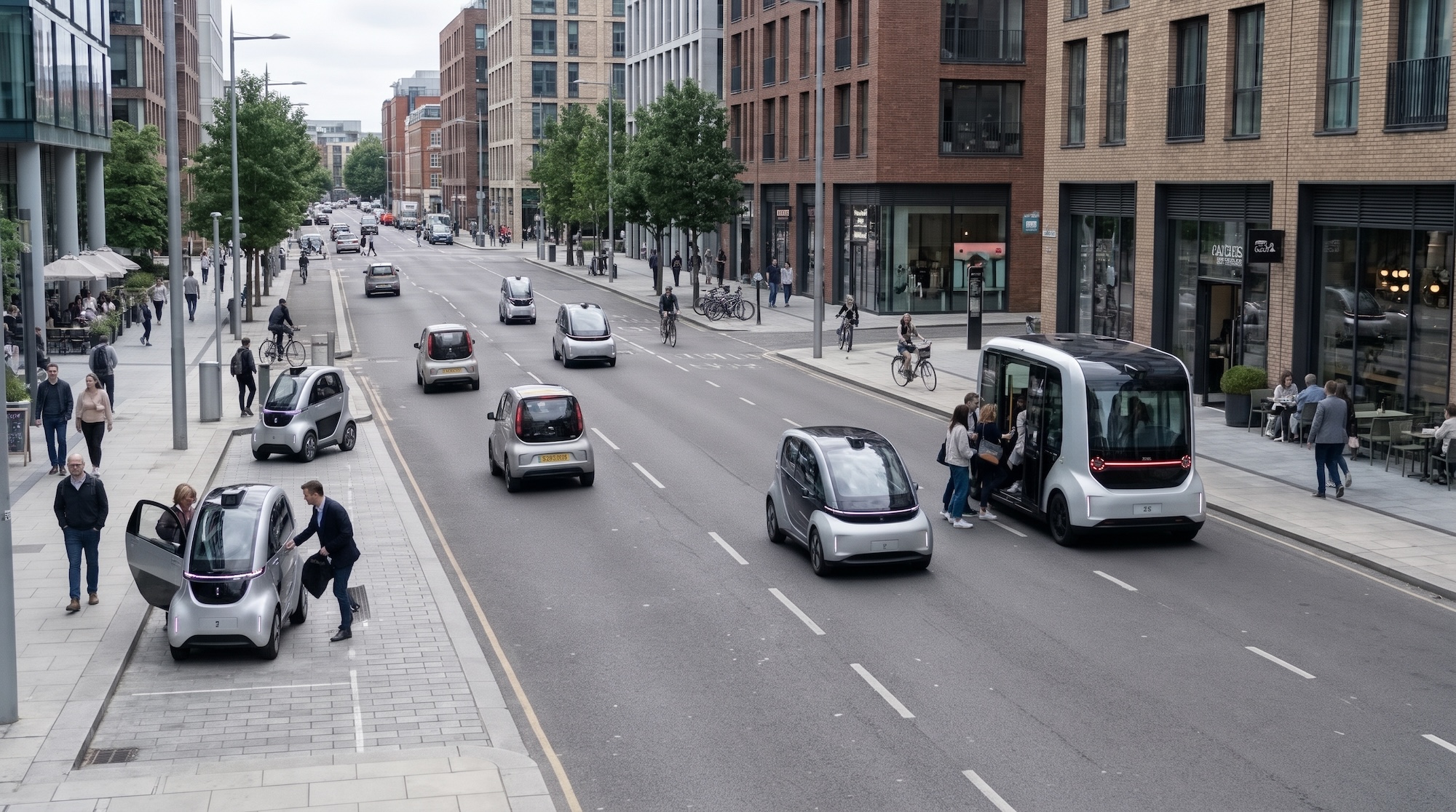
The consequences are clearly visible in the two previous images. If the majority of private cars are replaced by a small number of autonomous vehicles, then the urban space currently occupied exclusively by parked cars will be returned to the public for other purposes, such as playgrounds, parks, café and restaurant patios, urban gardens, etc.
Not only that: parked cars also pose a safety hazard. People standing between parked vehicles are difficult for moving cars to see, and they themselves have a hard time seeing the traffic.
BUT: Of course, we will never see privately owned cars disappear entirely. Just as there are still horse owners today, there will also be car owners who can afford a private car. Perhaps there won’t be 800,000 cars in Hamburg as there are today, but maybe 100,000—still far fewer than there are today.
Deadheading
Autonomous cars have been accused of making many trips without passengers—that is, empty runs, or what is known as “deadheading.” A study found that as late as mid-2025, between 55% and 57% of Waymo robotaxis were driving empty, whereas by 2026, that figure had dropped to—or remained at—43% to 45%. What at first glance looks like a lot of unnecessary traffic fails to take into account how human traffic—that is, traffic where a person is sitting in the car—works. Example:
A mother drives her two children to school. She first drives to the school or schools to drop the children off, and if that’s not on her way to the office, she has to take this detour back again to get to the office. In the afternoon, she picks the children up again and takes them, for example, to horseback riding lessons or soccer practice, or to after-school care at Grandma’s, only to drive back to the office to finish up any remaining tasks during the last two hours of the day. Then she picks the children up again from Grandma’s or from horseback riding lessons and soccer practice, and possibly takes them home via a detour because the route isn’t a direct one.

HOMO SYNTHETICUS
Wie Mensch und Maschine verschmelzen
Künstliche Intelligenz wird sichtbar. In „Homo Syntheticus“ beschreibt Zukunftsforscher Dr. Mario Herger den Aufbruch in ein neues Zeitalter, in dem Maschinen nicht mehr nur denken, sondern fühlen, handeln und lernen. Humanoide Roboter mit künstlicher Haut und autonomem Bewusstsein treten in unser Leben – als Helfer, Kollegen, vielleicht Partner. Gleichzeitig erweitern wir Menschen uns selbst: durch Implantate, Schnittstellen und KI im Körper. Mensch und Maschine nähern sich an, verschmelzen – und stellen unsere Vorstellung von Identität, Ethik und Fortschritt auf die Probe. Ein faszinierender Blick auf die Ära des synthetischen Menschen.
Every time, an adult—such as the mother mentioned here—has to make the trip from the office or home to drive the children around as a “parent taxi.” This usually involves more kilometers than an empty robotaxi would travel, since the algorithm directs the nearest robotaxi to the next passenger. And this robotaxi could be a one-seater, rather than the five- or seven-seater that is the typical parent taxi.
Bundling?
On the “Autonomobil” podcast, Felix Zwick from MOIA shares figures from Hamburg similar to those we’ve already heard from San Francisco. Hamburg has just under 1.9 million residents and 800,000 registered cars, which, on average, are on the road for no more than half an hour a day but spend 23.6 hours a day simply parked. The goal of offering 10,000 MOIA robotaxis—in the form of the VW ID.Buzz AD with up to eight seats—as an alternative solution and part of the public transit system therefore makes sense—though, to be honest, I find these plans lacking in imagination. There’s never any mention of one- or two-seaters. That strikes me as a massive conceptual gap in all efforts to date.
On the other hand, the idea that these services should only be offered on a shared basis makes less sense. By this, they primarily mean that several passengers with similar destinations share the same vehicle. It comes as no surprise that these suggestions and demands mostly come from physically able-bodied men—and occasionally from women as well. The reality for people with disabilities, older adults, children, parents, or women is quite different.
Passengers with Disabilities
Let’s take a person with a disability who uses a wheelchair as our first example. In order to board a bus, tram, or train, ramps often have to be unfolded and set up. While this is happening, the other passengers often stare—sometimes with annoyance—at the process. This process is often very embarrassing for the person with a disability and serves as a stark reminder of how “different” they are. Since there are only specific entry and exit points—that is, stops—this person must also cover the last mile to their destination, which isn’t always easy to navigate.
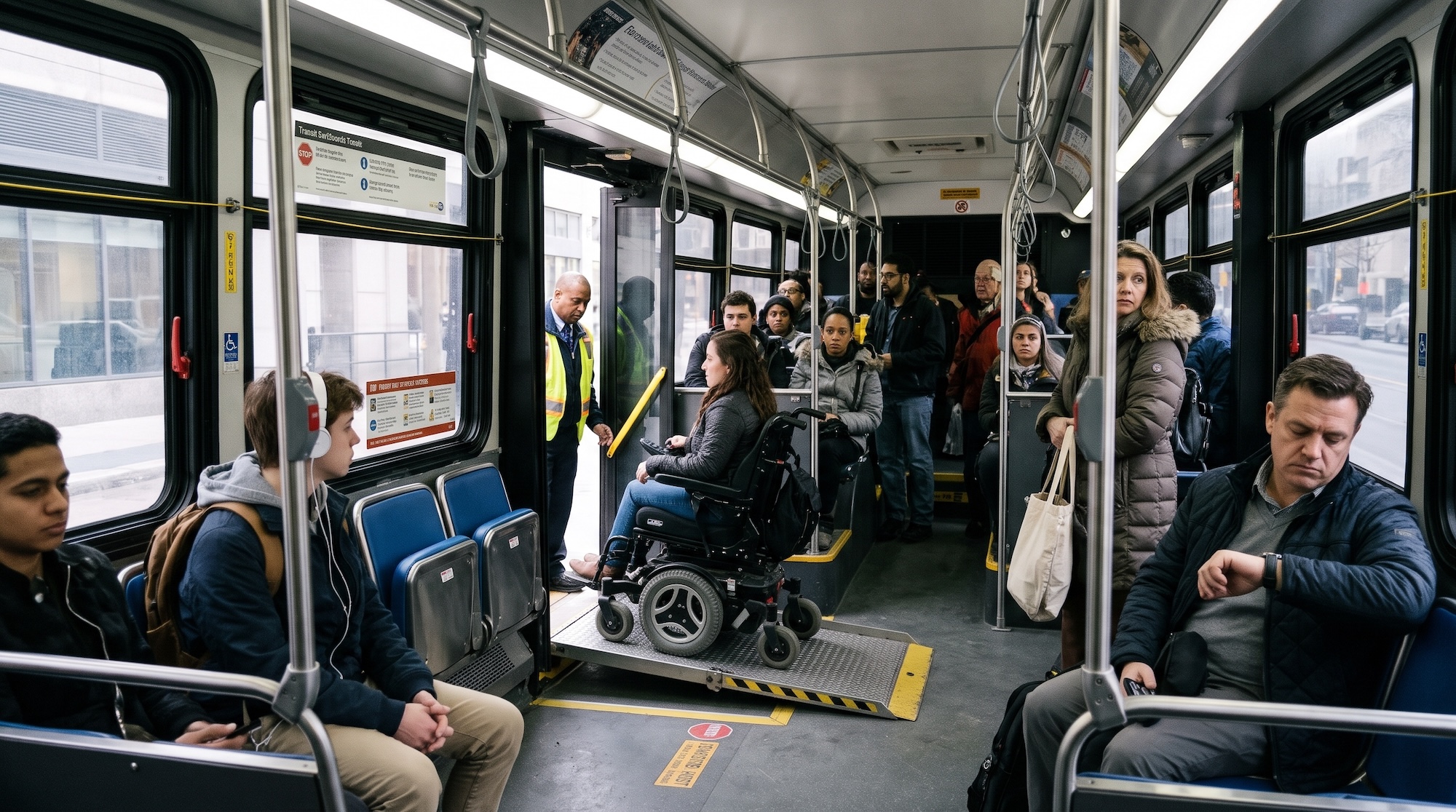
Life will be easier for our wheelchair user if she can order an autonomous, accessible vehicle at any time—one that arrives in just a few minutes and is all hers to use while she’s on her way to her destination. This makes access to personal mobility much easier for her. And mobility enables a social life, because it makes it much easier and more accessible for her to visit friends and relatives.
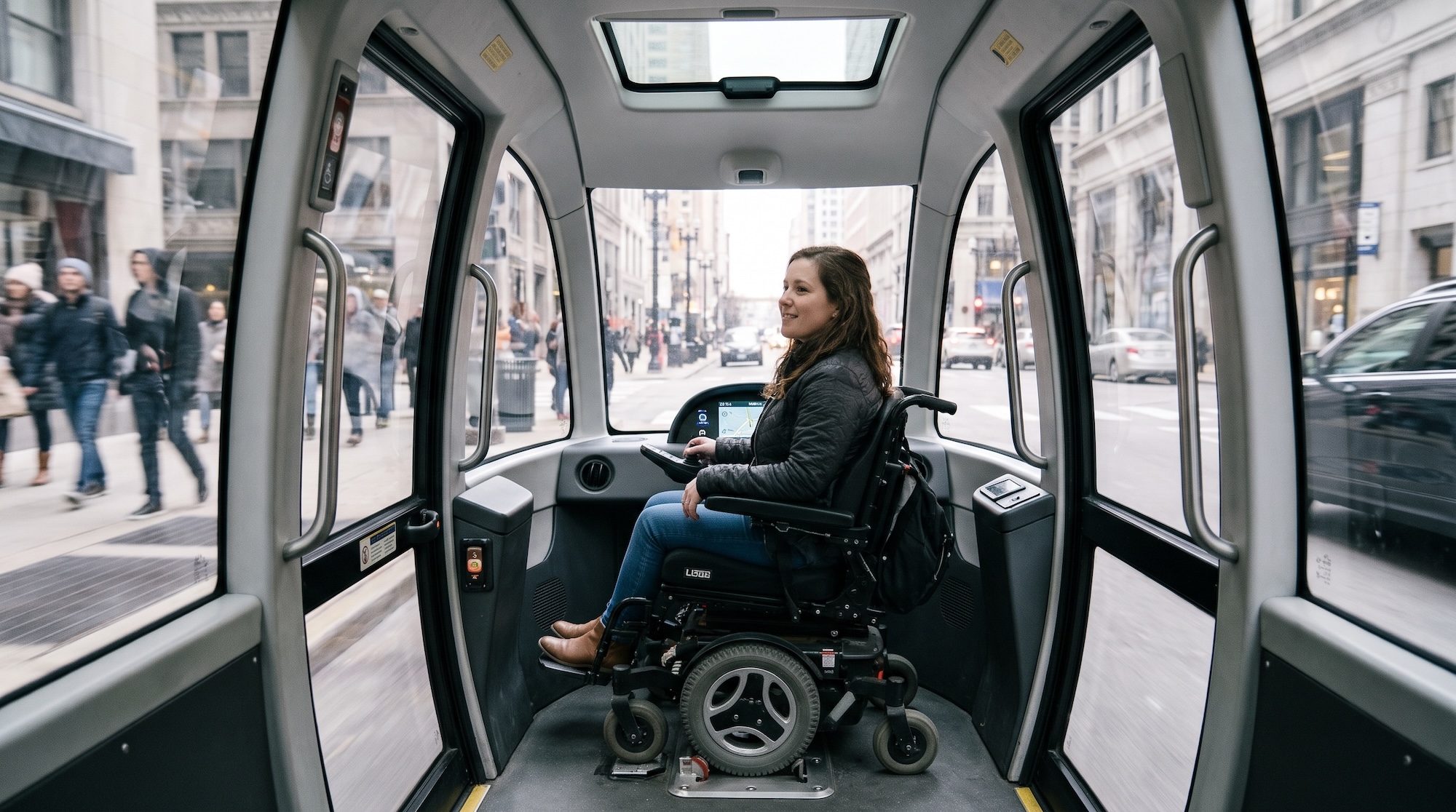
Even for other types of impairments—whether physical ailments in older adults or neurodiversity—integrated systems are not the first choice. People on the autism spectrum who feel sensory overwhelmed on public buses or even in taxis with a driver find peace of mind in robotaxis.
People Carrying Heavy Loads
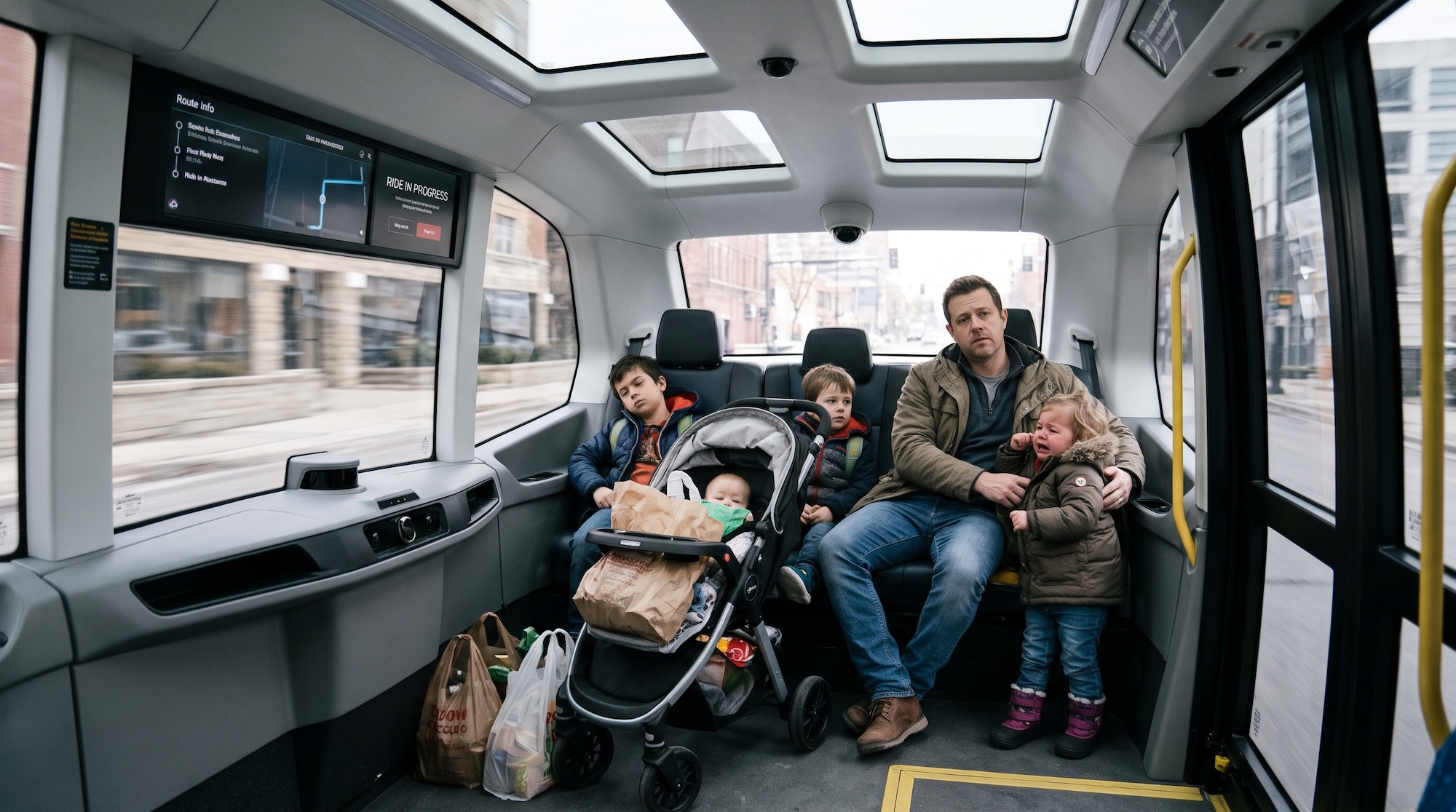
Even if you aren’t disabled, having an autonomous vehicle all to yourself can be a relief. Take, for example, a father out and about with a stroller, groceries, and a couple of tired and fussy kids. Juggling the heavy loads and the children’s frayed nerves at the same time is a challenge in itself. Having to listen to rude comments from impatient fellow passengers (“Those kids aren’t well-behaved!” or “Where’s their mother?”) doesn’t help matters.
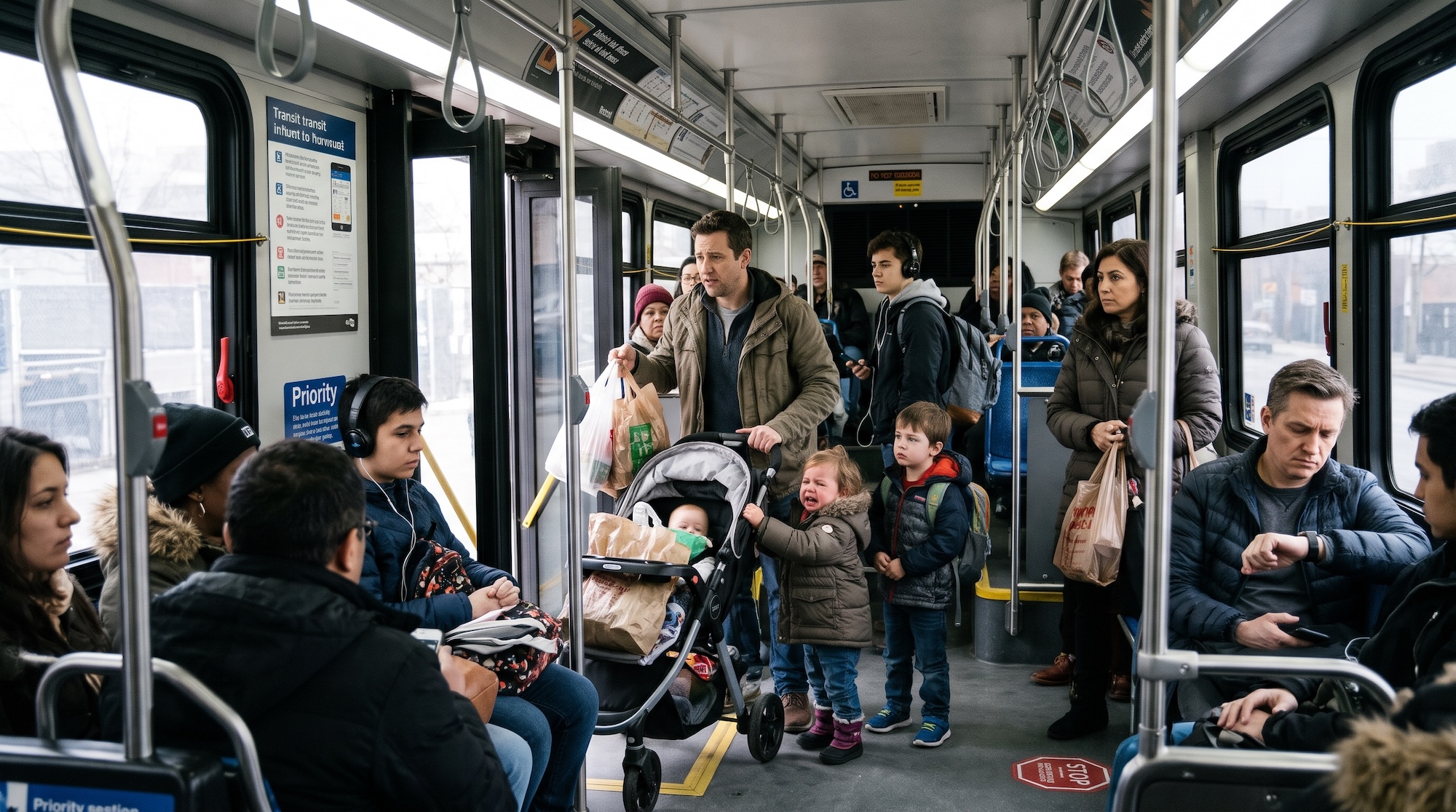
The situation is much more relaxed with a robotaxi that this family can use all to themselves—without having to share it with other passengers—and that drops them off right at their front door.
Women and Safety
Reports of how positively women in San Francisco have embraced robotaxis are linked to an increased sense of safety. There’s no (male) driver in the taxi trying to hit on them or who might later find out where they live, and no need to share a ride with other people, while having to avoid the intrusive stares of fellow passengers, or even having to navigate a dark bus stop or a dark subway entrance filled with drunk people, homeless individuals, and shady characters.
A vast number of statements from women attest to just how important safety is to them in this context. And what applies to women here naturally applies as well to other population groups that may be equally vulnerable.
Transportation Corridors
What proponents of public transit and integrated systems often fail to consider is just how much buses, trams, or subways force people into traffic corridors, thereby lengthening the routes for most users and inconveniencing residents living along those corridors.
This is easy to see in the street map of the fictional city of Neopolis shown in the image below. If you simply want to travel from the upper left corner along the orange line across the river to the right, near the blue line, you must either take the orange line the entire way, ride into the city center, and then board the blue line somewhere there to travel back up. Or you can get off after the sharp bend in the orange line, walk three blocks to the blue line, and then ride back up.
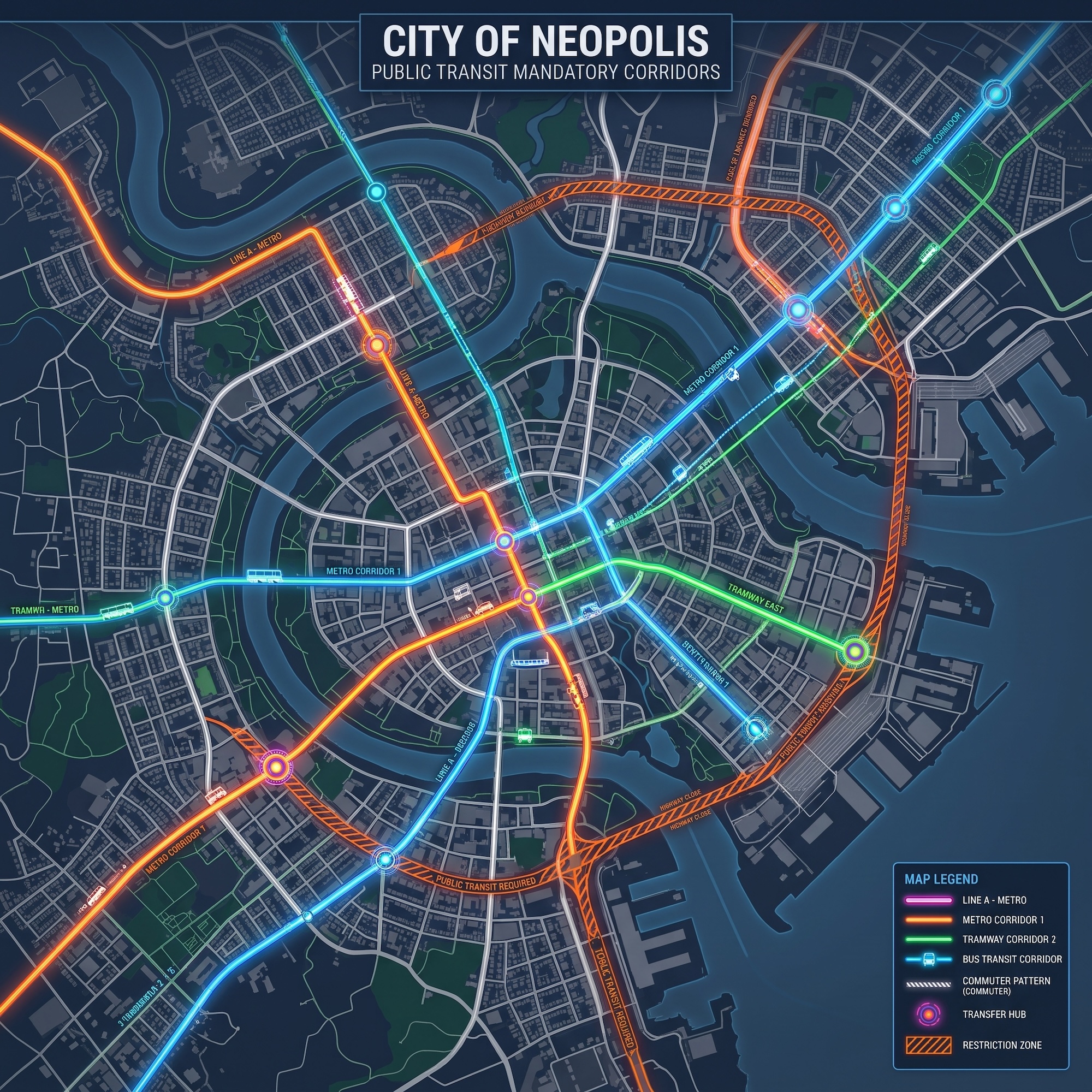
This results in many unnecessary kilometers being driven and, consequently, time being wasted—time that an autonomous single-seater vehicle could cover more quickly and efficiently outside of traffic corridors. Added to this are the wait times for public transit or integrated systems, as well as the “last mile”—that is, the walk to and from stations that public transit does not serve. This isn’t a problem as long as you’re a physically able-bodied man or woman, but if you have a disability, are carrying luggage, are traveling at night, or are dealing with adverse weather conditions, the situation looks quite different.
Public transportation or consolidated systems are therefore less often the desirable, supposedly ideal solution that they’re often presented as and chanted like a mantra.
Conclusion
Study authors who think only in linear terms and fail to consider the potential of autonomous vehicles, as well as politicians, urban planners, and transportation planners who blindly base their decisions on such studies when it comes to the introduction and regulation of autonomous driving systems, are doing their citizens a disservice. They hinder and delay the new technology and its potential, as well as its positive effects on the urban landscape, urban design, transportation planning, and the safety, health, and well-being of the population.
The arguments presented in this article are intended to help readers recognize and question existing assumptions, identify the potential of these new autonomous systems, and, at the same time, finally address and change the use of public space by private passenger cars—a practice that has thus far gone largely unchallenged.
HOMO SYNTHETICUS
Wie Mensch und Maschine verschmelzen
Künstliche Intelligenz wird sichtbar. In „Homo Syntheticus“ beschreibt Zukunftsforscher Dr. Mario Herger den Aufbruch in ein neues Zeitalter, in dem Maschinen nicht mehr nur denken, sondern fühlen, handeln und lernen. Humanoide Roboter mit künstlicher Haut und autonomem Bewusstsein treten in unser Leben – als Helfer, Kollegen, vielleicht Partner. Gleichzeitig erweitern wir Menschen uns selbst: durch Implantate, Schnittstellen und KI im Körper. Mensch und Maschine nähern sich an, verschmelzen – und stellen unsere Vorstellung von Identität, Ethik und Fortschritt auf die Probe. Ein faszinierender Blick auf die Ära des synthetischen Menschen.
This article was also published in German.


1 Comment